“ Dear Fanny, write directly, and tell us to come. It will do us all good. He and I can go to the Parsonage, you know, and be no trouble to our friends at Mansfield Park. It would really be gratifying to see them all again, and a little addition of society might be of infinite use to them; and as to yourself, you must feel yourself to be so wanted there, that you cannot in conscience—conscientious as you are—keep away, when you have the means of returning. I have not time or patience to give half Henry’s messages; be satisfied that the spirit of each and every one is unalterable affection. ”
Mansfield Park
Definition and stakes
Mansfield Park, Jane Austen’s 1814 novel, traces the moral and social evolution of Fanny Price, a shy orphan raised by her affluent aunt’s family. Austen’s work examines themes of ethics, faith, and the intricacies of family obligation, while its depiction of theatrical activity and colonialism—especially through Sir Thomas Bertram’s Antiguan estate—has generated lasting discussion.
Critics from the 19th century to the present have wrestled with its heroine’s quiet strength and the novel’s uncertain position on social structures. Andrew Lang commended its “modest request” for emotional depth, while R. Brimley Johnson emphasized its diverse scenes and realism, and Edward Said re-examined its colonial implications. Ultimately, Mansfield Park remains a sophisticated inquiry into conscience and societal limitations, prompting readers to balance moral uprightness with the flaws inherent in human connections.
Quotes about “Mansfield Park”
 Jane Austen,
Mansfield Park
(1814)
Jane Austen,
Mansfield Park
(1814)
“ Forgive me, my dear Fanny, as soon as you can, for my long silence, and behave as if you could forgive me directly. This is my modest request and expectation, for you are so good, that I depend upon being treated better than I deserve—and I write now to beg an immediate answer. I want to know the state of things at Mansfield Park, and you, no doubt, are perfectly able to give it. One should be a brute not to feel for the distress they are in—and from what I hear, poor Mr. Bertram has a bad chance of ultimate recovery. I thought little of his illness at first. ”
 Andrew Lang,
History of English Literature from "Beowulf" to Swinburne
Andrew Lang,
History of English Literature from "Beowulf" to Swinburne
“ If one novel is not quite so good as the rest, it is "Mansfield Park"; but to name it recalls Mrs. Norris, and the return of the heavy father as his progeny are rehearsing a dubious play from the German; and one has a tenderness for the good little heroine, and for her rather squalid kinsfolk, and for both of the naughty Crawfords. "Mansfield Park" is a masterpiece like the rest. Perhaps Miss Austen's heroes are not so good as her heroines; but Henry Crawford and Frank Churchill, in "Emma" prove that her young men are not mere lay figures. ”
Related terms
Authors who wrote about “Mansfield Park”
Edward S. MoggFürst von Hermann Pückler-MuskauElizabeth MontizambertJane AustenM. F. MansfieldAndrew Lang F. Scott Fitzgerald
 Rhoda BroughtonR. Brimley JohnsonG. E. MittonRichard Arthur Austen-Leigh
 Walter BesantGeorge BryanWilliam J. Brennan, Jr.
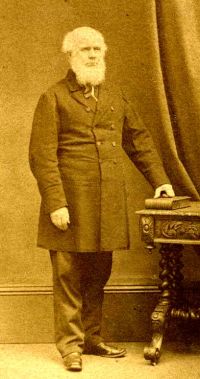 William Howitt
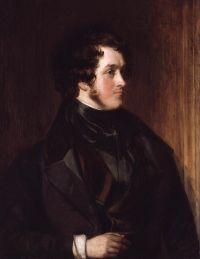 William Harrison AinsworthHenry James
 Virginia Woolf
 G. K. Chesterton
 James Joyce
Jane AustenM. F. MansfieldAndrew LangF. Scott FitzgeraldRhoda BroughtonR. Brimley JohnsonG. E. MittonRichard Arthur Austen-LeighWalter BesantGeorge BryanWilliam J. Brennan, Jr.William HowittWilliam Harrison AinsworthHenry JamesVirginia WoolfG. K. ChestertonJames Joyce