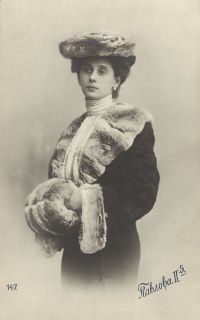
Marie Taglioni

Definition and stakes

Margaret West Kinney,  The Dance: Its Place in Art and Life

“ Not without cause were the hostilities of Pylades and Bathyllus, of Sallé and Camargo, associated with great public enthusiasm. To artistic appreciation they added the element of sporting interest.
In Marie Taglioni and Fanny Ellsler, Europe had the parties to a years-long competition that was Olympian in quality and incredible in its hold on the sympathies of the public. Both goddesses in art, their personalities and the genres of their work were at opposite extremes.
”
Source: Gutenberg

| override_editor,  Encyclopædia Britannica, Ninth Edition…

“ On 23d July 1827 she made her debut at the Opera House, Paris, in the Ballet de Sicilien, and aroused a furore of enthusiasm. Her style was entirely new, and may be termed ideal as opposed to the realistic and voluptuous ballet previously in vogue. Among her more remarkable performances were the dancing of the Tyrolienne in Guillaume Tell and of the pas de fascination in Meyerbeer’s Robert le Liable. At this period the ballet was a much more important feature in opera than it is now, and in fact with her retirement in 1845 the era of grand ballets may be said to have closed. ”
Source: Wikisource

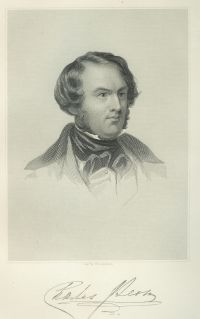
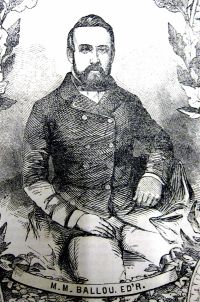
Portrait of Maturin M. Ballou Maturin M. Ballou,  Genius in Sunshine and Shadow

“ He was a magistrate, and became her patron, taking her from her humble surroundings and supplying her with suitable teachers. She was care [246] fully taught instrumental as well as vocal music, and became both an eminent pianist and singer, developing like her fair countrywoman, Jenny Lind, into a vocalist of grandest genius, and of such ability as the world affords but few examples.
Taglioni was also Scandinavian by birth, having been born at Stockholm, in 1804, of humble parentage, her father being a dancing-master.
”
Source: Gutenberg

Get perspective with Kwize: daily news enlightened by great literature