“ It is love in human shape: now he hovers above the sleeping figure, caressing: now he is dancing just in front of the window. And we dare not breathe lest by so doing the air is stirred to drive him back into the moving shapes outside. But he rises on the arms of the wind, he crouches beside the girl. She falls into his arms and the love dream of a ballroom is realized. The music of the night has entered the room, languid music like water which these two spill as they dance to and fro, until, our eyes being opened, we can see as well as hear music. ”
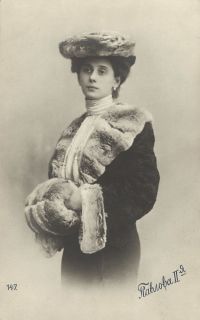
Anna Pavlova
Biographical details

Anna Pavlova (1881–1931), a celebrated Russian prima ballerina, redefined the art of classical dance through her ethereal presence and emotive performances. Renowned for creating the iconic role of The Dying Swan and pioneering global ballet tours, she combined technical mastery with expressive sensitivity, embodying the contrast between delicacy and power.
Her writings, notably The Dance, explore rhythm as the core of artistic and human existence, portraying movement as a universal language. Pavlova’s legacy endures as a link between tradition and innovation, her vision reflected in the lasting interplay of music, motion, and metaphor.
Quotes by Anna Pavlova
“ The Russian ballet is, in fact, an outgrowth of the folk-dance just as Russian music emanates from the folk-song. While watching the Russian ballet, you see glimpses of the racial traits. It is not like the music, however, a picture of the gloom of lonely moujik life, in which only here and there a beam of light breaks through the melancholy. It is a succession of brilliant pictures of the mediæval Boyars, the semi-barbaric nobility. Every part of the ballet is meant to show the rich Byzantine colors, and primitive passions as set forth in a half-civilized garb. ”
“ In dances of certain provinces and certain ages we discern the influence of Egypt, particularly of the Arabs. They give evidence of an ancient training which has grown into the blood and bones of the nation. They betray more the forms of Moorish arabesques than the clear-cut images of the Roman, Greek, or Gothic style. You can feel in their vigorous rhythm and colorful tunes simple, unspoiled souls, filled with energy and hope. To this the picturesque and romantic dresses of their women add that atmosphere and background which the individual stage dance seeks in proper scenery and costumes. ”
“ Every true art is a direct and immediate act of life. As in music and dancing, so in life, rhythm is the skeleton of tone and movement and also the basis of existence. We breathe rhythmically and our heart beats rhythmically. We walk, laugh and weep rhythmically. Rhythm is the only frame to the moving material of the visuo-audible art. What except rhythm can unite living men in order to convert them from a chaotically moving crowd into a work of art? It was undoubtedly the innate feeling for rhythm that actuated the primitive man to dance. ”
“ Thus I repeat, when I say that such a form of art as the old ballet cannot live I am not denying its right to exist, but I am indicating the absence of elements of development, the atrophy of the principle of vitality.‘There is one point of view possible as to the “classical ballet”; it is the one form in which we see the established forms of old dances. Who will deny the charm of the minuet, of the gavotte, of the pavane? But, on the other hand, who ever will dare to say that this is the final word of plastic art? Miniature painting is a lovely art, is it not? ”
“ Music quivers from hands and feet, lips and eyes. We feel an impending danger. The silence is broken with the sudden appearance of the High Priest. Cleopatra is coming. But Ta-Hor clings to the lips of Amoun. When the Queen appears the lovers shrink back into the shadows of the temple. She is a voluptuous beauty. We see her resting, her limbs tangled in a mass of color, her eyes fixed like serpent’s, staring into the hot night of the desert while she waits for what it will bring her. She is tired of the wealth the world has poured at her feet. ”
“ It is just the same sin against art as if a singer were to execute a lyric song with bravado. Would you forgive him? Why, then, do we not forgive a singer, yet forgive a mimic, even admire his “acting”? Why is it every one understands that singing must agree with music, and so few, almost nobody, feel the offensiveness of movement which disagrees with music? And yet how sensitive to the observation of the musico-plastic principle are those who are so indifferent to its non-observation. ”
“ Her dancing caught the very spirit of a maiden’s revery, and nothing could have been more finely imagined than those transitions from languor into quick rushes of darting movement, which illustrate the abrupt and irrational episodes of a troubled dream. She was the very embodiment of faint desire. We felt, as it were, a breath of perfume, and were troubled in spite of ourselves. Moreover, the long partnership between the two performers seemed to have resulted in a very special and intimate harmony. ”
“ Of all living Oriental races the Arabs show the most innate instinct for dancing. Judging from the ruins of the architecture that the Moors have left in Spain we can see that they knew more than the mere elementary rules of æsthetic line and form, which is the very essential of a dance. The ruins of the majestic Alhambra speak a language that fills us with an awe. No architects of other races, either dead or living, have reached that harmony of line which is plainly visible in this structural masterpiece of humanity. ”
“ What does the ballerina express when with a fascinating smile she regards caressingly her own toe, as she toe-dances over the smooth floor? What does her body express, the human body—the most wonderful instrument of expression on earth—when, carried away by gymnastic enthusiasm in an acrobatic ecstasy, with panting chest and terror in her open eyes, she crosses the stage diagonally, whirling on one toe, while with the other she executes the famous “thirty-two fouettés”?’ ‘Gymnastics transform themselves into fantastics,’ exclaims Levinsohn ”
“ We see Egyptian dancers moving slowly and quietly. String instruments are thrumming like nightingales. We see a whole company of men and women dancing in the torchlight. The sight of the costumes pours a spell of the Nile upon us. The stars of the desert and the passionate music of string instruments, the beautiful girls and the black virile bodies of the slaves, the waves of light and the distant wall of soldiers and priests, fill the air with something tragic and black. We get a glimpse of Cleopatra and Amoun, he standing beside her couch. ”
“ This is most evident in the syncopated style of its music, in its language and in its architecture. Like the American ‘ragtime’ tune, an American skyscraper is the result of an impressionistic imagination. Both are crude in their present form, yet they speak a language of an un-ethnographic race and form the foundation of a new art. Instead of having a floating, graceful and, so to speak, a horizontal tendency like the æsthetic images of the Old World, the American beauty is dynamic, impressionistic and perpendicular. It shoots directly upwards and denies every tradition. ”
“ There is more symbolism in Karsavina’s and Nijinsky’s art than in that of Pavlova and the followers of the old ballet. But the plastic symbols of Lada are far more condensed than those of Karsavina. This is what we have termed the essential of a cosmic choreography.The tendency of every art is from the simple to the complex and then again from the complex to the simple. The greatest dancer is the one who can express the most complex musical images in the simplest plastic forms. Dancing in the future will be nothing but a transformatory process of the time-emotions in the space-emotions. ”
“ We are in the cosmic current of evolution and begin our circle where it was left by those who had passed the current of a certain race or class. The future dance will grasp beauty from a broader stretch and deeper depths than the greatest virtuosi of the past and present could do. ”
“ The mimic expressions play seemingly a foremost rôle, as their smiling faces and bashful looks betray the power of their fascination. They show expert skill in the use of the veils, with which they now seemingly cover their bodies, opening them again to give a glimpse of their great beauty. The exquisitely artistic statuettes found at Tanagra give some idea of the beauty of motion as practised by young women dancers, when, in the marvellous setting of the antique theatres, under the blue skies of Greece, they gave performances to audiences with whom the love of beauty was a passion. ”
“ All these contrasts and contradictions may be found reflected in the essentials of the Russian folk-dance. Like the semi-Oriental style of architecture, now curved and gloomy, then suddenly straight and dazzlingly brilliant, occasionally bizarre and fantastic, but strongly inclined to the romantic and the mystic forms, are the innumerable figures and steps of the Russian dances. In Russia more than in any other country the sexual diversity in the style of the steps, poses and mimic display is subjected to a most careful consideration. The woman is neither equal nor inferior to the man. ”
“ Her art is an absolute image of the music. Lada is by no means a mood creator or a believer in genial spontaneity that requires nothing but a stage and orchestra. She possesses in her simplest folk-dance-like choreographic sketches the same technical perfection, the same strenuous practice, as the most accomplished ballet dancer. ”
“ Arthur Symons called dancing ‘thinking overheard.’ ‘It begins and ends before words have formed themselves, in a deeper consciousness than that of speech. * * * It can render birth and death, and it is always going over and over the eternal pantomime of love; it can be all the passions, all the languors; but it idealizes these mere acts, gracious or brutal, into more than a picture; for it is more than a beautiful reflection, it has in it life itself, as it shadows life; and it is farther from life than a picture. ”
“ A dancer represents in his vibrating body lines the symbolic complex of all the phonetic unities of a composition. He is, so to speak, the unset type. Music is the text that he has to print in such pictorial forms, in such symbols that our mind can grasp it. Throughout his dance, he remains a kaleidoscopic tracer of the musical designs of the composition. The plastic positions of the human body, the mimic expression of the face, the gestures and the steps, are the mediums that can suggest certain phases of emotion and feeling, certain ideas and impressions of soul and body. ”
“ Yet dance and music are like light and shadow, each depending upon the other. As canvas is to a painter, so is music to a dancer the essentialx element upon which he can draw his picture. The fact that the art of dancing has not evolved into its normal state of equality with the other arts, is wholly due to the lack of musical leadership. Neither the reforms of Noverre nor those of Fokine nor Marius Petipa can be of fundamental value if they lack the phonetic designs which alone a choreographic artist can transform into plastic events. ”
“ All the Pavlova ballets that have been given in America, all the elaborate ballets of the Russian classic school, all the ballets of the Diaghileff-Fokine group, are and remain dances to preconceived plots, dances to a style or a mood, but rarely dances of the music. We should like to have any of the celebrated dancers show us where there is expression of the music in all the spectacular pirouettes of Pavlova, Karsavina, Nijinsky and Fokina, in their dramatic acting to a musical composition, even in the most modern ballets of Stravinsky. ”
“ How important Lada’s illustration of the theory of concordance of motion and music is at this time of dancing evolution can be more concretely grasped by the coming generations than by an average dance-lover to-day. It is perspective that gives the true visual impression of a mountain. ‘In the unison of plasticity and music, of the visible with the audible, of the spacial with the temporal, lies the guarantee of that new art which we so ardently desire and so unsuccessfully seek,’ writes a celebrated dance authority. ”
“ No genius could build anything lasting unless the foundation is firm. The aim of dancing is not acrobatic nor gymnastic effect, but plasticity. Symmetry is the chief element of architecture, rhythm that of music. If we can combine the symmetric rules with those of the rhythmic we have the basis upon which a new choreography can be built. Isadora Duncan, Fokine, Lada, Trouhanova and many others are trying to grasp the truth in their individual ways, but the elemental truth lies in Dalcroze’s system. ”
“ You, which means in Chinese language ‘dance,’ lacks the principal forms of agility of our choreography. Pirouettes, jetés, cabrioles and pas’s are unknown terms to a Chinese ballerina. Their dancing, consisting of slow gestures of the arms, the shaking of head, bowing to the ceiling, and other similar manipulations, makes at the first glance an impression that suggests to our imagination the officiating of Greek priests. The power of a dancer lies in the atmosphere that she creates and the peculiar imitating poses of the body. ”
“ In the latter two women are endeavoring to gain the affection of a man. The favored one seats herself a moment on the man’s knee and finishes the number by waltzing with him, while the other bites her nails with vexation. In Sweden, as in France, the sexual elements play a conspicuous rôle in the folk-dance and render it sweetly graceful, seductive and sensuous by turns.The Danes, being a race of industry and agriculture from the earliest times on, have followed the lead of Norway in ethnographic matters, but of Paris and Vienna in artistic manners. ”
“ In the Valse Triste the sad majesty, as if absorbed in infinite grief, overcomes the spectator so irresistibly that he almost forgets the morbidly beautiful music of Sibelius. On occasions, impressively executed with unsurpassed loftiness and freedom, she places before us a visionary being, though on the verge of death, in whose presence everything low falls from us, and our feelings express the same elevation that they do in genuine tragedy. ”
“ In Greece, cradle of the arts, the Muses manifested themselves to man as a dancing choir, led by Terpsichore. The Romans imitated the Greeks in all their arts and imported with the Greek slaves Greek dances. But Rome was too barbaric to appreciate the full value of Greece’s poetic arts. ”
“ While a nationalistic art is always based on something traditional, something that belongs to the past evolution of a race, the cosmic art strives to unite the emotions of all humanity. The task of the latter is very much more difficult. It requires a universal mind to grasp and express what appeals to the whole world. It requires a Titanic genius to condense the æsthetic images so that in their shortest form they may say what the others would express in roundabout ways. This gives to beauty a dynamic vigor and makes it so much more universal than the art of any nation or age could be. ”
“ The Emmeleia was one of the most respected and popular dramatic dances of the Greek stage. Plato speaks of it as a dance of extraordinary gentleness, gravity and nobility, appropriate to the highest sentiments. It possessed extraordinary mobility and dramatic vigor, and yet was graceful, majestic and impressive. This dance, as it was produced on the Athenian stage, is said to have been so terribly realistic that many of the spectators rushed shocked from the theatre, imagining that they really beheld the incarnated sisters of sorrow whose very names they did not dare to mention. ”
“ True to the quick and fiery temperament of the race, the Hungarian dances are vivid sketches, full of action and color. Music and dancing have been for centuries past the foremost recreations of the race. Their ancient legends speak of worship that consisted only of music and dancing. Unlike other nations, their dance music is exceedingly pretty, melodious and full of imaginary beauty. The Hungarian folk-dance is expressive, rich in pictorial episodes, symbolic and elevating. ”
“ The Scandinavians were soon followed by the young Russian dreamers: Glinka, Dargomijsky, Seroff, Balakireff, Moussorgsky and Tschaikowsky in music and also in ballet; Gogol, Turgenieff, Dostoievsky and Ostrovsky105 in drama and literature, turned in their creations to the rich and unexploited folk-lore of the people. Russian music, perhaps more than any other, is a true mirror of the racial soul. There is fire, gloom, sorrow and joy, remodelled and expressed in the same racial spirit as that in which the moujik sings his Ai Ouchnem, or builds his izba. ”
“ We have to analyze music and sculpture to their elementary parts in order to be able to show the manifold manifestations of the human soul, and the manifold forms of beauty. It is in this way that a dancer comes to know which step or gesture corresponds to the emotions of a Romanesque Italian, Gothic German or Byzantine Russian.‘I have been assailed by our critics and composers as being too strict in demanding technique from our dancers. But tell me, please, can any talent make a man an artist without technical ability, where mathematical laws are required as in dancing and in music? ”
“ And according to this it seems quite incomprehensible that some people should see in Miss Duncan’s art ‘a possibility for all of us being beautiful.’ No, not at all for all of us; for not every temperament, while embodying ‘images or moods’ called forth by music, will necessarily create something beautiful; one cannot raise the exceptional into rule. In order to be certain of creating something beautiful, no matter whether in the moral or the æsthetical domain, it is not in ourselves that we shall find the law, but in subjecting ourselves to another principle which lives outside of ourselves. ”
“ Poetry is based on the laws of rhythm, yet it is not alone the rhythm that makes a poem beautiful, but the image that it creates. Thus in the art of dance it is not only the rhythm but the æsthetic episode that concerns a dancer most of all. It is the transformation of this phonetic episode into plastic forms, the visualization of the audible beauty, that lies at the bottom of every great dance. This requires certain symbols and those lie beyond the achievements of the Dalcroze graduates. ”
“ There is no doubt that the peculiarities of Indian music have been obstacles to the development of the national dance. Although it is full of color and feeling, yet the division of their scale into so many more tone units than ours makes it extremely difficult for a dancer to catch the delicate nuances and lines and reproduce them in movement. A few dancing designs here and there give the impression that this art has not changed during the four thousand years of the nation’s existence. ”
“ During the last part of the past and the beginning of the present century, when the outside world was ignorant of the existence of the Russian ballet, circles of more serious-minded students of art began to voice protest against the cult of skirt and fire dancers, jongleurs and kickers, and the time was ripe for any movement that would bring relief from the prevailing deterioration of such a noble art as dancing. ”
“ It owes everything to folk-art.172 No outside influence has ever been able to change the Russian æsthetic taste. In art, particularly in the ballet, the peasant ideals force themselves upon all aristocratic and bureaucratic classes. Already as a youth he sucks from the atmosphere the innumerable forms of dance expression. In his blood lives unconsciously the whole choreographic code, as his ancestors have known and practised it for centuries. The design of a peasant is the æsthetic scale of a Russian artist, particularly of a dancer. Aristocratic ideals never amounted to anything in Russia. ”
“ It is the same with the ballet; the musician composes the ballet, he puts the plot to music. Imagine a dancer coming out and acting the plot alone; he will be far from the fulfillment of his task; he will have accomplished but the lesser part of it. For the ballet does not relate how the Sleeping Beauty, for instance, fell asleep and awoke (this is the business of literature, declamation and drama) ; the ballet relates how music tells it. Music is the only real essence in that which forms the subject of the ballet. ”
“ And when he has rendered the music he will, by the same means, have rendered its contents, and naturally the silly question will be dropped: “How is it possible that on the stage the people should dance everything, whereas in life only dances are danced, or, at the utmost, joy?” The question is strange, to be sure, yet no less strange are those who forget that the only thing they may dance is music, and think they may dance a “rôle.” ”
“ Miss Duncan in her essay, ‘The Dance,’ says:‘To seek in nature the fairest forms and to find the movement which expresses the soul of these forms—this is the art of the dancer. It is from nature alone that the dancer must draw his inspirations, in the same manner as the sculptor, with whom he has so many affinities. Rodin has said: “To produce good sculpture it is not necessary to copy the works of antiquity; it is necessary first of all to regard the works of nature, and to see in those of the classics only the method by which they have interpreted nature.” ”
“ The Hungarian costume for a Czardas is singularly effective, the petticoat of cloth of gold, the red velvet bodice opening over a stomacher of gold and precious stones, crimson and green blending in the sash which surrounds the waist. It is said that the name Czardas is derived from an inn where it was danced by the peasants in past centuries. In every Czardas the music governs the dance, which is romantic, full of lyric beauty and very changeable. ”
“ It gives a chance for the dancer of the naturalistic school to display pretty poses, primitive gestures and ‘sound’ steps. Like all Glière’s compositions this is exceedingly lyric, full of charming old melodies and curved movements that occasionally call to mind Schumann, Schubert and Chopin. The ballet begins with Chrisis in the majestic valley of the Nile spinning cotton on a spinning-wheel, which she stops when a soft music, coming from a far-away temple, comes to her ears. It is the music of the morning-prayer. She prays, dancing to the trees and the clouds. ”
“ The dance seems to inflame the dancers as well as the spectators. A Spanish poet speaks of the Fandango as of an electric shock that animates all hearts. ‘Men and women,’ he writes, ‘young and old, acknowledge the power of the Fandango air over the ears and soul of every Spaniard. The young men spring to their places, rattling castañets, or imitating their sound by snapping their fingers. The girls are remarkable for the willowy languor and lightness of their movements, the voluptuousness of their attitudes—beating the exactest time with tapping heels. ”
“ To me the stage is a canvas on which the composer paints his ideas, notes his music and displays scenery colored by appropriate costumes. A picture is an imitation of Nature; but a good ballet is Nature itself, ennobled by all the charms of art. The music is to dancing what the libretto is to the music.’ According to his theory the action of the dancer should be an instrument for the rendering of the written idea. Before Noverre laid the foundation to his ballet d’action, dancing had existed as an auxiliary form to opera and was lacking in any signs of life. ”
“ Music, the soul of dancing in the modern sense, was lacking, and without this soul the art of plastic form is incomplete. Though the Russian reformers elevated11 dancing from a domestic amusement to a serious and lofty stage art, they did not succeed wholly in giving to it the foundation that it deserves among the other arts. All the past and living goddesses of choreography have not had the freedom, the phonetic means and dramatic threads to thrill their audiences as they would, if man had not distorted and hidden the natural meaning of the dance that inspired his barbaric ancestors. ”
“ The seventeenth, eighteenth and nineteenth centuries, that have meant so much to the perfection of the opera, vocal and orchestra technique, gave nothing of any significance to choreography. The church that tolerated Bach, Paësiello, Haydn, Mozart and Beethoven, put an open ban upon everything that had any relation to the dance. The great musical classics of the past centuries have treated dance as an insignificant side issue, thereby putting a label of inferiority upon this loftiest of arts. All the dance music of the great classics sounds naïve and lacking in choreographic images. ”
