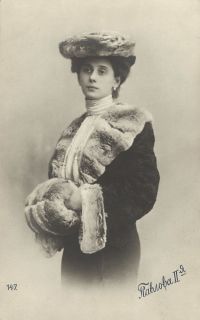
“ The seventeenth, eighteenth and nineteenth centuries, that have meant so much to the perfection of the opera, vocal and orchestra technique, gave nothing of any significance to choreography. The church that tolerated Bach, Paësiello, Haydn, Mozart and Beethoven, put an open ban upon everything that had any relation to the dance. The great musical classics of the past centuries have treated dance as an insignificant side issue, thereby putting a label of inferiority upon this loftiest of arts. All the dance music of the great classics sounds naïve and lacking in choreographic images. ”
Quotes about “choreography”
“ The future choreography does not necessarily need to be based upon syncopated rhythm only, but upon the various factors of the style, the method of expression and the spiritual issues.The physical and spiritual bases of every folk-art lie in the rural life. A folk-song or a folk-dance is and remains the product of idyllic village atmosphere. ”
“ All we need is to adapt it to the higher schools of choreography. What the Dalcroze schooling of to-day gives is insufficient for a stage art. But it is by far a more thorough elementary training than any ballet, naturalistic or individual school can give, as it makes a student feel the music in his body and soul before he expresses it in his plastic forms. Then again, there is a strict system, a method of gradual development246 of those essentials which lie at the bottom of every art dance. ”
“ Music, the soul of dancing in the modern sense, was lacking, and without this soul the art of plastic form is incomplete. Though the Russian reformers elevated11 dancing from a domestic amusement to a serious and lofty stage art, they did not succeed wholly in giving to it the foundation that it deserves among the other arts. All the past and living goddesses of choreography have not had the freedom, the phonetic means and dramatic threads to thrill their audiences as they would, if man had not distorted and hidden the natural meaning of the dance that inspired his barbaric ancestors. ”
“ The savages to-day dance most of their sexual dances to rhythmic recitation of certain words. Music is in every phase of evolution the only true essence of that which forms the subject of the dance.To the transformation of more or less primitive folk-dances into those of strictly religious character is due the principal idea of the modern ballet. In the Oriental temples dancing underwent a strange transformation. While dancing was made the basis of dramatic and symbolic ideas, yet this very fact became detrimental to the musical influence upon the choreography. ”
 Anna Harriette Leonowens,
The English Governess at the Siamese Court
Anna Harriette Leonowens,
The English Governess at the Siamese Court
“ The music swelling into a rapturous tumult preludes the choral climax, wherein the dancers, raising their delicate feet, and curving their arms and fingers in seemingly impossible flexures, sway like withes of willow, and agitate all the muscles of the body like the fluttering of leaves in a soft breeze. Their eyes glow as with an inner light; the soft brown complexion, the rosy lips half parted, the heaving bosom, and the waving arms, as they float round and round in wild eddies of dance, impart to them the aspect of fair young fiends. ”
Edward Baxter Perry, Descriptive Analyses of Piano Works
“ Every dance, the waltz included, is based upon and adapted to some particular dance movement. All its effects, whether of melody, harmony, rhythm, or embellishment, are carefully calculated by the composer to meet the requirements of this special movement, to conform to and express its general character and be governed by its usual rate of speed. Each of these dance movements embodies in itself some peculiar quality or characteristic, such as stately grace in the minuet, martial pomp in the polonaise, impetuous vivacity in the galop, which the music must indicate and supplement. ”
 Sol Hurok,
S. Hurok Presents; A Memoir of the Dance World
(1953)
Sol Hurok,
S. Hurok Presents; A Memoir of the Dance World
(1953)
“ There was an unconscionable confusion in the darkened opera house as the audience rattled down the aisles, chattering, greeting friends, and shattering the spell of the Prologue, disturbing those who had taken the trouble to arrive on time as much as they did the artists on the stage. My concern on this point is as much for the audience as for the dancers. A ballet, being a work of art, is conceived as an entity, from beginning to end, from the first notes of the overture, till the last one of the coda. ”
 Jane Ellen Harrison,
Ancient Art and Ritual
Jane Ellen Harrison,
Ancient Art and Ritual
“ We have noted that in ritual we have the beginning of a detachment from practical ends; we have watched the merely emotional dance develop from an undifferentiated chorus into a spectacle performed by actors and watched by spectators, a spectacle cut off, not only from real life, but also from ritual issues; a spectacle, in a word, that has become an end in itself. We have further seen that the choral dance is an undifferentiated whole which later divides out into three clearly articulate parts, the artist, the work of art, the spectator or art lover. ”
 Ned Wayburn,
The Art of Stage Dancing
Ned Wayburn,
The Art of Stage Dancing
“ Still others care nothing for the motion picture, and cannot be induced to witness a performance on the screen. But everyone—men and women, young or mature, can enjoy the beauty, harmony, and exhilaration of a well conceived and well executed dance. There is something in the nature of us all that responds immediately to the message that the dancer conveys. Perfection of form, grace of movement, harmony of action with appropriate music, all combine to make up a spectacle that thrills and inspires. ”
of Samosata Lucian, The Works of Lucian of Samosata…
“ Consider then the universality of this art: it sharpens the wits, it exercises the body, it delights the spectator, it instructs him in the history of bygone days, while eye and ear are held beneath the spell of flute and cymbal and of graceful dance. Would you revel in sweet song? Nowhere can you procure that enjoyment in greater variety and perfection. Would you listen to the clear melody of flute and pipe? Again the pantomime supplies you. ”
Jane Ellen Harrison,
Ancient Art and Ritual
“ We have in our modern theatre no chorus, and when, in the opera, something of the nature of a chorus appears in the ballet, it is a chorus that really dances to amuse and excite us in the intervals of operatic action; it is not a chorus of doddering and pottering old men, moralizing on an action in which they are too feeble to join. ”
 Wilhelm Max Wundt,
Elements of Folk Psychology
Wilhelm Max Wundt,
Elements of Folk Psychology
“ In the drama, whose origin was the mimetic dance, the rôle of women was taken by men.Closely connected with the dance is music, the preparatory stage of which is constituted by the participation [Pg 265] of the voice in the rhythm of the external movements of the body. These articulatory movements, which form a part of the mimicking activity of the face, supplement the dynamic rhythm of the dance with the melodic rise and fall of tones. The emotion which finds its outlet in the dance itself, then seeks a further enhancement through objective means. ”
J. E. Crawford Flitch, Modern dancing and dancers
“ Fragments of attitude, phrases of motion, are scattered prodigally up and down the world, awaiting the seeing eye and the understanding mind that can pluck these happy accidents, store them in the memory, and at the proper time build up out of them a new pattern of the dance. When the choregrapher of genius arrives, he will think in gestures, as the musician thinks in sound, and the painter in mass and colour. ”
Ned Wayburn,
The Art of Stage Dancing
“ Now you may think that you know just what Musical Comedy Dancing is, and perhaps you do, but the name of it hardly defines it so that it would be recognized for exactly what it is by one not thoroughly stage-wise. You see84 a pleasing ensemble or solo dance at some revue or musical show and, without seeking or desiring to classify this dance as this, that or the other kind, you are satisfied to realize in your inner consciousness that it is a pretty movement and well worth seeing. ”
Ned Wayburn,
The Art of Stage Dancing
“ Most of the artistic and financial successes of the stage today are built upon music and dancing. We find these two essential elements in opera, revue, musical comedy, pantomime and vaudeville, while the place of the dance in moving pictures may well be recognized. Should the old-time minstrel show come back, as it is certain to do, there will be added another name to the list of active entertainments that call for a union of music and dancing to insure their prosperity. ”
 P. G. Wodehouse,
The Little Warrior
P. G. Wodehouse,
The Little Warrior
“ On the second refrain four girls will come out and two boys. The girls will dance with the two men, the boys with the soubrette. So! On the encore, four more girls and two more boys. Third encore, solo-dance for specialty dancer, all on stage beating time by clapping their hands. On repeat, all sing refrain once more, and off-encore, the three principals and specialty dancer dance the dance with entire chorus. It is a great building number, you understand. It is enough to make the success of any musical play, but can I get a hearing? No! If I ask managers to listen to my music, they are busy! ”
 Gilbert Murray,
A History of Ancient Greek Literature
(1901)
Gilbert Murray,
A History of Ancient Greek Literature
(1901)
“ All that is needed is a place to dress in. A section of the round dancing-floor ('orchêstra') is cut off; a booth or 'skênê' is erected, and the front of it made presentable. Normally it becomes a palace with three doors for the actor-poet to go in and out of. Meantime the character of the dancing is somewhat altered, because there is no longer a ring to dance in; the old ring-dance or 'cyclic chorus' has turned into the 'square' chorus of tragedy. Of course, the choir can change costume too: Pratînas once had a choir representing Dymanian dancing girls. ”
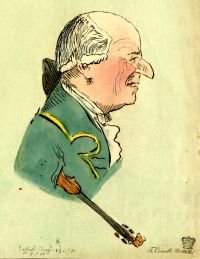 Giovanni-Andrea Gallini,
A Treatise on the Art of Dancing
Giovanni-Andrea Gallini,
A Treatise on the Art of Dancing
“ The composer, who must even have something of the poet in him; the musician, the painter, the mechanic, are essentially necessary to the contribution of their respective arts, towards the harmony and perfection of composition, in a fine dramatic dance; even the dresses are no inconsiderable part of 129 Q the entertainment. The costume, or in a more general term, propriety, should have the direction of them. It is not magnificence, that is the great point, but their being well assorted to character and circumstances. ”
Sol Hurok,
S. Hurok Presents; A Memoir of the Dance World
(1953)
“ Here were choreographers who strove to broaden the scope of their art and to bring into their works some of the richness of modern psychology and drama, always balletic in idiom, with freedom of style, who permitted their dramatic imaginations to guide them in creating movement and in the use of music. ”
 Eliza Ruhamah Scidmore,
Jinrikisha Days in Japan
(1891)
Eliza Ruhamah Scidmore,
Jinrikisha Days in Japan
(1891)
“ The sacred dance is solemn enough, and each dancer has a fan and a bunch of bells, from which hang long strips of bright-colored silks. They advance, retreat, glide to right and left, raise their fans, shake their sacred baby-rattles, and, with few changes in the measure, repeat the same figures and movements for a certain length of time. ”
Ned Wayburn,
The Art of Stage Dancing
“ In the popular stage entertainments of the day dancing forms an important feature of a large percentage of all productions that appear in the leading theatres. In many of the classical plays, by great dramatists, that are annually chosen for revivals, the dance appears, and the actor or actress who cannot dance misses many opportunities for profitable engagements. There has always been a kinship between the dance and the legitimate drama, and many prominent stars began their apprenticeship for the stage in the ranks of musical comedy or as vaudeville dancers. ”
Victor Oscar Freeburg, Pictorial Beauty on the Screen
“ Even in the elementary movement of a few leaps across the stage we see the delicate rhythm of a scarf which is at first retarded by the air, then follows the dancer gracefully, and at last gently overtakes her. ”
 Leonid Andreyev,
Savva and the Life of Man: Two plays by Leonid Andreyev
Leonid Andreyev,
Savva and the Life of Man: Two plays by Leonid Andreyev
“ The dance grows brisker, the movements sharper. Strange, whining notes mingle into the singing of the Old Women. An equally strange laugh passes around the circle of dancers, suppressed and quiet at first. ”
Albert A. Hopkins, Magic, Stage Illusions and Scientific Diversions…
“ FIG. 3.—AUTOMATIC DANSEUSE.The fifth figure shows that the fundamental osseous framework is made of hard wood, and the articulations formed of steel springs. When this wooden [172] skeleton is made to dance upon the stage, it has the attitude of an animated being; all of the articulations operate of themselves, with perfect suppleness. The covering of tow and dress materials give the external human form. Our last engraving shows the clown, who, at the rising of the curtain, recites the prologue. ”
Horace Greeley, Glances at Europe
“ I am, though no practitioner, a lover of the Dance. Restricted to proper hours and fit associates, I wish it were far more general than it is. Health, grace, muscular energy, even beauty, might be promoted by it. Why the dancing of the Theater should be rendered disgusting, I can not yet comprehend. ”
“ When these preparations [Pg 226] are completed, and the fire burns brightly, the performers are seen advancing in the guise of as many skeletons. This effect is produced by means of pipe clay, with which they paint broad white lines on their arms and legs, and on the head, while others of less breadth are drawn across the body, to correspond to the ribs. The music consists in beating time on their shields, and singing, and to it the movements of the dancers conform. It must not be supposed that this exhibition is a dance in our sense of the word. ”
Anonymous, The Dance (by An Antiquary)
“ Moreover, the naked foot should be of antique beauty, which in most of these cases it is not. Advertisements tell us that these dance are interpretations of classic music—Chopin, Weber, Brahms, etc.; they are not really interpretations, but distractions! We can hardly imagine that these composers intended their work for actual dancing. One can listen and be entranced; one sees the dancer's "interpretations" or "translations" and the music is degraded to a series of sham classic postures. ”
 Friedrich Schiller,
The Bride of Messina, and On the Use of the Chorus in Tragedy
Friedrich Schiller,
The Bride of Messina, and On the Use of the Chorus in Tragedy
“ As the chorus gives life to the language—so also it gives repose to the action; but it is that beautiful and lofty repose which is the characteristic of a true work of art. For the mind of the spectator ought to maintain its freedom through the most impassioned scenes; it should not be the mere prey of impressions, but calmly and severely detach itself from the emotions which it suffers. The commonplace objection made to the chorus, that it disturbs the illusion, and blunts the edge of the feelings, is what constitutes its highest recommendation ”
 Charles Burton Gulick,
The Harvard Classics Vol. 51
(1914)
Charles Burton Gulick,
The Harvard Classics Vol. 51
(1914)
“ The early composers of tragedy—for the author composed music, invented dance steps, and trained the chorus to sing—were content with one actor who by changing mask and costume in a neighboring booth (skênê) could take different rôles. The chorus leader was his interlocutor and bore the most difficult part, if we may judge from the plays of Æschylus. ”
Ned Wayburn,
The Art of Stage Dancing
“ Yet to accomplish the ballet effects or the character representations exacts of the dancer no special development along strictly ballet or classical lines, when she obtains her Musical Comedy training here, for these features are given the required attention as part of the regular course in fitting the student for this branch of the stage dancing art, and thus our Musical Comedy graduates are qualified for all the variations of effort that naturally come under that head. ”
 William Herman,
The Dance of Death
William Herman,
The Dance of Death
“ A score of forms whirl swiftly before us under the softened gaslight. I say a score of forms—but each is double—they would have made two score before the dancing began. Twenty floating visions—each male and female. Twenty women knit and growing to as many men, undulate, sway, and swirl giddily before us, keeping time with the delirious melody of piano, harp, and violin. ”
Ned Wayburn,
The Art of Stage Dancing
“ ONE OF OVER TWENTY DAILY DANCING CLASSES AT THE NED WAYBURN STUDIOS.In all probability, if you love dancing and aspire to make it a career, you possess an innate sense of rhythm. You feel the swing of music and love to move your body to the strains of a lilting melody. The first great possessions of the successful stage dancer are a love of harmonious sounds and a sense of rhythmic motion. If you haven't these, you might better abandon the idea of studying with me as far as any hope is concerned of my developing you into a stage artist. ”
