Maurice of Saxony

Definition and stakes

| override_editor Encyclopædia Britannica, Ninth Edition (1878)

His court became celebrated as the most extravagant and luxurious in Europe, and he himself as the most dissolute and magnificent of princes. His lavish expenditure, though it enriched his capital with treasures of art, impoverished both Poland and Saxony, and laid the foundations for the future misfortunes of those countries. He died, 1st February 1733, from mortification of an old wound. Of his numerous natural children, the most famous was the distinguished general, Maurice of Saxony.
Source: Wikisource

A. H. Johnson Europe in the Sixteenth Century…

Once deceived by Charles, he quickly learnt of him, and finally succeeded in outmanœuvring that master of diplomacy. To Maurice, at least, Protestantism owed its final recognition, and Germany her escape from the Spanish tyranny of Charles. Nor did the electorate of Saxony suffer under his hands. The country was well ruled, and education advanced. Nay, had Maurice lived longer or been succeeded by men of like calibre with himself, Saxony would probably not have seen herself eclipsed in the seventeenth and eighteenth centuries by her neighbours, the Hohenzollern Electors of Brandenburg.
Source: Gutenberg

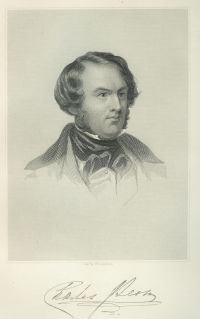
Portrait of Thomas Adolphus Trollope Thomas Adolphus Trollope A Decade of Italian Women, vol…

Among the various allies whom able Maurice of Saxony had induced to join him against the Emperor, was one Albert of Brandenburg, who, having been Grand Master of the Teutonic Order of Knights, then the rulers of a considerable portion of the country now called Prussia, was so deeply moved by the doctrines of Luther, that for conscience sake he was obliged to play false to his brother knights, and seize on their territory as an independent state for himself.
Source: Gutenberg

Get perspective with Kwize: daily news enlightened by great literature