“ In these sky cities the Moquis live a retired life that is well suited to their quiet dispositions, love of home life and tireless industry. The men are kind, the women virtuous and the children obedient. Indeed, the children are unusually well behaved. They seldom quarrel or cry, and a spoiled child cannot be found among them. The Moquis love peace, and never fight among themselves. ”
Moquis
Definition and stakes
The theme of “Moquis” has been addressed by authors such as J. A. Munk, John William De Forest, John Henry Goldfrap, Henry Gannett and Charles M. Skinner. It is often associated with terms like Mochuda, people, Moqui, king and river.
Quotes about “Moquis”
Charles M. Skinner, Myths and Legends of Our Own Land…
“ The Moquis have a legend that, long ago, when the principal mesa that they occupy was higher than it is now, and when they owned all the country from the mountains to the great river, giants came out of the west and troubled them, going so far as to dine on Moquis. It was hard to get away, for the monsters could see all over the country from the tops of the mesas. The king of the tribe offered the handsomest woman in his country and a thousand horses to any man who would deliver his people from these giants. ”
 Henry Gannett,
Encyclopædia Britannica, Ninth Edition
(1881)
Henry Gannett,
Encyclopædia Britannica, Ninth Edition
(1881)
“ The Moquis are a semi-civilized people living in seven towns on the plateau in northern Arizona. Our first accounts of them date from the expedition of Coronado in 1540. Their history is similar to that of the town-building Indians of New Mexico, except that after a successful revolt against the Spaniards, in 1680, they have remained independent. They are kind-hearted and hospitable, cultivate the soil, raising grain and vegetables, and possessing large flocks of sheep and goats. They weave very fine blankets, an art which they have taught several neighbouring tribes. ”
John William De Forest, Overland: A Novel
“ Coronado stopped, bowed, smiled, waited to see if Thurstane had finished, and then proceeded."Along the San Juan every hilltop is crowned with these monuments of antiquity. It is like the castled Rhine. Ruins looking in the faces of ruins. It is a tragedy in stone. It is like Niobe and her daughters. Moreover, if we take this route we shall pass the Moquis. The independent Moquis are a fragment of the ancient ruling race of New Mexico. They live in stone-built cities on lofty eminences. ”
“ It is said to be only one of fifty different methods which the Moquis have of preparing corn for the table, or about twice the number of styles known to any modern chef. The Moqui woman is favored above many of her sex who live in foreign lands. As a child she receives much attention and toys galore, as the parents are very fond of their children and devote much time to their amusement. They make dolls of their Katcinas which are given to the children to play with. ”
“ In 1583 Espejo estimated that the Moquis numbered fifty thousand, which, doubtless, was an over estimate, as he has been accused of exaggeration. However, since their discovery their numbers have greatly diminished and steadily continue to decrease, as if it were also to be their fate to become extinct like the ancient cliff dwellers. The Moqui Pueblos are well protected by natural barriers upon all sides except towards the south. Perched upon their high mesas the people have been safe from every attack of an enemy, but their fields and flocks in the valley below were defenseless. ”
John Henry Goldfrap, The Boy Scouts on the Range
“ Harkness having been reached, it was doubtful if the rancher would arrive in time. The old Indian recognized the symptoms of an approaching climax in the ceremonies, and what that climax was to be he guessed only too well. No white man had ever seen the snake dance of the Moquis and lived to tell of it, if his presence were known. That Jeffries Mayberry was to share the fate of many another unfortunate victim in the tribe's past history, was what Black Cloud feared. ”
Josiah Gregg, Gregg's Commerce of the Prairies…
“ The "seven Pueblos of Moqui" (as they are called) are a similar tribe living a few leagues beyond. They formerly acknowledged the government and religion of the Spaniards, but have long since rejected both, and live in a state of independence and paganism. Their dwellings, however, like those of Zuñi, are similar to those of the interior Pueblos, and they are equally industrious and agricultural, and still more ingenious in their manufacturing. The language of the Moquis or Moquinos is said to differ but little from that of the Navajoes.—Gregg. ”
John Henry Goldfrap, The Boy Scouts on the Range
“ With a wave of his hat, he dug his big blunt-rowelled spurs into his horse's sides and was off in a cloud of dust."I'd like to help that fellow get his Indians rounded up," said Rob; "he seems the right sort of a chap.""Yes, his name is well known around here," rejoined Harry, as the wagon moved onward once more. "He is the best Indian agent that the Moquis have ever had, my father says. He knows them, and can handle them at all ordinary times. ”
Henry Gannett,
Popular Science Monthly
(1880)
“ One by one their warriors fell; step by step they were driven southward, until at last, totally discouraged and disheartened, and with ranks terribly thinned, they abandoned the homes of their fathers, and wandered southward, some to build on almost inaccessible heights—the Moquis towns of the present day—some to wander to the site of Zuni, others to the Rio Grande, where their descendants are found to-day: but, as is so often the case with a people forcibly transplanted from their native soil, they have deteriorated from their former state of civilization. ”
Charles M. Skinner, Myths and Legends of Our Own Land…
“ When Noqoilpi, the gambling god, came on earth he strayed into this canon, and, finding the Moquis a prosperous people, he envied them and resolved to win their property. To do that he laid off a race-track at the bottom of the ravine and challenged them to meet him there in games of chance and strength and skill. They accepted his challenge, and, as he could turn luck to his own side, he soon won not their property alone, but their women and children, and, finally, some of the men themselves. ”
 Hubert Howe Bancroft,
The Native Races [of the Pacific states…
Hubert Howe Bancroft,
The Native Races [of the Pacific states…
“ Most of the Pueblo tribes call themselves the descendants of Montezuma; [II-40] the Moquis, however, have a quite different story of their origin. They believe in a great Father living where the sun rises; and in a great Mother, whose home is where the sun goes down. The Father is the father of evil, war, pestilence, and famine; but from the Mother are all joys, peace, plenty, and health. In the beginning of time the Mother produced from her western home nine races of men in the following primary forms: First, the Deer race ”
John Henry Goldfrap, The Boy Scouts on the Range
“ This sage advice had been jeered down by Diamond Snake's followers. The ancient lore of the tribe had been quoted, the spirits of their ancestors invoked, and Black Cloud denounced as a traitor to the traditions of the Moquis. A similar [Pg 251] situation has often prevailed in the counsels of the white men, who vaunt themselves so much the red man's superiors. It was simply the case of one leader bowing to the will of the populace, the other sternly stemming the tide, bidding defiance to the element which he knows stands for what is wrong and foolish. ”
 Henry T. Finck,
Primitive Love and Love-Stories
Henry T. Finck,
Primitive Love and Love-Stories
“ The ferocious Apaches make slaves of their women. (Bancroft, I., 512.) Among the Comanches "the women do all the menial work." The husband has the pleasant excitement of killing the game, while the women do the hard work even here: "they butcher and transport the meat, dress the skins, etc." "The females are abused and often beaten unmercifully." (Schoolcraft, I., 236, V., 684.) The Moquis squaws were exempt from field labor not from chivalrous feelings but because the men feared amorous intrigues. (Waitz, IV., 209.) ”
Hubert Howe Bancroft,
The Native Races [of the Pacific states…
“ Shipap, Acoti, Taos, Picuris, San Juan, Pojuaque, Santa Clara, San Ildefonso, Nambe, Tesuque, Cochite, Pecos, Santo Domingo, Cuyamanque, Silla, Jemez, San Felipe, Galisteo, Santa Ana, Zandia, Laguna, Acoma, Zuñi, Isleta, and Chilili. [791] The Moquis who speak a distinct language, and who have many customs peculiar to themselves, 528 inhabit seven villages, named Oraibe, Shumuthpa, Mushaiina, Ahlela, Gualpi, Siwinna, and Tegua. [792] By the Spanish conquest of New Mexico the natives were probably disturbed less than was usually the case with the vanquished race ”
Benjamin Franklin Bowen, America Discovered by the Welsh in 1170 A.D
“ Small appropriations have recently been made for them; and it is likely that much more will soon be learned about them,—their habits, industries, language, and strange history.Their seven cities stand upon very high, precipitous cliffs of sandstone, which, when seen in the distance, present such bold fronts that it appears out of the question for any one to think of climbing them. As the traveller approaches, however, he discovers narrow and circuitous paths, which must be passed over single file, up and up, till the summit is reached. On this giddy height is the home of the Moquis. Dr. ”
R. G. Latham, Opuscula: Essays chiefly Philological and Ethnographical
“ The Moqui, too, are they whose ethnological relations have been looked for in the direction of Mexico and the semi-civilized Indians of Central America. Large towns, regular streets, stone buildings, white skins, and European beards have all been attributed to these mysterious Moqui. They seem, however, to be simply Indians whose civilization is that of the Pueblo Indians of New Mexico. The same table that gives us the Uta and Navaho vocabularies, gives us a Moqui one also. ”
R. G. Latham, Opuscula: Essays chiefly Philological and Ethnographical
“ Now follows a population which has stimulated the attention and excited the wonder of ethnologists—the Moqui. The Moqui are they who, occupants of some of the more favoured parts of the country between the Gila and Colorado, have so often been contrasted with the ruder tribes around them—the Navaho and Uta in particular. ”
Life of St. Declan of Ardmore and Life of St…
“ Mochuda, with his following, next visited the cross already mentioned and here, turning to the king, he thus addressed him:—"Behold the heavens above you and the earth below." The king looked at them: then Mochuda continued:—"Heaven may you not possess and even from your earthly principality may you soon be driven and your brother whom you have reproached, because he would not lay hands on me, shall possess it instead of you, and in your lifetime. You shall be despised by all—so much so that in your brother's house they shall forget to supply you with food. ”
 Walter Hough,
The Moki snake dance
(1900)
Walter Hough,
The Moki snake dance
(1900)
“ High up above the plain, viewing from all sides an almost illimitable distance, basking in the brilliant sunshine from sunrise to sunset, bathed in the pure, life-giving air, the Mokis, or "good people," [2] as they delight to call themselves, must feel freedom in its truest sense. ”
Life of St. Declan of Ardmore and Life of St…
“ Alluding prophetically to the king's coming, previous to that event, Mochuda said, addressing the monks:—"Beloved brothers, get ready and gather your belongings, for violence and eviction are close at hand: the chieftains of this land are about to expel and banish you from your own home." Then the king, with his brothers and many of the chief men, arrived on the scene. They encamped near Rahen and the king sent his brother Diarmuid with some others to expel Mochuda and to put him out by force—which Diarmuid pledged his word he should do. ”
Captain James Carson, The Saddle Boys in the Grand Canyon…
“ Then all we've got to fear, Frank, is the work of Eugene and his crowd. Let us keep clear of that bad lot, and we're going to succeed. Any time, now, we may glimpse our old Moqui, returning with a message from the professor, if he sees fit to reply to your appeal. He may, though, be so set and stubborn that nothing will move him from his game of hiding. ”
Life of St. Declan of Ardmore and Life of St…
“ Mochuda enquired the name he was to impose, and the father answered—Fodhran. Having administered baptism Mochuda taking the infant's hand prophesied concerning the babe—"This hand will be strong in battle and will win hostages and submission of the Clan Torna whose country lies in mid-Kerry from Sliabh Luachra [Slieve Lougher] to the sea. From his seed, moreover, will spring kings to the end of time, unless indeed they refuse me due allegiance, and if, at any time, they incur displeasure of my successors their kingship and dominion will come to an end." ”
Life of St. Declan of Ardmore and Life of St…
“ Neither these wretched men themselves nor anyone of their nation shall be my coarb for ever, but my successors shall be of his race through whom God has rescued me. Moreover my city shall never be without men of the British race who will be butts and laughing-stocks and serve no useful purpose." The person who saved Mochuda was of the Ciarraighe race and it is of that same people that the coarbs and successors of Mochuda have commonly been ever since. ”
Various, The Mirror of Literature, Amusement…
“ Mocha, the coffee-drinker need not be told, is a place of some importance on the borders of the Red Sea, in that part of Arabia termed “Felix,” or “Happy.” “The town looks white and cheerful, the houses lofty, and have a square, solid appearance; the roadstead is almost open, being only protected by two narrow spits of sand—on one of which is a round castle, and the other an insignificant fort.” ”
 Frederick Albion Ober,
Young Folks' History of Mexico
(1895)
Frederick Albion Ober,
Young Folks' History of Mexico
(1895)
“ Moquihuix secretly assembled his soldiers, and, in order to infuse into them the highest degree of courage, made them drink of the blood of their enemies, washed from the filthy surface of the sacrificial stone. Then he and his officers made a solemn sacrifice on a mountain near the city, to gain the favor of their gods. It was all in vain, however, for the Mexicans prevailed over their neighbors and brethren, in the bloody battle that ensued, and Moquihuix was cast down from the tower of the temple, from which he was directing his troops, and slain. ”
 Thomas Love Peacock,
Headlong Hall
(1816)
Thomas Love Peacock,
Headlong Hall
(1816)
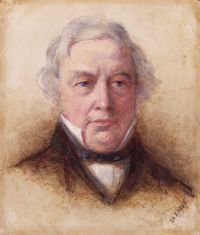
“ Comus and Momus were the deities of the night; and Bacchus of course was not forgotten by the male part of the assembly (with them, indeed, a ball was invariably a scene of "tipsy dance and jollity") : the servants flew about with wine and negus, and the little butler was indefatigable with his corkscrew, which is reported on one occasion to have grown so hot under the influence of perpetual friction, that it actually set fire to the cork. ”
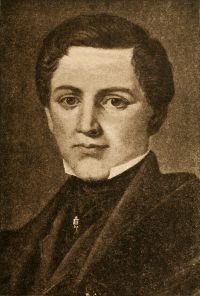
“ Your long ears and nose will remind you daily of little Mouk.’“As he spoke he wheeled round quickly upon his heel and at the third turn he wished himself far [Pg 86] away, and before the king had time to call for help Mouk had disappeared.“Since then the little man has lived here in our town, but he keeps himself aloof from his fellow-men, because he has learnt to despise mankind. Experience has made him a wise man, and his wisdom calls for your respect and admiration, even though his appearance may happen to be somewhat extraordinary.” ”
 James Bruce,
Travels to Discover the Source of the Nile…
James Bruce,
Travels to Discover the Source of the Nile…
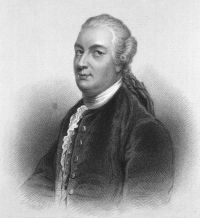
“ The 29th, about two o’clock in the morning, we passed six islands, called Jibbel el Ourèe; and having but indifferent wind, we anchored about nine off the point of the shoal, which lies immediately east of the north fort of Mocha.The town of Mocha makes an agreeable appearance from the sea. Behind it there is a grove of palm-trees, that do not seem to have the beauty of those in Egypt, probably owing to their being exposed to the violent south-westers that blow here, and make it very uneasy riding for vessels; there is, however, very seldom any damage done. ”
 Frank Hamilton Cushing,
Zuñi Folk Tales
Frank Hamilton Cushing,
Zuñi Folk Tales
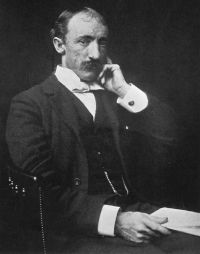
“ To our shame be it told that not many generations ago there lived in Moki a poor, ill-favored outcast of a young man, a not-to-be-thought-of-as-hero youth, yet nevertheless the hero of my story; for this youth, the last-mentioned in the numbering of the men of Moki in those days, alone brought great grief on the nation of Zuñi.And it happened that in Walpi, on the first mesa of the Mokis, there lived an amiable, charming, and surpassingly beautiful girl, whose face was shining, eyes bright, cheeks red like the frost-bite on the datila [12] ”
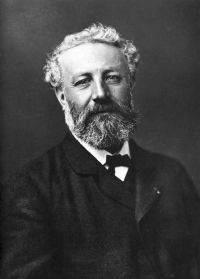 Jules Verne,
20,000 Leagues Under the Seas…
(1870)
Jules Verne,
20,000 Leagues Under the Seas…
(1870)
“ On February 8, as early as the first hours of daylight, Mocha appeared before us: a town now in ruins, whose walls would collapse at the mere sound of a cannon, and which shelters a few leafy date trees here and there. This once–important city used to contain six public marketplaces plus twenty–six mosques, and its walls, protected by fourteen forts, fashioned a three–kilometer girdle around it. ”
