“ Carlyle. “Then, sir, I beg your pardon a thousand times over. It occurred to me that you probably had not, Mr. Archibald; and I thought I would have said a word to prepare you, before you came upon it suddenly in the paper.” “To prepare me!” echoed Mr. Carlyle, as old Dill was turning away. “Why, what has come to you, Dill? Are you afraid my nerves are growing delicate, or that I shall faint over the loss of a hundred pounds? At the very most, we shall not suffer above that extent.” ”
Mr. Carlyle
Definition and stakes
The theme of “Mr. Carlyle” has been addressed by authors such as Ellen Wood, John Nichol, Hector Macpherson, Ernest Bramah and George Henry Calvert. It is often associated with terms like Thomas, John, hero, French and London.
Quotes about “Mr. Carlyle”
Various, Blackwood's Edinburgh Magazine…
“ In fine, turn which way you will, to philosophy, to politics, to religion, you find Mr Carlyle objecting, denouncing, scoffing, rending all to pieces in his bold, reckless, ironical, manner—but teaching nothing. The most docile pupil, when he opens his tablets to put down the precious sum of wisdom he has learned, pauses—finds his pencil motionless, and leaves his tablet still a blank. ”
“ Carlyle, suppressing all signs of incredulity. “I don’t know; a friend of Afy’s, he said. Archibald, he swore to it in the most solemn manner; and I believe, as truly as that I am now repeating it to you, that he was speaking the truth. I want you to see Richard, if possible; he is coming to the same place to-night. If he can tell his own tale to you, perhaps you may find out a way by which his innocence may be made manifest. You are so clever, you can do anything.” Mr. Carlyle smiled. “Not quite anything, Barbara. Was this the purport of Richard’s visit—to say this?” ”
Various, Blackwood's Edinburgh Magazine…
“ Could you bring Mr Carlyle into contact with a live Puritan, the charm would be instantly dispelled. If one of Harrison's troopers would but ask him to step aside with him, under a hedge, to wrestle for a blessing, or would kindly undertake to catechise him on some point of divinity,—on that notion of his, for instance, of "Right and Wrong bodying themselves into Hell and Heaven,"—the alliance would be dissolved, not, perhaps, without violent rupture.For ourselves, we sometimes think that Mr Carlyle is in earnest. Men should be honest. ”
“ Carlyle, for the love of life! I see you are alone. I’m dead beat, and I don’t know but I’m dodged also.” The tones struck familiarly on Mr. Carlyle’s ear. He drew back mechanically, a thousand perplexing sensations overwhelming him, and the man followed him into the room—a white man, as Lucy called her father. Aye, for he had been hours and hours on foot in the snow; his hat, his clothes, his eyebrows, his large whiskers, all were white. “Lock the door, sir,” were his first words. Need you be told that it was Richard Hare? ”
“ Carlyle, I am indeed. The police are after me, set on by that wretch Thorn.” Mr. Carlyle turned to the sideboard and poured out a wineglass of brandy. “Drink it, Richard, it will warm you.” “I’d rather have it in some hot water, sir.” “But how am I to get the hot water brought in? Drink this for now. Why, how you tremble.” “Ah, a few hours outside in the cold snow is enough to make the strongest man tremble, sir; and it lies so deep in places that you have to come along at a snail’s pace. ”
 Ellen Wood,
East Lynne — Chapter 29
(1861)
“ Carlyle could see little what the weather was, and he opened the window and stepped half out.The snow was falling faster and thicker than ever. Not at that did Mr. Carlyle start with surprise, if not with a more unpleasant sensation; but a feeling a man's hand touch his, and at finding a man's face nearly in contact with his own. ”
Hector Macpherson, Thomas Carlyle
“ In a word, there seemed no passivity about Mr Carlyle; he was the diamond, and the world was his pane of glass; he was a graving tool, rather than a thing graven upon—a man to set his mark on the world—a man on whom the world could not set its mark.... The proceedings began by the conferring of the degree of LL.D. on Mr Erskine of Linlathen—an old friend of Mr Carlyle's—on Professors Huxley, Tyndall, and Ramsay, and on Dr Rae, the Arctic explorer. ”
“ Vane dines out, my lord,” was the man’s immediate reply. “The carriage is at the door now.” “Very well. Mr. Carlyle remains.” At seven o’clock the dinner was announced, and the earl wheeled into the adjoining room. As he and Mr. Carlyle entered it at one door, some one else came in by the opposite one. Who—what—was it? Mr. Carlyle looked, not quite sure whether it was a human being—he almost thought it more like an angel. A light, graceful, girlish form; a face of surpassing beauty, beauty that is rarely seen, save from the imagination of a painter ”
Ellen Wood,
East Lynne — Chapter 22
(1861)
“ Carlyle's reply. "He is one who does not improve upon acquaintance.""To me it looks as though he had placed himself in our way to hear what we were saying.""No, no, Barbara. What interest could it bear for him?"Barbara did not contest the point; she turned to the one nearer at heart. "What must be our course with regard to Thorn?""It is more than I can tell you," replied Mr. Carlyle. "I cannot go up to the man and unceremoniously accuse him of being Hallijohn's murderer." ”
 Ernest Bramah,
Four Max Carrados Detective Stories
“ Carlyle practically."I bow to the decree of fate," replied Drishna. "And it is fitting to the universal irony of existence that a blind man should be the instrument. I don't imagine, Mr. Carlyle," he added maliciously, "that you, with your eyes, would ever have brought that result about.""You are a very cold-blooded young scoundrel, sir!" retorted Mr. Carlyle. "Good heavens! do you realize that you are responsible for the death of scores of innocent men and women?" ”
“ Carlyle hesitated, and looked down at his dress—a plain, gentlemanly, morning attire, but certainly not a dinner costume for a peer’s table. “Oh, that’s nothing,” said the earl; “we shall be quite alone, except my daughter. Mrs. Vane, of Castle Marling, is staying with us. She came up to present my child at the last drawing-room, but I think I heard something about her dining out to-day. If not, we will have it by ourselves here. Oblige me by touching the bell, Mr. Carlyle.” ”
“ Carlyle. “If so, I must send to the bank. Dill never keeps much money in the house when I’m away.” “Not until evening. Can you manage to see Richard?” “It is hazardous,” mused Mr. Carlyle; “for him, I mean. Still, if he is to be in the grove to-night, I may as well be there also. What disguise is he in?” “A farm laborer’s, the best he could adopt about here, with large black whiskers. He is stopping about three miles off, he said, in some obscure hiding-place. And now,” continued Barbara, “I want you to advise me; had I better inform mamma that Richard is here, or not?” ”
 Thomas Wentworth Higginson,
Henry Wadsworth Longfellow
“ Carlyle have more genuine worth and talent than half of the nobility in London. Mr. Carlyle’s literary fame is very high, and she is a very talented woman—but they are people after my own heart—not the least pretension about them. Mrs. Carlyle has a pin with Goethe’s head upon it, which that great author sent her himself. She is very proud of it I assure you. They live very retired, not wishing to mix with fashionable society, which they regard in its true light; still they have some friends among the nobility who know how to value them. Stockholm, August 5, 1835. ”
Thomas Carlyle, The Correspondence of Thomas Carlyle and Ralph Waldo Emerson…
“ CLIV. Emerson to CarlyleConcord, 11 March, 1854My Dear Carlyle,—The sight of Mr. Samuel Laurence, the day before yesterday, in New York, and of your head among his sketches, set me on thinking which had some pain where should be only cheer. For Mr. Laurence I hailed his arrival, on every account. I wish to see a good man whom you prize; and I like to have good Englishmen come to America, which, of all countries, after their own, has the best claim to them. He promises to come and see me, and has begun most propitiously in New York. ”
 George Henry Calvert,
Essays Æsthetical
“ His mind is biographical, not historical; stronger in details than in generalization; more intuitive than scientific; critical, not constructive; literary, not philosophical. Mr. Carlyle is great at a picture, very great; he can fail in a survey or an induction. Wealth of thought, strokes of tenderness, clean insight into life, satire, irony, humor, make his least successful volumes to teem with passages noteworthy, beautiful, wise, as do his “Cromwell” and his “Frederick.” Such giants carrying nations on their broad fronts, Mr. ”
Thomas Carlyle, On the Choice of Books
“ Time brings men into the most unexpected relationships. When the Principal was plain Mr. Brewster, editor of the Edinburgh Cyclopædia, little dreaming that he should ever be Knight of Hanover and head of the Northern Metropolitan University, Mr. Carlyle—just as little dreaming that he should be the foremost man of letters of his day and Lord Rector of the same University—was his contributor, writing for said Cyclopædia biographies of Montesquieu and other notables. ”
“ We went up to Beauchamp’s for a stroll, but found them all out, and I’m awful thirsty. Captain Thorn, Carlyle.” Mr. Carlyle invited them to his house and ordered in refreshments. Young Herbert coolly threw himself into an arm-chair and lit a cigar. “Come, Thorn,” cried he, “here’s a weed for you.” Captain Thorn glanced toward Mr. Carlyle; he appeared of a far more gentlemanly nature than Tom Herbert. “You’ll have one too, Carlyle,” said Herbert, holding out his cigar-case. “Oh, I forgot—you are a muff; don’t smoke one twice a year. I say how’s Lady Isabel?” ”
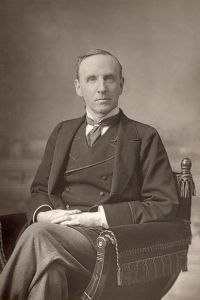 John Morley,
Critical Miscellanies, Vol. 1, Essay 2…
“ There are many able and honest and republican men who in their hearts suspect that the latter of the two alternatives is the more correct description of what has happened. Mr. Carlyle is as one who does not hear the question. He draws its general moral lesson from the French Revolution, and with clangorous note warns all whom it concerns, from king to churl, that imposture must come to an end. ”
Ellen Wood,
East Lynne — Chapter 32
(1861)
“ Carlyle, giving way to some excitement. "Of all men living, of all husbands, Mr. Carlyle least deserved such a requital. You will say so when you come to know. And the affair altogether was a mystery; for it never was observed or suspected by any one that Lady Isabel entertained a liking for another. ”
Ellen Wood,
East Lynne — Chapter 23
(1861)
“ Carlyle. "I know more than one who would be glad to get Barbara, in spite of the murder. Do not depreciate Miss Hare.""Not I, indeed; I like the young lady too well," replied Captain Thorn. "The girl, Afy, has never been heard of since, has she?""Never," said Mr. Carlyle. "Do you know her well?" ”
“ Captain Thorn observed. “I am half an hour beyond the time you mentioned, but the Herberts had two or three friends at dinner, and I could not get away. I hope, Mr. Carlyle, you have not come to your office to-night purposely for me.” “Business must be attended to,” somewhat evasively answered Mr. Carlyle; “I have been out myself nearly all day. We received a communication from London this morning, relative to your affair, and I am sorry to say anything but satisfactory. They will not wait.” “But I am not liable, Mr. Carlyle, not liable in justice.” ”
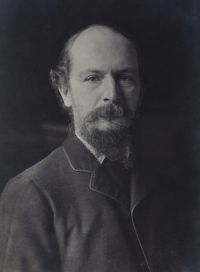 Algernon Charles Swinburne,
Under the Microscope — Under the Microscope
(1899)
“ It is long since Mr. Carlyle expressed his opinion that if any poet or other literary creature could really be "killed off by one critique" or many, the sooner he was so despatched the better; a sentiment in which I for one humbly but heartily concur. ”
John Morley,
Critical Miscellanies, Vol. 1, Essay 2…
“ His presentation of Puritanism and the Commonwealth and Oliver Cromwell first made the most elevating period of the national history in any way really intelligible. The Life of Frederick the Second, whatever judgment we may pass upon its morality, or even upon its place as a work of historic art, is a model of laborious and exhaustive narration of facts not before accessible to the reader of history. For all this, and for much other work eminently useful and meritorious even from the mechanical point of view, Mr. Carlyle deserves the warmest recognition. ”
“ The Herberts, too, are friends of yours, and they have not disdained to give me room amidst their family.” “True,” returned Mr. Carlyle, feeling that he could not well object further; and also that all men should be deemed innocent until proved guilty. “At any rate, I will advise you what must be done at present,” he added, “though if the affair is one that must go on, I do not promise that I can continue to act for you. I am very busy just now.” Captain Thorn explained his dilemma, and Mr. Carlyle told him what to do in it. “Were you not at West Lynne some ten years ago?” ”
Various, Blackwood's Edinburgh Magazine…
“ Observers of a curious and speculative turn might, perhaps, explain it thus:—Mr Carlyle is evidently a writer of strong religious feelings. Marry, when he would exhibit them to the world, he is under the necessity of borrowing a creed from some one else. His own philosophy has nothing palpable enough for ordinary vision ”
John Morley,
Critical Miscellanies, Vol. 1, Essay 2…
“ No tenable theory about free will or necessity, no theory of praise and blame that will bear positive tests, lays us under any obligation to spare either the comfort or the life of a man who indulges in certain anti-social kinds of conduct. Mr. Carlyle has done much to wear this just and austere view into the minds of his generation, and in so far he has performed an excellent service.The second set of relations in which the pathological element still so largely predominates are those between nations. Separate and independent communities are still in a state of nature. ”
Thomas Carlyle, The Correspondence of Thomas Carlyle and Ralph Waldo Emerson…
“ CXXXIX. Emerson to CarlyleBoston, 28 January, 1849My Dear Carlyle,—Here in Boston for the day, though in no fit place for writing, you shall have, since the steamer goes tomorrow, a hasty answer to at least one of your questions....You tell me heavy news of your friends, and of those who were friendly to me for your sake. And I have found farther particulars concerning them in the newspapers. Buller I have known by name ever since he was in America with Lord Durham, and I well remember his face and figure at Mr. Baring's. Even England cannot spare an accomplished man. ”
“ And she now more frequently called him “Mr. Carlyle” than “Archibald.” “Take a seat—take a seat, Barbara.” “I asked for Miss Carlyle,” she continued, “for mamma is in want of a pattern that she promised to lend her. You remember the Lieutenant Thorn whom Richard spoke of as being the real criminal?” “Yes.” “I think he is at West Lynne.” Mr. Carlyle was aroused to eager interest. “He! The same Thorn?” “It can be no other. Mamma and I were shopping to-day, and I went out for her bag, which she left in the carriage. ”
Various, The Atlantic Monthly, Volume 13…
“ Carlyle, with a poetic profundity of nature and a force of insight which entitle him not merely to a high place among the men of our time, but to a name among the men of all time, standing face to face with the divine reality and wonder of existence, conversing with the heights and depths of being, and appreciating the significance of personality, as Mr. Mill never can, will accompany our epoch into its future farther than one can foresee, but to its present must render a mixed and imperfect service ”
Thomas Carlyle, Life of Robert Burns
“ After a few years spent at the ordinary parish school, Thomas was sent, in his thirteenth or fourteenth year, to the grammar school of the neighboring town of Annan; and here it was that he first became acquainted with a man destined, like himself, to a career of great celebrity. “The first time I saw Edward Irving,” writes Mr. Carlyle in 1835, “was six-and-twenty years ago, in his native town, Annan. He was fresh from Edinburgh, with college prizes, high character, and promise: he had come to see our school-master, who had also been his. ”