“ The people of Northern Germany, therefore, though radically differing from them in most other respects, partake more of the general bodily features of Anglo-Saxon nations than those of the South of Germany, who are positively opposed to them. ”
Northern Germany
Definition and stakes
The theme of “Northern Germany” has been addressed by authors such as Price Collier, A. J. Schem, Armgaard Karl Graves, Louis Nizer and James W. Gerard. It is often associated with terms like Prussia, Rhine, France, Denmark and Austria.
Quotes about “Northern Germany”
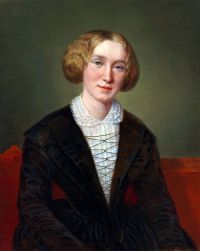 George Eliot,
The Essays of "George Eliot"
“ While the northern plains are marked off into great divisions, by such rivers as the Lower Rhine, the Weser, and the Oder, running almost in parallel lines, this central region is cut up like a mosaic by the capricious lines of valleys and rivers. Here is the region in which you find those famous roofs from which the rain-water runs toward two different seas, and the mountain-tops from which you may look into eight or ten German states. The abundance of water-power and the presence of extensive coal-mines allow of a very diversified industrial development in Middle Germany. ”
 Leon Dominian,
The Frontiers of Language and Nationality in Europe
“ The Danish tongue of land which divides Germany’s northern sea boundary into two separate regions contains in its eastern and northern coasts the very advantages which Germany cannot find on its northern frontier. ”
James W. Gerard, My Four Years in Germany
“ The heart of modern Germany is the great north central plain which comprises practically all of the original kingdom of Prussia, stretching northward from the Saxon and Hartz mountains to the North and Baltic seas. It is from this dreary and infertile plain that for many centuries conquering military races have poured over Europe. The climate is not so cold in winter as that of the northern part of the United States. There is much rain and the winter skies are so dark that the absence of the sun must have some effect upon the character of the people. ”
John M. Tyler, The New Stone Age in Northern Europe
“ They extend northward toward and along the Rhine valley. The close of the period is marked by the southward spread of peoples from northern Germany crowding back the farmers characterized by the banded pottery. This movement is augmented somewhat, perhaps very little, by recruits from the megalithic zone of northwestern Europe and Denmark. All these people are closing in on central or middle western Europe. In the Rhine valley along the middle of the course of the river we find a region of mingling or overlapping cultures which have not yet been satisfactorily disentangled. ”
 Madison Grant,
The passing of the great race; or…
(1916)
“ The Nordic realm includes nearly all the northern third of France with extensions into the fertile southwest; all the rich lowlands of Flanders; all Holland; the northern half of Germany with extensions up the Rhine and down the Danube; and the north of Poland and of Russia. Recent calculations indicate that there are about 90,000,000 of purely Nordic physical type in Europe out of a total population of 420,000,000.Throughout southern Europe a Nordic nobility of Teutonic type everywhere forms the old aristocratic and military classes or what now remains of them. ”
Philip Ashworth, Philip Lake and Charles Atkinson, 1911 Encyclopædia Britannica (1911)
“ The greater number of the more recent emigrants was from the agricultural provinces of northern Germany—West Prussia, Posen, Pomerania, Mecklenburg, Schleswig-Holstein and Hanover, and sometimes the emigration reached 1% of the total population of these provinces. ”
 James Harvey Robinson,
An Introduction to the History of Western Europe
“ In the middle of the tenth century the northern and eastern boundaries of Germany were as yet very ill defined. The Slavic peoples across the Elbe, many of whom were still pagans, were engaged in continual attacks upon the borders of Saxony. Otto I did more than fight these tribes; he established dioceses, such as Brandenburg, Havelberg, etc., in a district which is now the political center of the German empire, and greatly forwarded the Christianizing and colonization of the tract between the Elbe and the Oder. ”
Price Collier, Germany and the Germans from an American Point of View
“ These men trained to solitude in small bands, owing to the geographical exigencies of their northern country, become the founders of the particularist or individualistic nations, Great Britain and the United States among others. Those who had gone south, driven by pressure from behind, follow the Danube to the north and west, find the Rhine, and push on into what is now southwestern Europe. ”
Stepan Rudnytskyi, Ukraine, the land and its people (1918)
“ Among historians and anthropogeographers it is a much used commonplace that the northern peoples always appear as conquerors who subjugate the southern peoples, and that they are always the founders of states in their particular climatic zones. The Germans overthrew the Roman Empire, the Northern Frenchmen founded the French state, the Northern Spaniards the Spanish, the Northern Italians, the Italian state, and the North Germans united Germany. It is natural, therefore, that this commonplace should be applied also in Eastern Europe. ”
Frederik Winkel Horn, History of the Literature of the Scandinavian North (1884)
“ Christianity came by way of Germany, and so did the Reformation, the Renaissance, the enlightenment of the eighteenth century, etc., in short, for every material intellectual advancement, the North is indebted to Germany, since the impulse to every movement of great importance in the northern lands came from that country. ”
John M. Tyler, The New Stone Age in Northern Europe
“ Italy was always far in advance of Europe north of the Alps. But even in northern Europe there was great diversity. Shell-heap dwellers still remained long after a much higher culture prevailed throughout most of Denmark. The life and thought of the pioneer hunters of northern [Pg 62] Germany, and still more of northern Russia, were very different from those of the agriculturists along the valley of the Danube and in the Balkan Peninsula. In Greece little city-states began to arise early. Even in northern Europe density of population and size of settlements varied greatly. ”
John M. Tyler, The New Stone Age in Northern Europe
“ The custom of fortifying villages evidently spread rapidly during the Bronze and Iron periods. Sophus Müller tells us that all walled settlements north of the Alps are far younger than the Neolithic period.46 This statement, often disputed or neglected, is probably an exaggeration, but may well be true of the region surrounding the Baltic. The sparse and scattered hunting and pioneer population of Scandinavia and Germany had no need of building permanent walls around their single houses or small villages. They had very little wealth to protect. ”
A. J. Schem, The American Cyclopædia (1879)
“ Further N. the Ardennes send into Rhenish Prussia the ridge of the Eifel (2,500 ft.) and the Hohe Venn. Northeastern offshoots of the Jura cross the southern frontier of Alsace. 3. The great plain of northern Germany extends over the entire breadth of the country N. of a line drawn from the Holland frontier to Osnabrück and Minden, thence E. S. E. to Leipsic, thence S. by E. to a point where the head waters of the Oder and Vistula approach one another. ”
Newell Dwight Hillis, The Blot on the Kaiser's 'Scutcheon
“ The first step to be taken and the first goal to be reached concerned, of course, the English Channel, the Dutch cities on the mouth of the Rhine, and the iron mines of Northern France. We know to an absolute certainty all the details of this plan.For more than thirty years Germany had been organizing her army; she knew every road, inn, bridge, factory, shop, and wholesale store in Denmark and Holland, Belgium and France. ”
Louis Nizer, What To Do With Germany (1944)
“ Most of the Nordics are found in Germany but there are also many in the other lands of Northern Europe, such as Scotland, Sweden and Norway. Nordics are outstanding in truthfulness and energy; action, not talk, is the Nordic motto, and hence they are predisposed to leadership by nature. ”
Madison Grant,
The Conquest of a Continent; or…
“ Lithuania and North Poland are also Nordic lands, as are the German provinces along the Baltic; but South Poland and Galicia are Alpine, as are the majority of the immigrants who come from South Germany. Those from the provinces of the former Austrian Empire are mostly Alpine, although a few Nordics came from the Tyrol. ”
William Duthie, A Tramp's Wallet
“ The bleak, icy winter of North Germany is past. We have trodden its accumulated snows as they lay in crisp heaps in the streets of Hamburg; and have watched the muffled crowd upon the frozen Alster, darting and reeling, skating, sliding, and sleighing upon its opaque and motionless surface. We have alternately loved and execrated the massive German oven, which warmed us indeed, but never showed us a cheerful face. ”
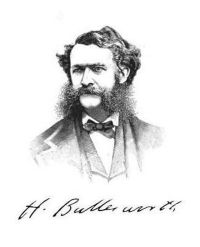 Hezekiah Butterworth,
Zigzag Journeys in Northern Lands…
“ The tales and traditions of the Rhine would give us a large knowledge of German history, and, in fact, of the great empire of Europe, over which Charlemagne ruled, and which now is divided into the kingdoms of Northern Europe. The stories of haunted castles, spectres, water nymphs, sylvan deities, and fairies, if shapes of fancy, are full of instruction, and I know of no subject so likely to prove intensely interesting as the Rhine and the Baltic ”
 Armgaard Karl Graves,
The Secrets of the German War Office
“ The most virile and aggressive power in the center of Europe is Germany proper--this term of Germany, including the whole of the Teutonic races, such as the German-speaking portion of Austria, Hungary (for your true Hungarian is a keen admirer of strength and force) , Holland, Switzerland and in all probability the Norsemen and Viking branches of the Teutonic clan, meaning Sweden, Norway and Denmark. Social and commercial aims and aspirations in Sweden, Norway and Denmark, independent as they are and probably always will be, still show a decided trend to Central Germanic cohesion. ”
Violet R. Markham, Watching on the Rhine (1921)
“ A mile or more below the Hohenzollern bridge, where four kings of Prussia on their bronze horses survey a world fashioned now on other lines than those contemplated by Prussian arrogance, the Rhine flows along a ribbon of green strand which serves as a recreation ground for the children of the district. Here on a summer evening we sometimes walk and watch young Germany at play: children of all ages bathing, paddling, shouting, laughing, amusing themselves in a hundred different ways, while their parents sit in little groups, the women sewing or knitting, the men with their pipes. ”
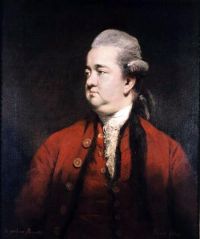 Edward Gibbon,
History of the Decline and Fall of the Roman Empire…
“ Almost the whole of modern Germany, Denmark, Norway, Sweden, Finland, Livonia, Prussia, and the greater part of Poland, were peopled by the various tribes of one great nation, whose complexion, manners, and language denoted a common origin, and preserved a striking resemblance. On the west, ancient Germany was divided by the Rhine from the Gallic, and on the south, by the Danube, from the Illyrian, provinces of the empire. A ridge of hills, rising from the Danube, and called the Carpathian Mountains, covered Germany on the side of Dacia or Hungary. ”
Madison Grant,
The passing of the great race; or…
(1916)
“ Although as a result of the Thirty Years’ War the German Empire is far less Nordic than in the Middle Ages, the north and northwest of Germany are still Teutonic throughout and in the east and south the Alpines have been thoroughly Germanized with an aristocracy and upper class very largely of pure Teutonic blood. ”
 Elizabeth A. Sharp,
William Sharp (Fiona Macleod): A Memoir Compiled by His Wife Elizabeth A. Sharp
“ He wrote to a friend: “The real charm of the Rhine, beyond the fascination that all rivers and riverine scenery have for most people, is that of literary and historical romance. The Rhine is in this respect the Nile of Europe: though probably none but Germans feel thus strongly. For myself I cannot but think it ought not [170] to be a wholly German river, but from every point of view be the Franco-German boundary.... Germany has much to gain from a true communion with its more charming neighbour. ”
 F. Max Müller,
Chips from a German Workshop, Volume 3
“ I shall curse them both if they prevent you from tearing yourself away from the Donnish atmosphere and bachelor life of Oxford, and from throwing yourself into the fresh mental atmosphere of Germany and of German mind and life. You must take other journeys besides lake excursions and Highland courses. Why don't you go to Switzerland, with an excursion (by Berlin) to Breslau, to the German Oriental Congress? There is nothing like the German spirit, in spite of all its one-sidedness. ”
 Ellen Churchill Semple,
Influences of Geographic Environment
“ The rule is that the growing people slowly but continually overflow their political boundary, which then advances to cover the successive flood plains of the national inundation, or yet farther to anticipate the next rise. This has been the history of Germany in its progress eastward across the Elbe, the Oder, the Vistula and the Niemen. The dream of a greater empire embraces all the German-speaking people from Switzerland, Tyrol and Steiermark to those outlying groups in the Baltic provinces of Russia and the related offshoot in Holland.314 [See map page 223.] ”
 Edward A. Freeman,
The Historical Geography of Europe…
“ Colonists were brought, specially from the Frisian lands, by whose means the Low-Dutch tongue was spread along the whole southern coast of the Baltic. German cities were founded. The marchlands grew into powerful German states. At last one of these marchlands, united with a German conquest still further cut off from the heart of the old German realm, has grown into a state which in our own days has become the Imperial power of Germany.♦Internal geography of Germany.♦The internal geography of the German kingdom is the greatest difficulty of such a work as the present. ”
 Gustav Freytag,
Pictures of German Life in the XVth…
“ In the great cities of Switzerland, the Low Countries, and the seaports of the German Hanse Towns, there was a peculiar development of the patrician order; but it was the patrician families of the great commercial cities of South Germany, and amongst these more especially those of Nuremberg, Augsburg, Ulm, Frankfort on the Maine, and Cologne, that exercised the greatest influence on the luxury, industry, and learning of Germany. ”
T. F. Tout, The Empire and the Papacy, 918-1273
“ The Expansion of Germany in the North and East. The extension of German influence over the North and East showed that the spirit of the great Saxon and Frankish Emperors continued to inspire the Germans of the thirteenth century. The triumph of St. Engelbert over Valdemar of Denmark had restored German hegemony over the Baltic lands. From it followed the commercial supremacy of Lübeck, the domination of the Margraves of Brandenburg over the Slavonic Dukes of Pomerania, and the extension of German influence beyond the Oder. ”
Price Collier, Germany and the Germans from an American Point of View
“ France, Germany, England, Spain, Holland, Belgium, Italy, too, grew out of these German tribes, who poured down from the territory roughly included between the Rhine, the North Sea, the Oder, and the Danube.As we know these countries to-day, the definite thing about them is their difference. You cross the channel in fifty minutes from Dover to Calais, you cross the Rhine in five minutes, and the peoples seem thousands of miles apart. ”
 Franz Boas,
Race and Nationality
(1915)
“ This process has led to the present distribution of languages, which expresses a fossilization of German colonization in the east, and illustrates in a most striking way the penetration of peoples. Poland and part of Russia, Slavonic and Magyar territories, are interspersed with small German settlements, which are the more sparse and scattered the farther east they are located, the more continuous the nearer they lie to Germany. ”
Madison Grant,
The Conquest of a Continent; or…
“ In a few cases of still unmixed peoples, like those of Sweden and Norway, nationality, language, religion, and race coincide. But in Germany, for instance, the Germans along the North Sea and the Baltic coasts are Protestant Nordics, while those of Bavaria, of Austria, and of other parts of the south are Catholic Alpines. Italy north of the Apennines is largely Alpine, slightly mixed with Nordic, while Naples and Sicily in the South are purely Mediterranean by race. ”
Madison Grant,
The passing of the great race; or…
(1916)
“ In the Balkans and eastern Europe, however, two large centres of green, north and south of the Danube respectively, represent the expanding power of the Slavic-speaking Alpines. The pink area of the continental Nordics is everywhere fading and is on the point of vanishing as a distinctive type and of merging in the red. The expansion of the Teutonic Nordics from Scandinavia and from the north of Germany is now at its maximum and they are everywhere pressing through the Empire of Rome and laying the foundations of the modern nations of Europe. ”
Related terms
Authors who wrote about “Northern Germany”
Price CollierA. J. SchemArmgaard Karl GravesLouis NizerJames W. Gerard Neville ChamberlainVariousViolet R. Markham
 Adolf HitlerPhilip Ashworth, Philip Lake and Charles AtkinsonNewell Dwight HillisKelly Miller
 Bayard Taylorw:Allied and Associated Powers
 Friedrich SchillerGustav Freytag
 Tomáš Garrigue MasarykJames Harvey RobinsonJ. N. LarnedWilliam Duthie
Armgaard Karl GravesLouis NizerJames W. GerardNeville ChamberlainVariousViolet R. MarkhamAdolf HitlerPhilip Ashworth, Philip Lake and Charles AtkinsonNewell Dwight HillisKelly MillerBayard Taylorw:Allied and Associated PowersFriedrich SchillerGustav FreytagTomáš Garrigue MasarykJames Harvey RobinsonJ. N. LarnedWilliam Duthie