
“ Why, a scamp, brother, raised above his proper place, who takes every opportunity of giving himself fine airs. About a week ago, my people and myself camped on a green by a plantation in the neighbourhood of a great house. In the evening we were making merry, the girls were dancing, while Piramus was playing on the fiddle a tune of his own composing, to which he has given his own name, Piramus of Rome, and which is much celebrated amongst our people, and from which I have been told that one of the grand gorgio composers, who once heard it, has taken several hints. ”
Piramus
Definition and stakes
The theme of “Piramus” has been addressed by authors such as George Borrow, Lincolnshire rector of Ruckland George Hall and John Gower. It is often associated with terms like Thisbe, Epirus, Pyrrhus, Priam and Pyramus.
Quotes about “Piramus”
John Gower, The complete works of John Gower…
“ From this thou mayest learn, my son; for thou hast said that thy will is thy master, and hence thou hast Contek in thine heart, and this, since love is blind, may even breed Homicide. (1201-1330.) Pyramus and Thisbe. In the city of Semiramis there dwelt two lords in neighbouring houses, and the one had a son named Piramus, and the other a daughter, Tisbee. These loved each other, and when two are of one accord in love, no man can hinder their purpose. ”
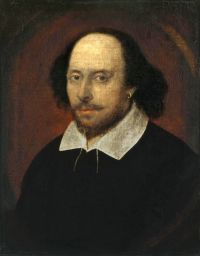 William Shakespeare,
A Midsummer-Night’s Dream — act iii…
(1914)
William Shakespeare,
A Midsummer-Night’s Dream — act iii…
(1914)
“ I'll meet thee, Pyramus, at Ninny’s tomb. Quince. ‘Ninus’ tomb,’ man: why, you must not speak that yet; that you answer to Pyramus: you speak all your part at once, cues and all. Pyramus enter: your cue is past; it is, ‘never tire.’ Flute. O,—As true as truest horse, that yet would never tire. Re-enter Puck, and Bottom with an ass’s head. Bottom. If I were fair, Thisby, I were only thine. Quince. O monstrous! O strange! we are haunted. Pray, masters! fly, masters! Help! ”
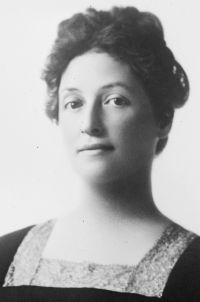 Josephine Preston Peabody,
Old Greek Folk Stories Told Anew
Josephine Preston Peabody,
Old Greek Folk Stories Told Anew
“ Here, again and again, Pyramus on his side of the wall and Thisbe on hers, they would meet to tell each other all that had happened during the day, and to complain of their cruel parents. At length they decided that they would endure it no longer, but that they would leave their homes and be married, come what might. They planned to meet, on a certain evening, by a mulberry-tree near the tomb of King Ninus, outside the city gates. Once safely met, they were resolved to brave fortune together. ”
William Shakespeare,
The Works of William Shakespeare…
“ There are things in this comedy of Pyramus and Thisby that will never please. First, Pyramus must draw 010 a sword to kill himself; which the ladies cannot abide. How answer you that? 012 Snout. By’r lakin, a parlous fear.Star. I believe we must leave the killing out, when all is done. 015 Bot. Not a whit: I have a device to make all well. Write me a prologue; and let the prologue seem to say, we will do no harm with our swords, and that Pyramus is not 018 killed indeed; and, for the more better assurance, tell them that I Pyramus am not Pyramus, but Bottom the weaver: ”
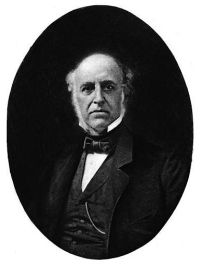 Thomas Bulfinch,
The Age of Fable: — III. Apollo and Daphne…
(1855)
Thomas Bulfinch,
The Age of Fable: — III. Apollo and Daphne…
(1855)
“ At the name of Thisbe Pyramus opened his eyes, then closed them again. She saw her veil stained with blood and the scabbard empty of its sword. "Thy own hand has slain thee, and for my sake," she said. "I too can be brave for once, and my love is as strong as thine. I will follow thee in death, for I have been the cause; and death which alone could part us shall not prevent my joining thee. And ye, unhappy parents of us both, deny us not our united request. As love and death have joined us, let one tomb contain us. ”
Crosbie Garstin, The Owls' House
“ Herne joined a fair there would be no trouble with the Romanies, also he gave them reliable information from time to time. Captain Rudolph, the notorious Bath Road highwayman, owed his capture and subsequent hanging to Pyramus, as did also a score of lesser tobymen. Pyramus made no money out of footpads, so he threw them as a sop to Justice.The gentry Pyramus fawned on with the oily cunning of his race. Every man has a joint in his harness, magistrates no less. Pyramus made these little weaknesses of the great his special study. ”
Mary Macleod, The Shakespeare Story-Book
“ As each part was mentioned, and Quince began to apportion them out, Bottom’s voice was heard again and again, declaring how well he could perform each one. The play was to be “The Most Lamentable Comedy and Most Cruel Death of Pyramus and Thisby,” and Bottom was selected for Pyramus, the hero.“What is Pyramus—a lover or a tyrant?” he inquired.“A lover that kills himself most gallantly for love,” answered Quince. ”
Thomas Bulfinch,
The Age of Fable: — III. Apollo and Daphne…
(1855)
“ What will not love discover! It afforded a passage to the voice; and tender messages used to pass backward and forward through the gap. As they stood, Pyramus on this side, Thisbe on that, their breaths would mingle. "Cruel wall," they said, "why do you keep two lovers apart? But we will not be ungrateful. We owe you, we confess, the privilege of transmitting loving words to willing ears." ”
 Andrew Lang,
Tales of Troy and Greece
Andrew Lang,
Tales of Troy and Greece
“ There was a prophecy that Priam's wife would give birth to a burning torch, so, when Paris was born, Priam sent a servant to carry the baby into a wild wood on Mount Ida, and leave him to die or be eaten by wolves and wild cats. The servant left the child, but a shepherd found him, and brought him up as his own son. The boy became as beautiful, for a boy, as Helen was for a girl, and was the best runner, and hunter, and archer among the country people. He was loved by the beautiful Œnone, a nymph—that is, a kind of fairy—who dwelt in a cave among the woods of Ida. ”
Thomas Bulfinch,
The Age of Fable: — III. Apollo and Daphne…
(1855)
“ When she came to the spot and saw the changed color of the mulberries she doubted whether it was the same place. While she hesitated she saw the form of one struggling in the agonies of death. She started back, a shudder ran through her frame as a ripple on the face of the still water when a sudden breeze sweeps over it. But as soon as she recognized her lover, she screamed and beat her breast, embracing the lifeless body, pouring tears into its wounds, and imprinting kisses on the cold lips. "O Pyramus," she cried, "what has done this? Answer me, Pyramus; it is your own Thisbe that speaks. ”
1911 Encyclopædia Britannica, Volume 22… (1911)
“ For a few days Primus was virtually ruler of Rome, and the senate bestowed upon him the rank and insignia of a consul. But on the arrival of Licinius Mucianus he was not only obliged to surrender his authority, but was treated with such ignominy that he left Rome. Primus must have been alive during the reign of Domitian, since four epigrams of Martial are addressed to him. Tacitus describes him as brave in action, ready of speech, clever at bringing others into odium, powerful in times of civil war and rebellion, greedy, extravagant, in peace a bad citizen, in war an ally not to be despised. ”
“ On the other side of the sea there stands a city, rich and mighty, the like of which there is none in Hellas. There an old man, named Priam, rules over a happy and peace-loving people. He dwells in a great palace of polished marble, on a hill overlooking the plain; and his granaries are stored with corn, and his flocks and herds are pastured on the hills and mountain slopes behind the city. Many sons has King Priam; and they are brave and noble youths, well worthy of such a father. ”
Thomas Bulfinch,
The Age of Fable
“ The vultures, to the conqueror's banner true, Who feed where Desolation first has fed, And whose wings rain contagion: how they fled, When like Apollo, from his golden bow, The Pythian of the age one arrow sped And smiled! The spoilers tempt no second blow; They fawn on the proud feet that spurn them as they go."PYRAMUS AND THISBE Pyramus was the handsomest youth, and Thisbe the fairest maiden, in all Babylonia, where Semiramis reigned. Their parents occupied adjoining houses; and neighborhood brought the young people together, and acquaintance ripened into love. ”
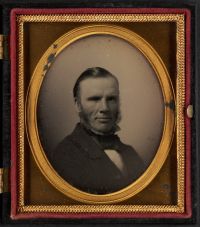 William Robson,
The Great Sieges of History
William Robson,
The Great Sieges of History
“ The new emperor sent Primus, one of his lieutenants, and a very skilful general, against the tyrant of Rome. After several advantages, Primus attacked two legions posted before Cremona. The Roman legions fought against each other like the most determined enemies. Primus was near losing the battle; but his courage rallied his troops when on the point of giving way, he brought them back to the charge, and gained a complete victory. His army was eager to enter Cremona, but was prevented by the arrival of six legions of the opposite party. ”
Captain Charles Johnson, A General History of the Pyrates… (1724)
“ Pompey finding the Mediterranean quite clear, appointed a Meeting of all his Fleet at the Haven of Brundusium, and from thence sailing round into the Adriatick, he went directly to attack these Pyrates in their Hives; as soon as he came near the Coracesium in Cilicia, where the Remainder of the Pyrates now lay, they had the Hardiness to come and give him Battle, but the Genius of old Rome prevailed, and the Pyrates received an entire Overthrow, being all either taken or destroyed ”
Frank Sidgwick, The Sources and Analogues of 'A Midsummer-Night's Dream'… (1908)
“ Now as at one side Pyramus, and Thisbe on the tother Stood often drawing one of them the pleasant breath from other: O spiteful wall (said they) why dost thou part us lovers thus? What matter were it if that thou permitted both of us In arms each other to embrace? or if thou think that this Were over-much, yet mightest thou at least make room to kiss. And yet thou shalt not find us churls: we think ourselves in debt For the same piece of courtesy, in vouching safe [2] to let Our sayings to our friendly ears thus freely come and go. ”
 Ovid,
The Metamorphoses of Ovid, Books I-VII
Ovid,
The Metamorphoses of Ovid, Books I-VII
“ Pyramus, arriving soon after, finds the veil of his mistress stained with blood; and believing her to be dead, kills himself with his own sword. Thisbe returns from the cave; and finding Pyramus weltering in his blood, she plunges the same fatal weapon into her own breast.But Alcithoë, the daughter of Minyas,1 does not think that the rites2 of the God ought to be received; but still, in her rashness, denies that Bacchus is the progeny of Jupiter; and she has her sisters3 as partners in her impiety. ”
Frank Sidgwick, The Sources and Analogues of 'A Midsummer-Night's Dream'… (1908)
“ Dwelt hard together two young folk, in houses joined so near, That under all one roof well nigh both twain conveyéd were. The name of him was Pyramus, and Thisbe call'd was she, So fair a man in all the East was none alive as he. Nor ne'er a woman, maid, nor wife in beauty like to her. ”
 George Grote,
History of Greece, Volume 01 (of 12…
George Grote,
History of Greece, Volume 01 (of 12…
“ It is a fact still more curious, and illustrative of the strong working of the old legend on an impressible and eminently religious mind, that he also sacrificed to Priam himself, on the very altar of Zeus Herkeius from which the old king was believed to have been torn by Neoptolemus. As that fierce warrior was his heroic ancestor by the maternal side, he desired to avert from himself the anger of Priam against the Achilleid race. ”
 Padraic Colum,
The Golden Fleece and the Heroes Who Lived Before Achilles
Padraic Colum,
The Golden Fleece and the Heroes Who Lived Before Achilles
“ All this was before the famous walls of Troy were built; before King Priam had come to the throne of his father and while he was still known, not as Priam, but as Podarces. And the beginning of all these happenings was in Iolcus, a city in Thessaly. Cretheus founded the city and had ruled over it in days before King Priam was born. He left two sons, Æson and Pelias. Æson succeeded his father. And because he was a mild and gentle man the men of war did not love Æson; they wanted a hard king who would lead them to conquests. ”
 Homer,
The Story of the Iliad
(1895)
Homer,
The Story of the Iliad
(1895)
“ All fresh he lies, and the blood is washed from him, and all his wounds are closed—and many spear-points pierced him. The blessed gods love him well, dead man though he be." This King Priam was well pleased to hear. "It is well," he said, "for a man to honour the gods; for, indeed, as my son never forgot the dwellers on Olympus, so have they not forgotten him, even in death. But do thou take this fair cup, and do kindness to him, and lead me to the tent of Achilles." ”
Thomas Bulfinch,
Bulfinch's Mythology: The Age of Fable
“ King Priam lived to see the downfall of his kingdom, and was slain at last on the fatal night when the Greeks took the city. He had armed himself and was about to mingle with the combatants, but was prevailed on by Hecuba, his aged queen, to take refuge with herself and his daughters as a suppliant at the altar of Jupiter. While there, his youngest son Polites, pursued by Pyrrhus (Pyrrhus's exclamation, "Not such aid nor such defenders does the time require," has become proverbial.) , the son of Achilles, rushed in wounded, and expired at the feet of his father ”
“ Pyrrhus at length sent back a body of his guards under Ptolemy, his son, to drive them away. Ptolemy attacked the Spartans and fought them with great bravery, until at length, in the heat of the contest, a celebrated Cretan, of remarkable strength and activity, riding furiously up to Ptolemy, felled him to the ground, and killed him at a single blow. On seeing him fall, his detachment were struck with dismay, and, turning their backs on the Spartans, fled to Pyrrhus with the tidings. ”
Herodotus, The Persian Wars — Book II (1920)
“ Even be it granted that they were so minded in the first days, yet when not only many of the Trojans were slain in fighting against the Greeks, but Priam himself lost by death two or three or even more of his sons in every battle (if the poets are to be trusted) , in this turn of affairs, had Helen been Priam’s own wife, I cannot but think (for myself) that he would have restored her to the Greeks, if by so doing he could escape from the present evil plight. Nay, nor was Alexandrus next heir to the kingship, whereby he might have been the real ruler, Priam being old ”
Charles Morris, Historic Tales: The Romance of Reality…
“ Here was another battle that proved almost as bad as a defeat. Pyrrhus had lost many of the men he had brought from Epirus. He was not in condition to take the field again, and no more soldiers could just then be had from Greece. The Romans were now willing to make a truce, and Pyrrhus crossed soon after to Sicily, to aid the Greeks of that island against their Carthaginian foes, He remained there two years, fighting with varied success and defeat. Then he returned to Tarentum, which [Pg 332] again needed his aid against its persistent Roman enemies. ”
William Shakespeare,
Hamlet, Prince of Denmark
“ With eyes like carbuncles, the hellish Pyrrhus Old grandsire Priam seeks. So, proceed you. POLONIUS. ’Fore God, my lord, well spoken, with good accent and good discretion. FIRST PLAYER. Anon he finds him, Striking too short at Greeks. His antique sword, Rebellious to his arm, lies where it falls, Repugnant to command. Unequal match’d, Pyrrhus at Priam drives, in rage strikes wide ”
 Gilbert Abbott À Beckett,
The Comic History of Rome
Gilbert Abbott À Beckett,
The Comic History of Rome
“ The policy of Pyrrhus was to turn old foes into new friends; and he sent his trusty counsellor, Cineas, to Rome, with a suggestion that all animosity should be buried in the graves of those who had fallen on both sides. The Senators were beginning to waver, when Appius Claudius the Blind—who had been carried down to the house by his four sons—an arrangement that suggests the picture of a veteran supported by a youth at each arm and at each leg—declared suddenly that he could see through the whole affair, and called upon the Romans to open their eyes to the designs of Pyrrhus. ”
 Christopher Marlowe,
The Tragedy of Dido, Queene of Carthage
(1594)
Christopher Marlowe,
The Tragedy of Dido, Queene of Carthage
(1594)
“ Achates, see King Priam wags his hand, He is alive, Troy is not overcome. Ach. Thy mind Æneas that would have it so Deludes thy eyesight; Priamus is dead. Æn. Ah Troy is sack'd, and Priamus is dead, And why should poor Æneas be alive? Asca. Sweet father, leave to weep, this is not he: For were it Priam he would smile on me. Acha. Æneas see here come the Citizens; Leave to lament, lest they laugh at our fears. ”
Famous Tales of Fact and Fancy
“ So when she saw Priam, how he had girded himself with armor as a youth, she cried to him and said, “What hath bewitched thee, that thou girdest thyself with armor? It is not the sword that shall help us this day; no, not though my own Hector were here, but rather the gods and their altars. Come hither to us, for here thou wilt be safe, or at the least wilt die with us.”So she made the old man sit down in the midst. But lo! there came flying through the palace, Polites, his son, wounded to death by the spear of Pyrrhus, and Pyrrhus close behind him. ”
