Various, Popular Science Monthly (1887)
“ The first Roman emperor whose name marks a golden era in history is said to have claimed as his greatest triumph that, having found Rome a city of sunburned brick, he should leave it a city of marble. ”
The Roman emperor was the supreme ruler of the Roman Empire, a position that emerged with Augustus in 27 BCE, consolidating authority through a combination of military strength, republican structures, and divine endorsement. Historians such as Edward Gibbon stressed the emperor's dependence on the military for power, while John Lord underscored the veneration of emperors like Marcus Aurelius, whose influence persisted through memorials and admiration.
Ierne L. Plunket juxtaposed the harshness of imperial displays with the spread of Christianity, showcasing the conflict between traditional pagan practices and the emerging faith. The position transformed from a republican "first among equals" to a ruler sanctioned by the gods, mirroring the changing political and spiritual landscape.
Various, Popular Science Monthly (1887)
“ The first Roman emperor whose name marks a golden era in history is said to have claimed as his greatest triumph that, having found Rome a city of sunburned brick, he should leave it a city of marble. ”
John Lord, Beacon Lights of History, Volume 04…
“ Hence he is one of the favorite characters of history. No Roman emperor was so revered and loved as he, and of no one have so many monuments been preserved. Everybody had his picture or statue in his house. He was more than venerated in his day, and his fame as a wise and good man has increased with the flight of ages.This illustrious emperor did not belong to the family of the great Caesar. That family became extinct with Nero, the sixth emperor. Like Trajan and Hadrian, Marcus Aurelius derived his remote origin from Spain, although he was born in Rome. ”
John Lord, The Old Roman World : the Grandeur and Failure of Its Civilization
“ Civil wars create an imperator, who, uniting in himself all the great offices of state, and sustained by the conquering legions, rules from East to West and from North to South, with absolute and undivided sovereignty. The Caesars reach the summit of human greatness and power, and the city of Romulus becomes the haughty mistress of the world. The emperor is worshiped as a deity, and the proud metropolis calls herself eternal. An empire is established by force of arms and by a uniform policy, such as this world has not seen before or since. ”
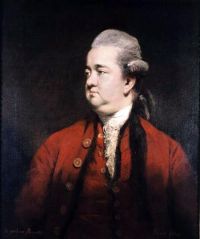 Edward GibbonAmmianus Marcellinus
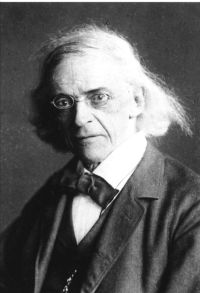 Theodor MommsenEmperor of the French Napoleon IIIHerodianEugene LawrenceFrank Frost AbbottOliver GoldsmithArthur E. R. BoakCharles SwanJames Smith Reid
 Guglielmo Ferrero
 Wallace StevensJames LewisJohn Lord
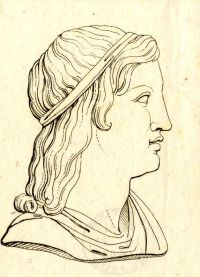 Gaius Suetonius Tranquillus
 T. G. Tucker
 Calvert VauxA. H. J. GreenidgeTacitus

