Romani language

Definition and stakes

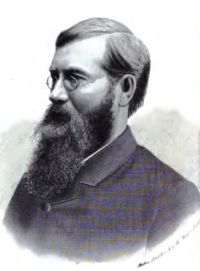
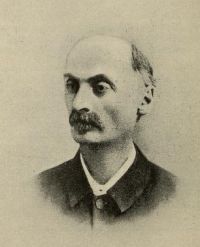
Portrait of Francis Hindes Groome Francis Hindes Groome,  Gypsy folk-tales (1899)

“ Over and above the identity in every Rómani dialect of these two selected words—and there are hundreds more like them—they are also identical with the Hindustani pani and churi, familiar to all Anglo-Indians. And to cite but a few more instances, ‘nose,’ ‘hair,’ ‘eye,’ ‘ear’ are in Turkish Rómani nak, bal, akh, kann; in Hindustani, nak, bal, akh, kan: whilst ‘Go, see who knocks at the door’ in the one language is Jâ, dik kon chalavéla o vudár, and in the other Jâ, dekh kon chaláya dvár ko. ”

Source: Gutenberg

Donald W. Bernier,  Area Handbook for Romania

“ The basis for Romanian seems to be the Vulgar Latin of ancient Rome. Long contact with Slavic-speaking peoples has left its mark on the vocabulary but has not affected grammar or syntax, which remain similar to those of other Romance languages. The vocabulary of literary Romanian is more purely of Latin origin than that of the spoken dialects. Frequently, parallel words of Latin and Slavic derivation exist for an object or concept and are used interchangeably. Turkish, Albanian, Hungarian, and German have also influenced the vocabulary of the spoken language in various parts of the country. ”
Source: Gutenberg

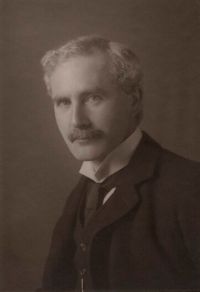
Portrait of H. G. Wells H. G. Wells,  A Short History of the World

“ The Roumanian, Italian, French and Spanish languages, all variations and modifications of Latin, remain to remind us of this extension of Latin speech and customs. North-west Africa also became at last largely Latin-speaking. Egypt, Greece and the rest of the empire to the east were never Latinized. They remained Egyptian and Greek in culture and spirit. And even in Rome, among educated men, Greek was learnt as the language of a gentleman and Greek literature and learning were very, properly preferred to Latin. ”
Source: Gutenberg

Get perspective with Kwize: daily news enlightened by great literature