Romano-British

Definition and stakes

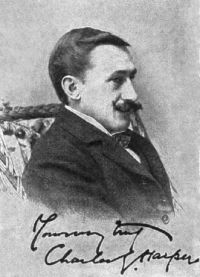
Portrait of Charles G. Harper Charles G. Harper,  The Dover Road: Annals of an Ancient Turnpike

“ Four hundred years would suffice to create a high state of civilization from mere savagery, and that is what the Romans accomplished here in that space of time. They not only conquered, but they eventually pacified, the fierce and fearless Britons; and they established export and import trades that rendered Britain the most prosperous colony of the Roman Empire, and the Romano-British merchants and people the wealthiest colonists of those times. ”
Source: Gutenberg

F. Haverfield,  The Romanization of Roman Britain

“ Here, among great woodlands and on damp and chilly clay, there dwelt not merely few civilized Roman-Britons, but few occupants of any sort.
[Footnote 1: Victoria Hist. of Warwickshire, i. 228.]
And lastly, Romano-British life was on a small scale. It was, I think, normal in quality and indeed not very dissimilar from that of many parts of Gaul. But it was in any case defective in quantity. We find towns in Britain, as elsewhere, and farms or country-houses. But the towns are small and somewhat few, and the country-houses indicate comfort more often than wealth.
”
Source: Gutenberg

W. Lyon Blease,  A Short History of English Liberalism

“ The Tory conception of the Empire is in fact very like the old Roman Empire, and ominous comparisons are often drawn between the two. [22] The Roman Empire was a similar gigantic organization, which subordinated all other ideas to that of strength and unity against external peoples. What will preserve the British Empire from the fate of the Roman is what the Romans omitted, the encouragement of local independence, the sacrifice of mere mechanical efficiency to that infinite diversity of individual civilizations which keeps nations alive. ”
Source: Gutenberg

Get perspective with Kwize: daily news enlightened by great literature