“ But two years later he had lost his hold upon Florence, and died upon the gallows amid the ferocious yells of the populace. Sandro, the poet-painter, was less happy than Pico della Mirandola, the beautiful marvellous youth, who had died at the beginning of these troubles wrapped in a friar's cloak, the beloved follower of the lion-hearted preacher. His own brother Simone, with whom he lived, was one of the Prate's followers, and suffered exile for his cause. There can be no doubt that he himself was profoundly influenced by Savonarola. ”
Sanremo
Definition and stakes
The theme of “Sanremo” has been addressed by authors such as . It is often associated with terms like Florence, Girolamo, Sangiorgio, Rome and Pietro.
Quotes about “Sanremo”
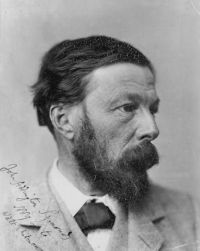 John Addington Symonds,
Renaissance in Italy, Volume 2…
John Addington Symonds,
Renaissance in Italy, Volume 2…
“ Sannazzaro's own elegies on the joys of love and country life, the descriptions of his boyhood at Salerno, the praises of his Villa Mergillina, and his meditations among the ruins of Cumæ, are marked by the same characteristics. Nothing quite so full of sensual enjoyment, so soft, and so voluptuous can be found in the poems of the Florentine and Roman scholars. They deserve study, if only as illustrating the luxurious tone of literature at Naples. It was not by these lighter effusions, however, that Sannazzaro won his fame. ”
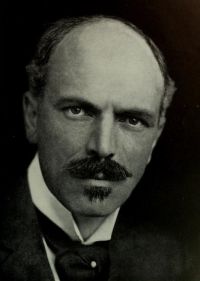 Maurice Hewlett,
Earthwork out of Tuscany: Being Impressions and Translations of Maurice Hewlett
Maurice Hewlett,
Earthwork out of Tuscany: Being Impressions and Translations of Maurice Hewlett
“ She spoke eagerly, running her words together."Ecco, Messer Sandro," she whispered blushing. "You have heard these sayings.... Who is there in Florence like me?""There is no one," said Sandro simply."I will be your Lady Venus," she went on breathlessly. "You shall paint me, rising from the sea-foam.... The Genoese love the sea." She was still eager and defiant; her bosom rose and fell unchecked."The Signorina is mocking me; it is impossible; the Signorina knows it.""Eh, Madonna! is it so shameful to be fair—Star of the Sea as your poets sing at evening? ”
“ But it is in Florence that all but a small minority of Sandro's masterpieces are to be found, and it is in Florence that one first really comes under the spell of the magician. There, in the Uffizi, in the Sala de Lorenzo Monaco, in the holy company of Fra Angelico's saints and angels, is Sandro's masterpiece, "The Birth of Venus." It is a large canvas painted in tempera: [1] but a horizontal join just apparent and running right across the picture, together with the medium used, gives it at first sight the appearance of being executed upon wood. ”
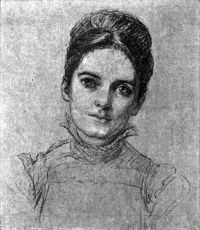 A. Mary F. Robinson,
The End of the Middle Ages: Essays and Questions in History
A. Mary F. Robinson,
The End of the Middle Ages: Essays and Questions in History
“ Here we catch a last glimpse of him in that sinister spring of 1498 which witnessed in Florence the martyrdom of Savonarola and in France the sudden death of Charles VIII. The whirlwind that destroyed these mighty vessels allowed the idle straw to float unharmed. “Entragues is back in Pisa,” writes Sanuto, “which city is very poor now, having lost all her lands and subsisting only on that which we afford her. He has returned some time from his visit to Jerusalem. He lives with certain families in Pisa. He has money of his own, and gives himself his pleasures.” ”
 Matilde Serao,
The conquest of Rome
Matilde Serao,
The conquest of Rome
“ A feminine shape, dressed in an embroidered Turkish costume, her head covered over, and her face concealed behind a white veil, came up to him, and said in a flutelike voice:'Good-evening, dear Sangiorgio! Why so melancholy?''Because I have not yet found out who you are, sweetheart!''You do not know me, you must not know me, you never will know me! I can tell why you are melancholy, Sangiorgio. I will whisper it in your ear: you are in love!''Yes, with you, my dear!''How amusing you are! You are much too gallant. That's not the custom here. ”
Matilde Serao,
The conquest of Rome
“ Passing the dividing line between the Pincio and the Villa Medici, Sangiorgio cast a regretful glance at the gloomy darkness of the dense alley of trees where his sweet idyll would have been safe from the bright, lavish sunlight, but she had refused, since a special permit would have been requisite for the Villa Medici. What disturbed Sangiorgio, in his walk round the big garden, was the part which faced Rome and the Piazza del Popolo, all that open side, that gigantic breach, whence at moments came a deep drone, the clamour of the crowd in its mirth or disappointment. ”
John Addington Symonds,
Renaissance in Italy, Volume 5…
“ But in either case its scenery is drawn from Sannazzaro's own Italian home. The inhabitants are shepherds such as Virgil fancied, with even more of personal refinement. Through their lips the poet tells the tale of his own love, and paints his Neapolitan mistress among the nymphs of Mount Parthenion. Throughout, we note an awkward interminglement of subjective and objective points of view. Realism merges into fancy. Experience of life assumes the garb of myth or legend. Neither as an autobiographical romance nor again as a work of pure invention has the Arcadia surpassing merit. ”
Edward Armstrong, The Cambridge Modern History, Volume 1… (1902)
“ The vices of Florence were those of a rich, commercial city, extravagance in clothes and furniture, in funerals and weddings. Young bourgeois might think the brothel and the tavern the ante-chambers of gentility. Men of all classes gambled and swore. Dowries were high, and it was becoming difficult to marry. Yet in Florentine society there was a healthy consciousness that all this was wrong, and a predisposition in favour of any preacher who would say so. Savonarola's sympathetic nature, when once he had learned his method and his manner, touched this chord. ”
Matilde Serao,
The conquest of Rome
“ Not a soul was to be seen in the avenue, which in one direction went towards the Villa Medici and the Trinita dei Monti, and in the other up to the Pincio; there was not a single passer-by, not a woman, not a child. Everyone, everyone was in the Corso, in the street, doorways, balconies, loggias, on the improvised stands, on the pedestals of lamp-posts, on the backs of carriages; everyone, everyone was in the Corso, seized with carnival madness. [Pg 247] Francesco Sangiorgio felt more and more at ease and peace, as he ascended to that place of rural solitude. ”
Anne C. Lynch Botta, Handbook of Universal Literature…
“ The manners of the Italian peasantry are more truly pastoral than those of any other people, and a bucolic poet in that fair region need not wander to Arcadia. But Sannazzaro, like all the early pastoral poets of Italy, proposed to himself, as the highest excellence, a close imitation of Virgil; he took his shepherds from the fabulous ages of antiquity, borrowed the mythology of the Greeks, and completed the machinery with fauns, nymphs, and satyrs. Like Sannazzaro, Beccari places his shepherds in Arcadia, and invests them with ancient manners; but he goes beyond mere dialogue ”
Matilde Serao,
The conquest of Rome
“ She nestled up to him as though she was cold and fearsome, as if she pretended to be small and wanted his protection. Nevertheless, she was strong and tall in her black cloak, and under the hood where her eyes were sparkling. And that person and those eyes had the peculiar quality of magnetism—the violent fascination that stirs the senses. Again Francesco Sangiorgio felt as he had in her [Pg 134] drawing-room, when she had so ruthlessly cast love into contempt. The sensation was profound and sharp, without any sweetness whatever—a revulsion, a storm, a sort of inebriation. ”
Matilde Serao,
The conquest of Rome
“ Tall, slender, habited in black, wearing a velvet cloak, she was quite fresh and young behind her black veil. She walked with rhythmical step, her gloved hands hidden in her muff, her eyes downcast, as though she were immersed in thought. And there was such dignity and sweetness in that female form that the Honourable Sangiorgio involuntarily bowed to her. But His Excellency's wife did not acknowledge his bow, and passed on, proceeding towards the Via Angelo Custode along the pavement. And in Francesco Sangiorgio arose a profound feeling of resentment, because of the rejected salute. ”
Edward Armstrong, The Cambridge Modern History, Volume 1… (1902)
“ At all events in the most youthful of Savonarola's writings is expressed a loathing for the Court of Rome, a belief that throughout all Italy, and above all at Rome, virtue was spent and vice triumphant. The tribute which solitude exacts from those who court her is an abnormal consciousness of self. ”
John Addington Symonds,
Renaissance in Italy, Volume 3…
“ Had that but found expression in their cloistral pictures, one of the most peculiar and characteristic flowers of art the world has ever known, would then have bloomed in Florence. The mantle of Savonarola, however, if it fell upon any painter, fell on Michael Angelo, and we must seek an echo of the friar's thunders in the Sistine Chapel. Fra Bartolommeo was too tender and too timid. The sublimities of tragic passion lay beyond his scope. Though I have ventured to call him the painter of adoration, he did not feel even this movement of the soul with the intensity of Fra Angelico. ”
Matilde Serao,
The conquest of Rome
“ In the semi-darkness of the carriage, which was making for old Rome from the Quirinal hill at a slow trot, Francesco Sangiorgio dwelt now on that sweet face, whose continued pallor rendered it more fascinating than ever, and now on that little hand, lying as listlessly in her lap as if she were overcome with mortal fatigue. In the long-awaited rapture of that moment, in the strange seclusion of the dark little blue nest, conveying the sweetest of her sex homeward, her lover was seized with not a single desire, with no care for the time which was speeding and bringing separation nearer. ”
Matilde Serao,
The conquest of Rome
“ He felt the contrast between the weariness, the emptiness of Don Silvio's tumultuous life, and the poetical delicacy of that feminine toilet, and all the perturbation of heart and senses instilled by everything that comes into contact with a woman's body.At last, at ten o'clock, doors were opened and shut, and subdued voices heard; and Sangiorgio, choked by his one wish, shut his eyes to avoid the blinding spectacle of Donna Angelica's beauty. But no one appeared; a dull rumble of wheels was audible in the courtyard, and then in the Piazza dell' Apollinare. ”
John Addington Symonds,
Renaissance in Italy, Volume 4…
“ Otherwise, Savonarola would hardly have suffered his proselytes to roam the streets chanting stanzas which are little better than echoes from the brothel or travesties of Poliziano's chorus of the Mænads. The Italians have never been pious in the same sense as the Northern nations. Their popular religious poetry is the lyric of emotion, the lyric of the senses losing self-restraint in an outpouring of voluptuous ecstasy. With them "music is a love-lament or a prayer addressed to God;" and both constituents of music blend and mingle indistinguishably in their hymns. ”
Adventures of an Aide-de-Camp; or…
“ I have not forgotten how generously you entertained the Cavaliere di Castelermo and myself last night; protecting us from the insolence of your band, and the petulence of their lieutenant. Receive your poniard, and learn to make a better use of it: or rather not to use it at all. I esteem you as a brave man, though an erring one; and trust that the blow I gave you will not occasion you further inconvenience.""Francatripa!" added Santugo, striking him familiarly on the shoulder, "seek another path than that which leads through the prison-gate to the scaffold. ”
Adventures of an Aide-de-Camp; or…
“ Just what they please, Santugo is too spirited a cavalier to value a rush the silly scruples of a bigoted peasantry, or the idle thunders of a knavish priesthood. He will only remember, that in abducting his cousin—replete with danger though the act may be—he has done a good deed in the cause of love and humanity. ”
Herbert M. Vaughan, The Naples Riviera
“ At the northern end of this promenade, in what constitutes the most fashionable quarter of the place, is a tiny garden with palms and daturas, whilst hard by stands a large theatre, evidences of the gentility of modern Salerno. But the whole town appears sleepy and dead-alive to a stranger, though at the sunset hour a band occasionally plays in this open space, the music attracting hither a crowd composed of all the divers elements of society in the quiet old city. ”
Matilde Serao,
The conquest of Rome
“ Au revoir, gentlemen!' and hardly had they moved on when the carriage was speeding in the direction of Rome.'Who is that lady?' Sangiorgio inquired.'Why does that concern you? Do you not like her?''Yes, I like her.''Well—go there this evening; you will enjoy yourself. She is fascinating, not beautiful. Some evenings she is irresistible. She sings excellently. At times, though not often, she is witty. She talks too much. But she is a good girl.''What sort of woman is she?' persisted Sangiorgio.'How can I tell?' And Giustini shrugged his shoulders. ”
 Mrs. Lawrence Turnbull,
A Golden Book of Venice
Mrs. Lawrence Turnbull,
A Golden Book of Venice
“ Santissima Maria, thou hast saved him!" she cried. "For he hath the special blessing of his Holiness Pope Clement, and our Holy Father cannot reach him with this curse of Venice!""We cannot keep her mind from it," said Santorio, aside to Marcantonio; "it is essential to calm it with the right view—no argument, it might induce the most dangerous excitement. Send for some bishop or theologian who takes the right view; let him present it as a fact, and with authority; her life depends upon it." ”
Herbert M. Vaughan, The Naples Riviera
“ As in all Italian cities, northern or southern, however, the nocturnal noise is prodigious. Shouting and shrieking, quarrelling and yelling rend the air at all hours, whilst the practice of serenading, more agreeable in romantic poetry than in everyday life, is here carried to excess, and the twanging of the mandoline and the throaty voices of ardent lovers are rarely silent o’ nights in the dark narrow streets of Salerno. ”
John Addington Symonds,
Renaissance in Italy, Volume 5…
“ The elegies in which he recorded his grief, are not the least poetical of his compositions both in Latin and Italian. [253] After estab-201-lishing himself once more at Naples, Sannazzaro began the composition of the Eclogæ Piscatoriæ, in which he has been said to have brought the pastoral Muses down to the sea shore. The novelty of these poems secured for them no slight celebrity. Nor are they without real artistic merit. The charm of the sea is nowhere felt more vividly than on the bay of Naples, and nowhere else are the habits of a fishing population more picturesque. ”
Great Pictures, As Seen and Described by Famous Writers
“ Sandro is a nickname, and his true name is Filipepi, Botticelli being only the name of the goldsmith who first taught him art. Only two things happened to him, two things which he shared with other artists—he was invited to Rome to paint in the Sistine Chapel, and he fell in later life under the influence of Savonarola, passing apparently almost out of men's sight in a sort of religious melancholy which lasted till his death in 1515, according to the received date. ”
Giorgio Vasari, Lives of the Most Excellent Painters… (1850)
“ In like manner and with equal truth Starnina has pourtrayed the circumstances connected with the death-bed of San Girolamo. The saint, who is on the point of death, is dictating his testament; many monks, painted with admirable force and beauty, are around him, some of whom Gherardo represents writing, while others, fixedly regarding and earnestly listening to their master, seem to be storing up all his words with the utmost reverence and affection. ”
Edmund G. Gardner, The Story of Florence
“ Of the amazing scene in the Piazza on April 7th, I will speak in the following chapter; suffice it to say here that it ended in a complete fiasco, and that Savonarola and his friars would never have reached their convent alive, but for the protection of [132] the armed soldiery of the Signoria. Hounded home under the showers of stones and filth from the infuriated crowd, whose howls of execration echoed through San Marco, Fra Girolamo had the Te Deum sung, but knew in his heart that all was lost. ”
Matilde Serao,
The conquest of Rome
“ How could a man have the strange taste to walk in the deserted Pincio, on that holiday, at that warm afternoon hour, when everybody was mad with carnival mirth, from the Piazza Venezia to the Piazza del Popolo? The crowd was incredulous of such eccentricity, and refused to let Francesco Sangiorgio pass. ”
