Santa Cruz de Tenerife

Definition and stakes

1911 Encyclopædia Britannica, Volume 24… (1911)

“ Santa Cruz is the residence of the governor-general of the Canaries, the civil lieutenant-governor of the Teneriffe district, and the military governor of the island. It occupies a small plain bounded by rugged volcanic rocks, and seamed by watercourses which are dry almost throughout the year. Scarcely any vegetation, except cactuses and euphorbias, is to be seen in the neighbourhood. Almost the entire town was rebuilt in the 19th century, when its population more than trebled. The houses are generally low, with flat roofs ”
Source: Wikisource

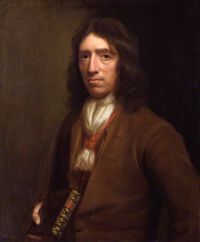
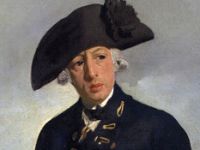
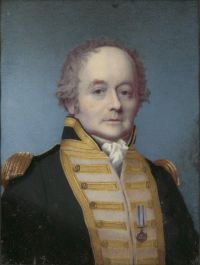
Portrait of William Bligh William Bligh,  A Voyage to the South Sea

“ Tenerife, though considerably without the tropic, is so nearly within the limits of the tradewind that navigators generally steer to it from the eastward. The road of Santa Cruz lies on the east side of the island, at the end of a range of craggy hills, barren and very lofty, along with you sail west by south by compass into the road, with a sea unfathomable until near the shore. The anchoring ground may be accounted from fifty fathoms to twenty, or even fifteen. The bank is very steep and gives but little time to sound ”
Source: Gutenberg

Karl Baedeker,  The Mediterranean (1911)

“ Santa Cruz de Tenerife and Puerto de la Luz near Las Palmas, the chief ports of the Canaries, as also Puerto Orotava (p. 39) , Santa Cruz de la Palma, and others, all declared free harbours in 1852, are rising places and compete with Madeira in provisioning the ocean steamers. The trade is in British, Spanish, and German hands. The chief exports are bananas, tomatoes, early potatoes and other vegetables, and wine. ”
Source: Gutenberg

Get perspective with Kwize: daily news enlightened by great literature