“ Huge saurians, locked for a thousand centuries in their vice-like prison, rise up, not as of old to bask lazily in the sun, but to gape with huge jaws at the demons of lightning and steam rushing past, and to crack the stiff backs of savans with their forty feet of tail. ”
Quotes about “Sauria”
“ He concentrated on the crystal, shifting the view to scan toward the nearest village.Suddenly, he sat forward in his chair. A herd of saurians was slowly [p 17] drifting toward one of the arms the null had thrust out. Shortly, they would have ambled into a stream and beyond, out of all possible control. Perhaps they might wander for years in the wastelands. Perhaps they and their increase might furnish meat for the pseudomen who lurked inside the swirling blankness. ”
 François Rabelais,
Gargantua and Pantagruel
François Rabelais,
Gargantua and Pantagruel
“ Lampridius also testifieth that the Emperor Heliogabalus, to acquire unto himself the reputation of a soothsayer, did, on several holy days of prime solemnnity, in the presence of the fanatic rabble, make the head of his idol by some slight within the body thereof publicly to shake. Plautus, in his Asinaria, declareth likewise, that Saurias, whithersoever he walked, like one quite distracted of his wits kept such a furious lolling and mad-like shaking of his head, that he commonly affrighted those who casually met with him in his way. ”
The Circle of Knowledge: A Classified…
“ SARACEN OR MOHAMMEDAN WARS—632-1492.Cause: Saracens are ambitious to found a world wide Mohammedan empire.Leaders: (1) Omar, Amru, Hassan, Mousa, Tarik, Abderrahman, Mohammed II., Abdallah; (2) Yezdegerd (Persia) , Leo the Isaurian, Charles Martel, Constantine, Palæologus, Ferdinand of Aragon.Chief Actions: (1) Yarmouk (Syria) , Damascus Jerusalem Cadesia (Persia) , Alexandria, Carthage (697) , Xeres (Spain) , Granada, Toledo; (2) Constantinople (716) , Tours, Jerusalem, Las Navas de Tolosa (1212) . ”
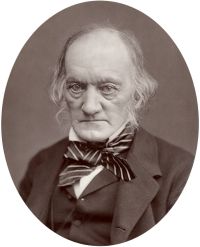 Richard Owen,
The zoology of the voyage of H.M.S. Beagle…
(1839)
Richard Owen,
The zoology of the voyage of H.M.S. Beagle…
(1839)
“ In the cold-blooded Saurians,—in which the confluence of the separate elements of a vertebra takes place tardily and imperfectly, if at all,—the nature of the so called perforation of the transverse process is very clearly manifested, as in the cervical vertebræ of the Crocodile, in which the interspace of the inferior and superior transverse processes is closed externally by a separate short moveable cervical rib. ”
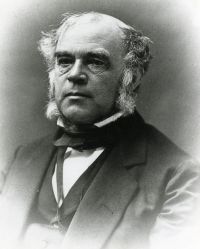 John William Draper,
History of the Conflict Between Religion and Science…
(1874)
John William Draper,
History of the Conflict Between Religion and Science…
(1874)
“ Nothing could prevent the Saracens from overrunning Asia Minor. Heraclius himself had to seek safety in flight. Syria, which had been added by Pompey the Great, the rival of Caesar, to the provinces of Rome, seven hundred years previously—Syria, the birthplace of Christianity, the scene of its most sacred and precious souvenirs, the land from which Heraclius himself had once expelled the Persian intruder—was irretrievably lost. ”
pseud. Charles Annesley, The Standard Operaglass
“ Solomon, well understanding the vile tricks of the eastern Queen, has changed the verdict of death into that of exile. Sulamith, faithful and gentle, entreats for her lover, and has only one wish: to sweeten life to her Assad, or to die with him. We find Assad in the desert. He is broken down and deeply repents his folly, when, lo, the Queen appears once more, hoping to lure him with soft words and tears. But this time her beauty is lost upon him: he has at last recognized her false soul; with noble pride he scorns her, prefering to expiate his follies, by dying in the desert. ”
Simon Ockley, History of the Saracens (1857)
“ When the Saracens that had it saw themselves hard beset, they shifted it from one to another, till it came to Serjabil’s hands. As the Damascenes followed Thomas with great courage and vigour, the engines all the while playing upon the Saracens from the walls, and throwing stones and arrows as thick as hail, the battle soon began to be fierce and bloody. They plied the engines so well from the walls, that the Saracens were forced to retreat, and fight out of the reach of their fire. Thomas having at last discovered the standard in Serjabil’s hand, made up to him, and fell upon him like a lion. ”
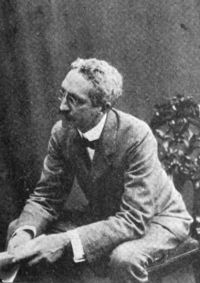 Gustav Kobbé,
The Complete Opera Book
Gustav Kobbé,
The Complete Opera Book
“ On the border of the desert stands the asylum of the young women consecrated to God in which Sulamith has found rest from the deceitful world. Assad staggers hither; a weary, banished man.-775- And again the Queen of Sheba appears before him offering him her love. But he flees from the false woman for whom he had sacrificed Sulamith, the noble one. A desert storm arises, burying Assad in the sand. When the sky becomes clear again Sulamith, taking a walk with her maidens, finds her lover. She pardons the dying man and points out to him the eternal joys which they will taste together. ”
Anonymous, The Arabian Nights Entertainments - Volume 01
“ Assad would have excused himself: It does not belong to a slave, said he, to presume to this honour.To a slave! replied the queen; you shall not be so long: henceforward you are no more a slave. Sit down near me, and tell the story of your life; for, by what you wrote, and the insolence of that slave merchant, I guess there is something extraordinary in it.Prince Assad obeyed her; and, sitting down, began thus: Mighty queen, your majesty is not mistaken in thinking there is something extraordinary in the story of my life; it is indeed more so than you can imagine. ”
Simon Ockley, History of the Saracens (1857)
“ And now, within so short a period, we find the undertakings of his successor prospering beyond expectation, and making him the terror of all his neighbours; and the Saracens in a capacity not only to keep possession of their own peninsula of Arabia, but to extend their arms over larger territories than ever were subject to the Romans themselves. Whilst they were thus employed in Arabia, they were little regarded by the Grecian emperor, who awoke too late to a sense of their formidable power, when he saw them pouring in upon them like a torrent, and driving all before them. ”
 Felicia Buttz Clark,
Virgilia; or, Out of the Lion's Mouth
Felicia Buttz Clark,
Virgilia; or, Out of the Lion's Mouth
“ She and her father had been brought to Rome as prisoners of war after a victorious conquest by the Romans in North Africa. They were by descent, Moors, having dark skins but very regular, even classical features. Sahira, the slave, walked like a queen and was so proud that she would not mingle with the other servants. Her father, Alyrus, chief of hundreds in the desert-land of his own country, was but a door-keeper in the house of Aurelius Lucanus, and he was, very bitter in spirit."Your mother has need of you," said Sahira, in her velvet voice. "I think that the Lady Claudia is very ill." ”
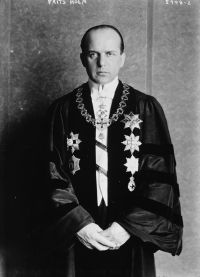 Frits Vilhelm Holm,
The Nestorian Monument: An Ancient Record of Christianity in China
(1909)
Frits Vilhelm Holm,
The Nestorian Monument: An Ancient Record of Christianity in China
(1909)
“ According to the Illustrated Memoir of the Western Regions, and the historical books of the Han and Wei dynasties, the kingdom of Syria reaches south to the Coral Sea; on the north it joins the Gem Mountains; on the west it extends toward the borders of the immortals and the flowery forests; on the east it lies open to the violent winds and tideless waters. The country produces fire-proof cloth, life-restoring incense, bright moon-pearls, and night-lustre gems. Brigands and robbers are unknown, but the people enjoy happiness and peace. None but Illustrious laws prevail ”
Anonymous, The Arabian Nights Entertainments - Volume 01
“ I only come to require a slave, named Assad, to be delivered up to me: he was carried away by one Behram, a captain of a ship, the most insolent man in the world. I hope your king will do me justice, especially when he knows that I am queen Margiana.The prince answered, Mighty queen! the slave you take so much pains to seek is my brother; I lost him, and have found him again. Come, madam, I will deliver him up to you myself, and will do myself the honour to tell you the rest of the story as we go to the king my master's palace, who will rejoice to see you. ”
Simon Ockley, History of the Saracens — Author's Preface (1857)
“ For in these authors is contained an account of all the most remarkable actions done in the east, and other parts, for above one thousand years. During this period, Asia and Africa were the scene of as great achievements as ever were performed in the times of the Roman empire, to which that of the Saracens was, in many respects, equal. ”
Simon Ockley, History of the Saracens (1857)
“ The young lady was in the monastery, and her guard stood round about it, with a great many of the nobility and officers richly clothed. When Abdallah saw this number of people, he was not in the least discouraged, but turned himself about to the Saracens, and said, “The apostle of God has said, that paradise is under the shadow of swords; either we shall succeed, and then we shall have all the plunder, or else die, and so, the next way to paradise.” ”
Thomas Forester, Rambles in the Islands of Corsica and Sardinia
“ Sassari, the second city of Sardinia, containing a population of some 30,000 souls, has always been a jealous rival of Cagliari, the metropolis, boasting an independent history of its own, of which it has just pretensions to be proud. It was an insignificant village till the inhabitants of Porto-Torres,—the ancient Turris Libysonis, founded on the neighbouring coast by the Greeks, and colonised by the [363] Romans,—were driven by the incursions of the Saracen corsairs, and, finally, by the ruin of their town by the Genoese, in 1166, to seek a refuge further inland. ”
Simon Ockley, History of the Saracens (1857)
“ Before the death of this noble Saracen, a base charge of appropriating to himself the public treasure was preferred against him, or encouraged, by Omar. It seems that among many others, one of the poets of the day, Assauth, the son of Keyss Kaundi, had celebrated the glory of Kaled in the following lines: ‘Thy irresistible valour hath hushed the raging tempest; in battle thou hast been armed with the tusks of the elephant and the jaws of the alligator; thy mace hath hurled the terrors of the day of judgment through the Roman provinces ”
J. Fr. Michaud, The History of the Crusades (vol…
“ The capital of Syria had all at once a new religion, and was inhabited by a new people. A considerable part of the spoils of the Saracens was employed in repairing and ornamenting the churches which had been converted into mosques. The Greeks and the Latins mingled their vows and their hymns, and prayed together to the God of the Christians to conduct them to Jerusalem. The leaders of the army then joined in addressing a letter to the princes and nations of the West, in which they made a relation of their labours and their exploits. ”
Simon Ockley, History of the Saracens (1857)
“ They fought bravely, and handled the Saracens so severely, that Mesab Ebn Adi, who had been present in most of the battles fought in Syria, said, that of all the men he ever beheld, none behaved themselves better, or stood closer to it, than those Greeks which were then with the governor. It was he that rode and gave notice to Abu Obeidah, who no sooner heard it, than despatching Saïd at once with an hundred archers, commanded Derar to support him. ”
J. Theodore Bent, Southern Arabia
“ Where are we going? I also am an Arab and a Moslem, and I swear by my Koran and my religion, that we will give you forty dollars, and spend two days in Ghail Babwazir, during which you will have your eleven dollars a day; and we will engage you on to Sheher, and give you good bakshish, and a good character to the sultan and two nice turbans.'We gasped in amazement at this.'Oh!' said Saleh, 'I only read them something from the preface of the Koran! We are not bound at all. If I had to swear falsely on the Koran, I should have to be given a great many guineas! ”
Simon Ockley, History of the Saracens (1857)
“ The besieged, sallying out, made so good a day’s work of it, that the Saracens had little reason to boast of their success. Now there happened to be present a great man among the Arabs, who was a person of extraordinary sagacity and penetration, and had himself many times commanded an army with good conduct and success. Having well considered the strength of the place, and the courage and resolution of the inhabitants, he told Abu Obeidah privately, that if he expected to conquer Hems, he must use stratagem, rather than force. ”
G. Maspero, History of Egypt, Chaldæa, Syria…
“ SYRIA: THE PART PLAYED BY IT IN THE HISTORY OF THE ANCIENT WORLD— BABYLON AND THE FIRST CHALDÆAN EMPIRE—THE DOMINION OF THE HYKSÔS: ÂHMOSIS. Syria, owing to its geographical position, condemned to be subject to neighbouring powers-Lebanon, Anti-Lebanon, the valley of the Orontes and of the Litâny, and surrounding regions: the northern table-land, the country about Damascus, the Mediterranean coast, the Jordan and the Dead Sea-Civilization and primitive inhabitants, Semites and Asiatics: the almost entire absence of Egyptian influence, the predominance of that of Chaldæa. ”
John William Draper,
History of the Intellectual Development of Europe…
“ A competent scholar might furnish not only an interesting, but valuable book, founded on the remaining relics of the Arab vocabulary; for, in whatever direction we may look, we meet, in the various pursuits of peace and war, of letters and of science, Saracenic vestiges. Our dictionaries tell us that such is the origin of admiral, alchemy, alcohol, algebra, chemise, cotton, and hundreds of other words. The Saracens commenced the application of chemistry, both to the theory and practice of medicine, in the explanation of the functions of the human body and in the cure of its diseases. ”
C. Raymond Beazley, Prince Henry the Navigator, the Hero of Portugal and of Modern Discovery…
“ From the rise of Islam, Saracens controlled the great trade-routes of the South and East. It was only on the West and North that the coast was clear—of all but natural dangers.In the Moslem Caliphate men were now busy in following up the old lines of trade, the immemorial traditions of the East, or as in southern Africa, extending the sphere of commercial activity and so of civilisation; men of science were commenting on the ancient texts of Greeks and Latins, or adapting them to enlarged knowledge. ”
G. Maspero, History of Egypt, Chaldæa, Syria…
“ Syria is surrounded on all sides by countries of varying aspect and soil. That to the north, flanked by the Amanos, is a gloomy mountainous region, with its greatest elevation on the seaboard: it slopes gradually towards the interior, spreading out into chalky table-lands, dotted over with bare and rounded hills, and seamed with tortuous valleys which open out to the Euphrates, the Orontes, or the desert. ”
Muhammad Diyab al-Atlidi, Historical Tales and Anecdotes of the Time of the Early Khalîfahs (1873)
“ During the reign of Hishâm-ibn-ʾAbd-el-Málik, I set set off for Syria, taking with me a slave-girl musician, to whom I had taught everything required by her art, and whose value to me I estimated at a hundred thousand dirhems. And when we drew near Syria, the caravan halted at a pool of water, by the side of which I dismounted, spread the food I had with me, and brought out a flask of wine. And whilst I was thus occupied, behold! a young man of fair countenance and form, mounted upon a chesnut horse, came by, and two attendants with him. ”
Simon Ockley, History of the Saracens (1857)
“ Zeid, returning to the army with the caliph’s letter, found the Saracens full of joy, occasioned by Kaled’s good success, who had gone through the country as far as the Euphrates, and taken Menbigz, and some other neighbouring towns, as Beraa and Bales, the inhabitants paying down one hundred thousand ducats for their present security, and for the time to come submitting to tribute. ”
Lewis Gaston Leary, Syria, the Land of Lebanon (1913)
“ Although Syria possesses a rare natural beauty and boasts a wealth of historic and religious interest, its fame has been so overshadowed by that of the neighboring Land of Israel that most travelers are content to take the easy railway journey to Baalbek and Damascus, and know nothing of the wild mountain valleys and snow-capped summits of Lebanon or the many ancient shrines of a country whose history reaches far back of the classic days of Greece. ”
 Bayard Taylor,
Lands of the Saracen
(1859)
Bayard Taylor,
Lands of the Saracen
(1859)
“ Of all the Damascenes I have yet seen, there is not one but declares his city to be the Garden of the World, the Pearl of the Orient, and thanks God and the Prophet for having permitted him to be born and to live in it. But, except the bazaars, the khans and the baths, of which there are several most luxurious establishments, the city itself is neither so rich nor so purely Saracenic in its architecture as Cairo. ”
