Scottish Gaelic

Definition and stakes

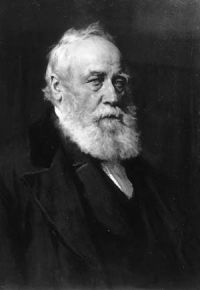
Portrait of Alexander MacBain Alexander MacBain,  An Etymological Dictionary of the Gaelic Language (1911)

“ The term Gaelic means Modern Gaelic.
Scottish Gaelic is written on the orthographic lines of Modern Irish, which in its turn represents the orthography of Old Irish. The greatest departure from ancient methods consists in the insistence now upon the rule of "Broad to broad and small to small." That is to say, a consonant must be flanked by vowels of the same quality, the "broad" being a, o, u, and the "small" e and i. Gaelic itself has fallen much away from the inflexional fulness of Old Irish.
”
Source: Wikisource

William Ridgeway, Edmund C. Quiggin and William J. Gruffydd,  1911 Encyclopædia Britannica, Volume 5… (1911)

“ Scottish Gaelic.—Scottish Gaelic is the form of Goidelic speech which was introduced into Scotland by the Dalriadic Scots who came over from Ireland in the early centuries of our era. We possess practically no early monuments of the language. We have one or two inscriptions in Latin characters, such as that at St Vigeans and the Ogams mentioned above, which have not yet been solved. ”
Source: Wikisource

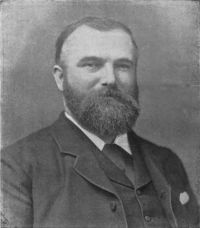
Portrait of Alexander MacBain Alexander MacBain,  An Etymological Dictionary of the Gaelic Language (1911)

“ The Gaelic languages—Irish, Manx, and Scottish Gaelic—have a much closer connection with one another than the Brittonic languages. Till the Reformation and, indeed, for a century or more thereafter, the Irish and Scottish Gaelic had a common literary language, though the spoken tongues had diverged considerably, a divergence which can be traced even in the oldest of our Gaelic documents—the Book of Deer. ”
Source: Wikisource

Get perspective with Kwize: daily news enlightened by great literature