The Two Noble Kinsmen

Definition and stakes

Frank Sidgwick,  The Sources and Analogues of 'A Midsummer-Night's Dream'… (1908)

“ The complete Chaucerian form of the story of Palamon and Arcite is dramatised in The Two Noble Kinsmen, a play to which Shakespeare undoubtedly [15] contributed. The changes made by the authors—Fletcher and Massinger or Shakespeare, or all three—are little more than such limitations as are demanded by dramatic form; for instance, the Kinsmen, when discovered fighting, are dismissed for a month to find three knights, instead of being given a year to find one hundred. ”
Source: Wikisource

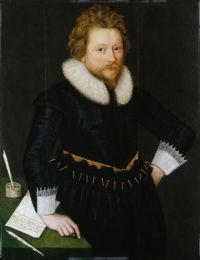
Portrait of John Fletcher John Fletcher,  The Two Noble Kinsmen

“ EMILIA.
Sweare’em never more
To make me their Contention, or to know me,
To tread upon thy Dukedome; and to be,
Where ever they shall travel, ever strangers
To one another.
PALAMON.
Ile be cut a peeces
Before I take this oth: forget I love her?
O all ye gods dispise me, then! Thy Banishment
I not mislike, so we may fairely carry
Our Swords and cause along: else, never trifle,
But take our lives, Duke: I must love and will,
And for that love must and dare kill this Cosen
On any peece the earth has.
THESEUS.
Will you, Arcite,
Take these conditions?
”
Source: Gutenberg

Portrait of John Fletcher John Fletcher,  The Two Noble Kinsmen

“ When fifteene once has found us! First, I saw him;
I (seeing) thought he was a goodly man;
He has as much to please a woman in him,
(If he please to bestow it so) as ever
These eyes yet lookt on. Next, I pittied him,
And so would any young wench, o’ my Conscience,
That ever dream’d, or vow’d her Maydenhead
To a yong hansom Man; Then I lov’d him,
Extreamely lov’d him, infinitely lov’d him;
And yet he had a Cosen, faire as he too.
But in my heart was Palamon, and there,
Lord, what a coyle he keepes! To heare him
Sing in an evening, what a heaven it is!
”
Source: Gutenberg

Get perspective with Kwize: daily news enlightened by great literature