“ Least Chinese of all, perhaps, are the splendid motor-roads darting off into the country in all directions, and the wide-spread growth of trees upon the hills as far as the eye can see.It is said that Germans are gradually returning now to Tsingtao, but the little cloven-footed people from the east are much more in evidence. The largely Japanese shops are a trifle mean and small in comparison with the general scheme of things, and boldly demand Japanese money still, as though there had been no change in the status of Tsingtao merely because their troops and officials have sailed away. ”
Tsingtao
Definition and stakes
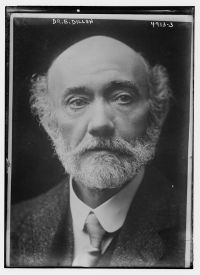
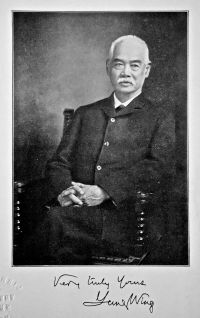
The theme of “Tsingtao” has been addressed by authors such as James R. Stockman, Franklin Hiram King, Harriet Alice Chipman Dewey, Emile Joseph Dillon and Paul S. Reinsch. It is often associated with terms like China, Shandong, people, Germans and Chinese.
Quotes about “Tsingtao”
James R. Stockman, The Sixth Marine Division (1946)
“ When the division landed, it found the citizens of Tsingtao to be a polyglot group: Communist agents, former Nazis, White Russians, Koreans, Japanese civilians, Japanese military personnel, Europeans, Eurasians, and Chinese.Politically, Tsingtao, as the most coveted city on Shantung Peninsula, was a hotbed of intrigue and strife. The Communists, with a stronghold at Chefoo, hoped to gain control of the peninsula, and the city. Resisting them were Japanese troops, protecting rail lines leading into the city. ”
 Franklin Hiram King,
Farmers of forty centuries — In the Shantung Province
(1911)
Franklin Hiram King,
Farmers of forty centuries — In the Shantung Province
(1911)
“ But Tsingtao, with its forty thousand Chinese, and Kiaochow across the bay, with its one hundred and twenty thousand more, and other villages dotting the narrow plains, maintain a very great demand for such growth on the hill lands. The wonder is that forest growth has persisted at all and has contributed so much in the way of fuel. Fig. 121.—Close view of the wild yellow Shantung rose cultivated in the Forest Garden at Tsingtao and very effective for parks and pleasure drives. ”