Ucayali River

Definition and stakes

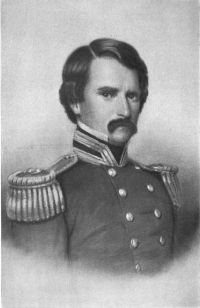
William Lewis Herndon, Lieutenant, U.S.N.,  Exploration of the Valley of the Amazon… (1853)

“ The channels on these rivers are frequently obstructed by grounded trees, striking one of which the boat would almost inevitably perish. It is safer on the broader Amazon. The Ucayali, as far as Sarayacu, averages half a mile of width, twenty feet of depth at its lowest stage, and three miles the hour of current. I fear that there is a place at the great bend of the river, just below Sarayacu, where there are islands with extensive sand-flats, that may form, at the lowest stage of the river, an obstruction to navigation for a vessel of greater draught than ten feet. ”

Source: Wikisource

James Henry Rochelle,  Life of Rear Admiral John Randolph Tucker

“ A chart of the River Ucayali, from its mouth to the confluence of the Rivers Urubamba and Tambo, drawn upon nine sheets and on a scale of one inch for each two miles. The Rivers Urubamba and Tambo, from their mouths to the highest point to which steamer navigation is practicable, are included in this chart, which contains 885 miles of the River Ucayali, 24 miles of the River Urubamba, and 53 miles of the River Tambo.
"9th. A chart of the River Pachitea, from its mouth to the confluence of the Rivers Palcazu and Pichis, drawn upon two sheets and on a scale of one [78] inch for each two miles.
”
Source: Gutenberg

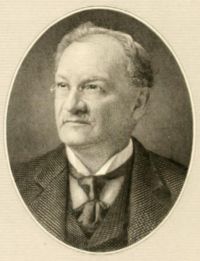
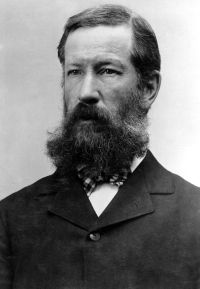
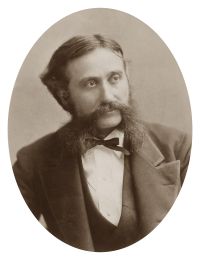
Portrait of George Earl Church George Earl Church,  1911 Encyclopædia Britannica (1911)

“ Señor Torres, who explored the Alto Ucayali for the Peruvian government, gives it a length of 186 m., counting from the mouth of the Pachitea to the junction of the Tambo and Urubamba. Its width varies from 1300 to 4000 ft., due to the great number of islands. The current runs from 3 to 4 m. an hour, and a channel from 60 to 150 ft. wide can always be found with a minimum depth of 5 ft. There are five bad passes, due to the accumulation of trees and rafts of timber. Sometimes enormous rocks have fallen from the mountains and spread over the river-bed causing huge whirlpools. ”
Source: Wikisource

Get perspective with Kwize: daily news enlightened by great literature