“ At the university the students learn how to wear a sort of tam-o'-shanter cap jauntily on one side of the head, and practise, with much assiduity, the art of making unearthly noises in the street at dead of night. An Italian university student may be safely backed to talk for more hours and in a louder tone concerning nothing, immediately under your hotel window, than can any other species of being, human or otherwise. Pavia also has a reputation for teaching the medical art. ”
University of Pavia
Definition and stakes
The theme of “University of Pavia” has been addressed by authors such as Raymond West, James J. Walsh, Arthur O. Norton, W. G. Waters and Fidel Castro. It is often associated with terms like Italy, Bologna, Padua, Milan and student.
Quotes about “University of Pavia”
1911 Encyclopædia Britannica (1911)
“ Pavia had been widely known as a seat of legal studies, and more especially of the Lombard law, although the evidence is wanting which would serve to establish a direct connexion between this early school and the university which was founded there in 1361, by virtue of the charter granted by the emperor Charles IV. The new “studium” included faculties of jurisprudence, philosophy, medicine and the arts, and its students were formally taken under the imperial protection, and endowed with privileges identical with those which had been granted to Paris, Bologna, Oxford, Orleans and Montpellier ”
Thomas Ashby, 1911 Encyclopædia Britannica (1911)
“ The university of Pavia has long been famous as a medical school, and has the oldest anatomical cabinet in Italy; in addition it has a natural history museum founded under Spallanzini in 1772, a botanical garden, begun in 1774, and excellent geological, palaeontological and mineralogical collections. ”
1911 Encyclopædia Britannica (1911)
“ His reputation soon widened, and in 1754 he became professor of logic, metaphysics and Greek in the university of Reggio, and in 1760 was translated to Modena, where he continued to teach with great assiduity and success, but devoted his whole leisure to natural science. He declined many offers from other Italian universities and from St Petersburg until 1768, when he accepted the invitation of Maria Theresa to the chair of natural history in the university of Pavia, which was then being reorganized. ”
“ I saw no students in Pavia, for it was vacation-time. The Italian university student is almost invariably a red-hot radical, and spends much of his time in making political demonstrations, or in actively rebelling against some unpopular professor. When he rebels or demonstrates, the authorities close the university for a few weeks, and thank Heaven that they have an unexpected vacation. ”
 James Montgomery,
Eminent literary and scientific men of Italy…
James Montgomery,
Eminent literary and scientific men of Italy…
“ Signora Goldoni hastened thither to get them, while the father and son enjoyed themselves at Milan, hospitably entertained by their kind and noble soi-disant relation; till, the necessary papers having arrived, they pursued their way to Pavia, and Goldoni left his son at his college. The university of Pavia was on a more expensive and luxurious footing than is usual in Italy, and dissipation and liberty were the order of the day. The students were regarded in the town like officers in garrison: the men hated, and the women welcomed them ”
F. M. Rudge, Catholic Encyclopedia (1913)
“ After some years of study under capable masters, he entered the Congregation of the Barnabites at an early age, and became teacher of philosophy and theology at the University of Pavia, and later Superior-General of the Congregation (1565) . In 1571 he was appointed by Pius V to the ancient see of Aleria, Corsica, where faith was all but extinguished, and clergy and people were in a state of deplorable ignorance. ”
“ I began to think that logic had never been taught in Pavia, either at the university or elsewhere. I had met a porter who thought that because a man was half an Englishman he should be called a Greek, and I had met a guide who spelled his name with a Greek letter because his father had killed a man in a wine-shop. ”
P. S. Allen, The Age of Erasmus
“ Before he could settle he must see many men and many cities, and learn what Italy had to teach him.For the first part of his time there, until 1473, he was at Pavia studying law and rhetoric; but on his return from home in 1474 he went to Ferrara in order to enjoy the better opportunities for learning Greek afforded by the court of Duke Hercules of Este and its circle of learned men. His description of the place is interesting: 'The town is beautiful, and so are the women. The University has not so many faculties as Pavia, nor are they so well attended ”
W. G. Waters, Jerome Cardan: A Biographical Study
“ Padua cannot claim for its University an antiquity as high as that which may be conceded to Pavia, but in spite of its more recent origin, there is no little obscurity surrounding its rise. The one fact which may be put down as certain is that it sprang originally from the University of Bologna. Early in the thirteenth century violent discords arose between the citizens of Bologna and the students, and there is a tradition that the general school of teaching was transferred to Padua in 1222. ”
W. G. Waters, Jerome Cardan: A Biographical Study
“ Padua like Athens humanized its conquerors. It became the University town of Venice, as Pavia was of Milan, and it was for a long time protected from the assaults of the Catholic reaction by its rulers, who [Pg 26] possibly were instigated rather by political jealousy of the Papacy as a temporal power, than by any enthusiasm for the humanist and scientific studies of which Padua was the most illustrious home south of the Alps; studies which the powers of the Church began already to recognize as their most dangerous foes. ”
Various, Encyclopaedia Britannica, 11th Edition…
“ Thus a large all-round increase in secondary and higher education is shown—satisfactory in many respects, but showing that more young men devote themselves to the learned professions (especially to the law) than the economic condition of the country will justify. There are 21 universities—Bologna, Cagliari, Camerino, Catania, Ferrara, Genoa, Macerata, Messina, Modena, Naples, Padua, Palermo, Parma, Pavia, Perugia, Pisa, Rome, Sassari, Siena, Turin, Urbino, of which Camerino, Ferrara, Perugia and Urbino are not state institutions; university courses are also given at Aquila, Bari and Catanzaro. ”
1911 Encyclopædia Britannica (1911)
“ But in October 1412 the lectures were recommenced, and the university entered upon the most brilliant period of its existence. Its professors throughout the 15th century were men of distinguished ability, attracted by munificent salaries such as but few other universities could offer, while in the number of students who resorted thither from other countries, and more especially for the study of the civil law, Pavia had no Arezzo. rival in Italy but Padua. Arezzo appears to have been known as a centre of the same study so early as 1215, and its earliest statutes are assigned to the year 1255. ”
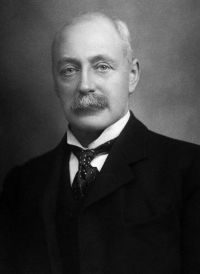 Sir D'Arcy Power,
William Harvey
Sir D'Arcy Power,
William Harvey
“ The great North Italian Universities of Bologna, Padua, Pisa, and Pavia, were then at the height of their renown as centres of mathematics, law, and medicine. Harvey chose to attach himself to Padua, and many reasons probably influenced him in his [15] choice. The University was specially renowned for its anatomical school, rendered famous by the labours of Vesalius, the first and greatest of modern anatomists, and by the work of his successor, Fabricius, born at Aquapendente in 1537. ”
Various, Encyclopaedia Britannica, 11th Edition…
“ The most copious collections relate to the study of medicine and natural science. It possesses about 300,000 printed books, 404 incunabula, 203 Aldines, and 196 Bodoni editions, but the more important incunabula and MSS. about the middle of the 19th century went to enrich the Biblioteca Nazionale. Other important university libraries are those of Catania (1755) , 130,000 vols.; Genoa (1773) , 132,000 vols., 1588 MSS.; Pavia (1763) , 250,000 vols., 1100 MSS.; Padua (200,000 vols., 2356 MSS.) , which in 1910 was housed in a new building; Cagliari (90,000 vols.) ; Sassari (74,000 vols.) . ”
Various, The Catholic World, Vol. 16, October 1872-March 1873
“ Italy was fruitful in universities, for, to mention only prominent names, there were Padua, Pavia, Salerno, and Naples, besides Rome, where the tradition of learning, especially sacred learning, was never quite broken. Padua was an offshoot from Bologna, and became famous in the XIIIth century for its devotion to classic literature and the liberal arts. ”
Thomas Ashby, 1911 Encyclopædia Britannica (1911)
“ Pavia has a number of iron-foundries, military engineering and electrical production works, and other factories, as well as a large covered market, built in 1882. Pavia lies on the main line from Milan to Genoa (which crosses the Ticino by a bridge half a mile long, and shortly afterwards the Po) , with several branch lines. Barges from Pavia can pass down the Po to the Adriatic or to Milan by canal. Five miles north of Pavia is the Carthusian monastery of Certosa di Pavia, one of the most magnificent in the world. ”
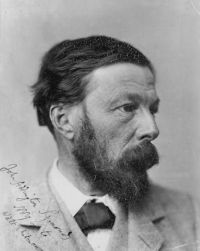 John Addington Symonds,
Renaissance in Italy, Volume 2…
John Addington Symonds,
Renaissance in Italy, Volume 2…
“ It was natural that important and remunerative branches of learning like law and medicine should attract a greater number of students than pure literature, and that their professors should be better paid than the teachers of eloquence. Padua, Bologna, and Pavia in particular retained their legal speciality throughout the period of the Renaissance, and remained but little open to humanistic influences. ”
Various, The Atlantic Monthly, Volume 20…
“ At the foot of the stairway ascending to the schools from the court is the statue of the learned lady who was once a professor in the University, and who, if her likeness belie not her looks, must have given a great charm to student life in other times. At present there are no lady professors at Padua, any more than at Harvard ”
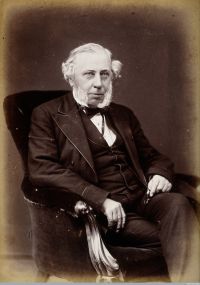 Charles West,
The Harveian Oration for 1874
Charles West,
The Harveian Oration for 1874
“ The hasty traveller, indeed, who stops for an hour or two on his way to Venice to take a hurried glance at the chapel of Giotto scarcely dreams as he treads the grass-grown streets of the deserted city, ‘Where wasteful time debateth with decay,’ how large a space Padua has filled in the intellectual life of Europe. [13] And yet it was once a university with 18,000 students; a true republic of letters, and a republic of most democratic kind. The Professors, originally elected by the students, were in Harvey’s time still nominated by the University. ”
Sir D'Arcy Power,
William Harvey
“ The Universities of Europe have always been of two [16] types, the one Magistral, like that of Paris, with which we are best acquainted, for Oxford and Cambridge are modelled on Paris, and the Masters of Arts form the ruling body; the other, the Student Universities, under the control of the undergraduates, of which Bologna was the mother. Hitherto Harvey had been a member of a Magistral University, now he became attached to a University of Students, for Padua was an offshoot of Bologna. ”
M. F. Mansfield, Italian Highways and Byways from a Motor Car
“ Pavia was the Lombard capital from 572 to 774. Its old walls and ramparts remain, in part, to-day and the whole aspect of the town is one of a certain mediævalism which comports little with the modernity of its neighbour, Milan, which has so far outgrown its little brother.Pavia’s Certosa, on the road from Milan to Pavia, is its chief architectural splendour. Of that there is no doubt. ”
the Council of Pavia, Select Historical Documents of the Middle Ages (1892)
“ Then the venerable bishops Hermann of Yerden, Daniel of Prague and Otto count Palatine, and master Herbert, provost, whom the lord emperor, by the advice of 22 bishops and the Cistercian and Clairvaux abbots and other monks there present, had sent to Rome to summon the parties before the council at Pavia, gave testimony in the sight of the council that they had summoned before the presence of the church congregated at Pavia, through three edicts at intervals, peremptorily and solemnly, all secular influence being removed, Roland the chancellor and his party ”
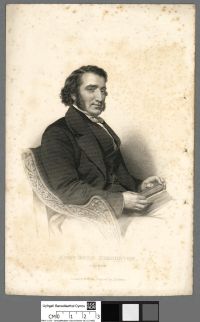 John Stoughton,
Recollections of a Long Life
John Stoughton,
Recollections of a Long Life
“ In other places I picked up illustrations I desired; for, when the mind is bent on a particular inquiry, it is wonderful how it draws cognate matters to itself. We made an excursion to Pavia, and, on the way, stopped at the beautiful monastery of Certosa. Pavia, situated on the river Ticino, with a covered bridge, is interesting, from its antiquities and history. The churches are specimens of Lombardic architecture, and in the Duomo one was startled to find the tomb of Augustine, Bishop of Hippo, whose remains were transferred from Africa to this city. ”
 Lilian Whiting,
Italy, the Magic Land
Lilian Whiting,
Italy, the Magic Land
“ Augustus often sojourned in Naples, and it was an especially poetic haunt of Virgil, whose tomb is here. Although the poverty and the primitive life of the great masses of the people have been widely discussed, it is yet true that Naples has a very charming social life, and that the University is a centre of learning and culture. One of the oldest universities in Europe, it has a faculty of over one hundred and twenty professors and more than five thousand students. ”
Various, The Catholic World, Vol. 05, April 1867 to September 1867
“ In Italy the universities to a great extent owed their existence to the liberality of opulent citizens, who valued the institutions far too highly to disgust them by any infringement of their privileges. {225} Should, however, the city of Bologna show difficulties in their path, the scholars, well aware of a friendly reception elsewhere, packed up their valuables, or pawned them in case of need, and emigrated to Padua. If the commune of Padua grew in any way obnoxious to the university, the rectors and students at once decided on an excursion to Vercelli. ”
Various, Encyclopaedia Britannica, 11th Edition…
“ The university, founded in 1471, is a flourishing institution with faculties in law, medicine, natural science, engineering and philosophy. Attached to it are a library, an observatory, a botanical garden, and a physical and natural history museum. Genoa is also well supplied with technical schools and other institutions for higher education, while ample provision is made for primary education. The hospitals and the asylum for the poor are among the finest institutions of their kind in Italy. ”
Anne C. Lynch Botta, Handbook of Universal Literature…
“ From the period of the first institution of universities, that of Bologna had maintained its preëminence. Padua, Ferrara, Pavia, Turin, Florence, Siena, Pisa, and Rome were also seats of learning. The men who directed the scientific studies of their country and of Europe were almost universally attached as professors to these institutions. Indeed, at this period, through the genius of Galileo and his school, European science first dawned in Italy. ”
Arthur Gray, Tedious brief tales of Granta and Gramarye (1919)
“ After all my wanderings my conscience reproached me with my culpable neglect of the art in whose elements I had been grounded by the ever-revered Gazophylacius. I resumed the medical studies which I was convinced were best suited to my bent and upbringing, by adopting the features and the status of a freshman in the University of Padua. As the freshman, under no possible circumstances, could have passed his examinations you will see that I conferred on him no small obligation by the assistance which I rendered. ”
Asa Gray, Letters of Asa Gray; Vol. 1
“ By making a very early ride I succeeded in reaching Padua at ten o’clock this morning; visited the university so famed of old, the churches, the splendid Caffè Pedrocchi, the Botanic Garden,—the most ancient in Italy, of which Alpinius, the elder and the younger, and Pontedera were the directors. It is under the care of Visiani, [98] to whom I brought a letter from Bentham, and who politely showed me all I wished to see. The university is a queer old place indeed, and the lecture-rooms the most dark, gloomy, and incommodious places you can conceive ”
Robert S. Rait, Life in the Medieval University
“ Where students legislated for themselves, their rules were neither numerous nor detailed. Our information about life in the student-universities is, therefore, comparatively small, and it is with the universities of masters that we shall be chiefly concerned. It is, however, essential to understand the powers acquired by the student-guilds at Bologna, the institutions of which were reproduced by most of the Italian universities, by those of Spain and Portugal, and, much less accurately, by the smaller universities of France. ”