Valentinian I

Definition and stakes

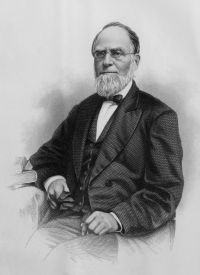
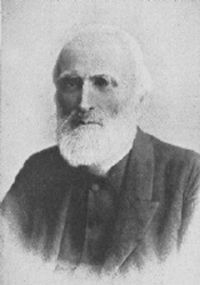
Portrait of Philip Schaff Philip Schaff,  Nicene and Post-Nicene Fathers… (1885)

“ Valentinian had died in 375, leaving two sons, Gratian, an accomplished youth of eighteen, who became Emperor of Gaul and the West, and Valentinian II., then a child, who was nominal Emperor of Italy and the central provinces, and who, with his mother Justina, had his residence at Milan. Gratian distinguished himself by his conduct of several expeditions against the German tribes beyond the Rhine, and, upon the death of his uncle Valens, nominated Theodosius to be Emperor of the East. ”
Source: Wikisource

Zosimus,  New History — Book the Fourth (1814)

“ He threw himself into the sea, preferring rather to trust to the waves than to men who were his greatest enemies.
Theodosius then delivered to Valentinian as much of the empire as his father had possessed; in which he only acted as he was enjoined by his duty to those who so merited his kindness. Having afterwards embodied the choicest soldiers of Maximus with his own, he sent Valentinian into Italy, Celtica, and other countries, to arrange the affairs of his share of the empire. His mother accompanied him, to supply, as much as was possible in a woman, the prudence which his youth required.
”
Source: Wikisource

1911 Encyclopædia Britannica, Volume 27… (1911)

“ Peculiarly Valentinian is the above-mentioned derivation of the material world from the passions of Sophia. Whether this already formed part of the original system of Valentinus is, indeed, questionable, but at any rate it plays a prominent part in the Valentinian school, and consequently appears with the most diverse variations in the account given by Irenaeus. By it is effected the comparative monism of the Valentinian system. The dualism of the conception of two separate worlds of light and darkness is over-come by the derivation of the material world from the passions of Sophia . ”
Source: Wikisource

Get perspective with Kwize: daily news enlightened by great literature