Veii

Definition and stakes

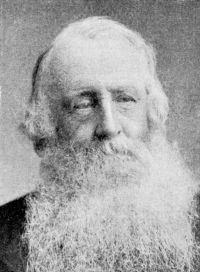
Portrait of Edward A. Freeman Edward A. Freeman,  Studies of Travel: Italy

“ The site of Veii is that of a great city, a strong city, but not a city made, like Rome, for rule. We go far and wide, and we find nothing like the "great group of village communities by the Tiber." Veii is not a group, and she has no Tiber. The city stood high on the rocks, yet it can hardly be called a hill-city. A peninsular site rises above the steep and craggy banks of two small streams which make up the fateful Cremera; but the peninsula itself is nearly a table-land, a table-land surrounded by hills. The stream supplied the walls with an admirable natural fosse, and that was all. ”
Source: Gutenberg

Portrait of Edward A. Freeman Edward A. Freeman,  Studies of Travel: Italy

“ It is strange to step out the traces of a city whose position and extent are so unmistakably marked, but of which nothing is left which can be called a building, or even a ruin. The most memorable work in the circuit of Veii 74 is a work not of building but of boring—the Ponte Sodo, hewn in the rock for the better passage of the guardian stream. Besides these, some small fragments of the Etruscan wall, the signs of a double gate, some masonry of the small Roman tower which in after times arose within the forsaken walls, are pretty well all that remains of the life of Veii. ”
Source: Gutenberg

Charles Bucke,  Ruins of Ancient Cities (Vol. 2 of 2…

“ Veii was a powerful city of Etruria; large enough to contend with Rome in the time of Servius Tullus; and Dionysius of Halicarnassus says, that it was equal in extent to Athens; and Sir W. Gell quotes a passage from a fragment of the same writer, published by Mai at Milan, 1816, in which he speaks thus of Veii and its territory:—“The city of Veii was not inferior to Rome itself in buildings, and possessed a large and fruitful territory, partly mountainous, and [Pg 497] partly in the plain. ”
Source: Gutenberg

Get perspective with Kwize: daily news enlightened by great literature