“ It is not this world. It is not a bit like this world. In a world as it should be, Veronica, you would undoubtedly have been blown up—if not altogether, at all events partially. What you have to do, Veronica, is, with a full heart, to praise Heaven that this is not a perfect world. If it were I doubt very much, Veronica, your being here. That you are here happy and thriving proves that all is not as it should be. The bull of this world, feeling he wants to toss somebody, does not sit upon himself, so to speak, till the wicked child comes by. ”
Veronica
Definition and stakes
The literary concept of "Veronica" appears as a recurring figure across various narratives, representing resilience, ethical contemplation, and the conflict between idealism and reality. Authors such as Johanna Spyri, Jerome K. Jerome, and H. G. Wells depict her as a character navigating personal development, social expectations, and existential reflections.
Spyri’s Veronica struggles with uncertainty and ambition, while Jerome’s humor highlights her function as a spark for philosophical discussion. Wells, in Ann Veronica, connects her to wider themes of human relationships and change. These differing portrayals illustrate Veronica as a complex symbol of the interaction between personal initiative and the intricacies of existence.
Quotes about “Veronica”
“ Veronica! Mr. Veronica! that sounds well," cried Dietrich, and he laughed aloud at the idea.Veronica thought it no laughing matter, however. She pressed Gertrude's hand firmly and looked up with glowing eyes, as she said, "I can be one too, can't I mother; say?""You should not laugh, Dietrich," said his mother kindly. "Veronica can be exactly what you can be. If she works steadily, and does not grow tired and careless, but keeps on till her work is finished and well finished, she will be a lady as you will be a gentleman." ”
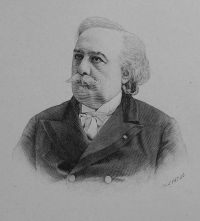 Hector France,
The Grip of Desire: The Story of a Parish-Priest
Hector France,
The Grip of Desire: The Story of a Parish-Priest
“ Well, between ourselves, I believe that there are none but in the calendar.—Oh, Veronica, Veronica.—Yes, sir, I believe it in my soul and conscience, and I can add another thing still. If, before they canonized all these saints, they had consulted their servant, perhaps they would not have found a single one of them.—What! you, the pious Veronica, you say such things?—One is pious and staid and everything you wish, but one sees what one sees. Monsieur Fortin was accustomed to say that no one is a great man to his valet de chambre; and I add, that no one is a saint to his cook. ”