Völsunga saga

Definition and stakes

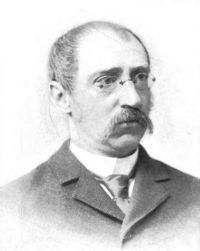
Portrait of Henry A. Beers Henry A. Beers,  A History of English Romanticism in the Nineteenth Century

“ The family vendetta which it narrates, in the Iceland of the eleventh century, is hardly more fabulous—hardly less realistic—than any modern blood feud in the Tennessee mountains. The passions and dramatic situations are much the same in both. The "Völsunga Saga" belongs not to romantic literature, strictly speaking, but to the old cycle of hero epics, to that earlier Middle Age which preceded Christian chivalry. It is the Scandinavian version of the story of the Niblungs, which Wagner's music-dramas have rendered in another art. But in common with romance, it abounds in superhuman wonders. ”
Source: Gutenberg

Portrait of George Saintsbury George Saintsbury,  The Flourishing of Romance and the Rise of Allegory

“ There is no real question of superiority or inferiority, but only one of difference. The older handling, in the Volsunga Saga to some extent, but still more in the Eddaic songs, has perhaps the finer touches of pure clear poetry in single passages and phrases; the story of Sigurd and Brynhild has a passion which is not found in the German version; the defeat of Fafnir and the treacherous Regin is excellent; and the wild and ferocious story of Sinfiötli, with which the saga opens, has unmatched intensity, well brought out in Mr Morris's splendid verse-rendering, The Story of Sigurd the Volsung. ”
Source: Gutenberg

L. Winifred Faraday,  The Edda, Volume 2

“ There is also the inevitable deterioration in the character of Brynhild, without the compensating elevation in that of her rival by which the Nibelungen Lied places Chriemhild on a height as lofty and unapproachable as that occupied by the Norse Valkyrie; the Brynhild of Völsunga Saga is something of a virago, the Gudrun is jealous and shrewish. But for actual material, the compiler is absolutely to be trusted; and Völsunga Saga is therefore, in spite of artistic faults, a priceless treasure-house for the real features of the legend. ”
Source: Gutenberg

Get perspective with Kwize: daily news enlightened by great literature