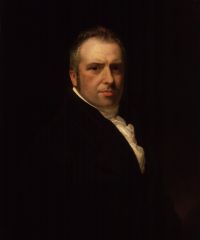
William Gifford

Definition and stakes

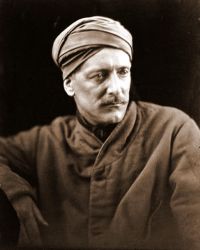
Portrait of Sabine Baring-Gould Sabine Baring-Gould Devonshire Characters and Strange Events (1908)

It was not in human nature that William Gifford should withhold his hand from turning out some neat lines taking off the sanctimonious and pretentious cobbler, and so revenging himself for slights and insults many. It is not in human nature that he should refrain from showing this product to his fellow apprentices. It is not in human nature that some sneak among them should not apprise the master or that master's son of what the sullen, discontented lad had done.
Source: Wikisource

W. E. Winks Lives of Illustrious Shoemakers

Having taken a glimpse of the work accomplished by William Gifford as a critic, a scholar, and an editor in the latter years of his life, let us turn to look at his circumstances in boyhood and youth, when, as a miserable cobbler’s apprentice, he began to yearn after knowledge and to cherish ambitious dreams. The contrast between the first and last scenes in the drama of life could hardly be more wonderful than that which is presented in the history of the man who passed from the cobbler’s stool to the editor’s chair.
Source: Gutenberg

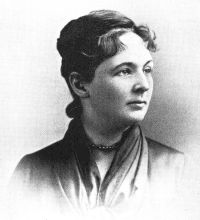
William Hazlitt The Collected Works of William Hazlitt…

Life’s Decay. Sonnet LXXIII. A LETTER TO WILLIAM GIFFORD, ESQ. William Gifford (1756–1826) , the son of a glazier, after a neglected childhood, during which he was at one time apprenticed to a shoemaker, entered Exeter College, Oxford, through the kindness of a friend, and graduated in 1782. His two satires, The Baviad (1791) and The Mæviad (1795) , were published together in 1797, and his translation of Juvenal, upon which he had been working since he left Oxford, in 1802. He became editor of The Anti-Jacobin (1797) , and was the first editor (1809–1824) of The Quarterly Review.
Source: Gutenberg

Get perspective with Kwize: daily news enlightened by great literature