Winslow Homer

Definition and stakes

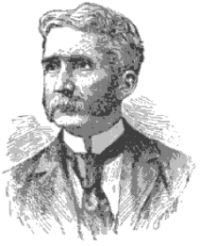
Portrait of John C. Van Dyke John C. Van Dyke,  American painting and its tradition (1919)

“ Homer is an excellent illustration of what a man cannot do entirely by himself. With his initial force and his keen vision he could make a very powerful report. Had he been educated, taught restraint and method, given a sense of style, schooled in decorative value, he might have risen to the great gods of art. But perhaps not. Even pedagogues, in their late years, begin to doubt the worth of training. It might have ruined Winslow Homer. Yet, nevertheless, it is the thing that his admirers always feel the lack of in his pictures. ”
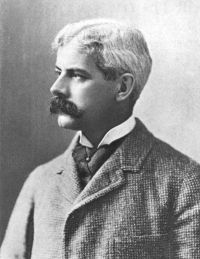
Source: Gutenberg

S. G. W. Benjamin,  Art in America: A Critical and Historial Sketch

“ It is to the eccentric and altogether original compositions of Winslow Homer that we turn for a more decided expression of the growing weariness of our people with the conventional, and a vague yearning after an original form of art speech. The freshness, the crudity, and the solid worth of American civilization are well typified in the thoroughly native art of Mr. Homer. No artist has shown more versatility and inventiveness in choice of subject, and greater impatience with accepted methods. ”
Source: Gutenberg

Civilization in the United States… (1922)

“ The cases of Winslow Homer and Albert P. Ryder have an interest aside from the actual works of the two painters. They are doubtless the strongest Americans of their time—and the ones who owe the least to Europe. It must be men of such a breed who will make real American art when we are ready to produce it. In any case their work must rank among our permanently valuable achievements: Homer’s for the renewal of the sturdy self-reliance that we noted in Copley, Ryder’s for the really noble design he so often obtained and for the grand and moving fidelity to a vision. ”
Source: Gutenberg

Get perspective with Kwize: daily news enlightened by great literature