“ Copley may be a rich man now, but he is just as big a scamp as ever he was, and Sir George ought to know it. I tell you, Mr. Harry, it fairly makes my blood boil to see that blackguard swaggering about here and hanging around Miss May as if she belonged to him. It fair spoils my enjoyment and my food, it does. But you see how difficult it is for a man in my position to interfere. ”
Copley
Definition and stakes
The concept of "Copley" encompasses both a historical figure and a literary archetype, reflecting dual legacies in art and storytelling. John Singleton Copley, a colonial American painter, is celebrated for capturing the essence of 18th-century portraiture, as noted by S. G. W. Benjamin, whose work highlights Copley’s ability to immortalize the grandeur of his time. Conversely, in literature, Copley emerges as a recurring character, often embodying moral complexity or social commentary.
Authors like Fred M. White portray him as a wealthy yet detestable figure, while Nathaniel Hawthorne and Susan Warner examine his personal relationships, revealing conflicts between aspiration and virtue. These varied depictions underscore Copley’s lasting presence as both a cultural symbol and a narrative tool, bridging historical admiration with literary analysis.
Quotes about “Copley”
“ Copley is not a gentleman, of course——""I tell you, he is a scoundrel," Fielden interrupted. "Believe me, May, I would not have spoken unless I had been bound to. That man is not fit to go into any respectable house. I cannot say more than that at present, because the secret is not altogether mine. But this much I tell you: Had there been no such person as Raymond Copley I should be a rich man at the present moment. I know that, but for the merest accident, there would be blood on that man's hands. You must not marry him, May. You must not give him the slightest encouragement. ”
S. G. W. Benjamin, Art in America: A Critical and Historial Sketch
“ No painter was ever more in sympathy with his age than Copley; and thus, when we look at the admirable portraits in which his genius commemorated the commanding characters of those colonial days, in their brilliant and massive uniforms, their brocades and embroidered velvets, and choice laces and scarfs, the imagination is carried back to the past with irresistible force, while, at the same time, we are astonished at the ability which, with so little training, could give immortality both to his contemporaries and his own pencil. ”
Related terms
Authors who wrote about “Copley”
Theodore MartinFred M. White Jean WebsterArmstrong LivingstonS. G. W. Benjamin
 Susan WarnerJ. D. Beresford
 Nathaniel Hawthorne
 Robert Southey
 Jacob Abbott
 James Henry Stark
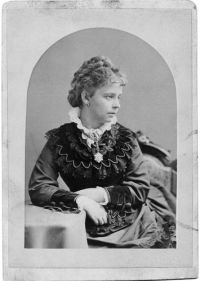 Alice Morse Earle
 Adeline SergeantMary Stoyell Stimpson
 Emily Eden
 Thomas Bailey Aldrich
 John TimbsGeorge M. Towle
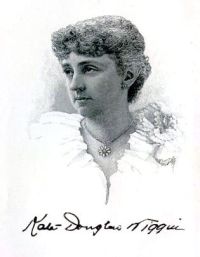 Kate Douglas Smith Wiggin
 Augustus J. C. Hare
Jean WebsterArmstrong LivingstonS. G. W. BenjaminSusan WarnerJ. D. BeresfordNathaniel HawthorneRobert SoutheyJacob AbbottJames Henry StarkAlice Morse EarleAdeline SergeantMary Stoyell StimpsonEmily EdenThomas Bailey AldrichJohn TimbsGeorge M. TowleKate Douglas Smith WigginAugustus J. C. Hare