Accent (phonetics)

Definition and stakes

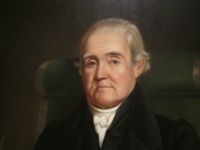
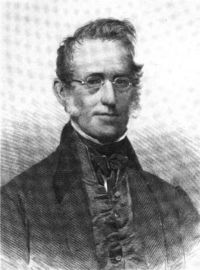
Portrait of Goold Brown Goold Brown,  The Grammar of English Grammars

“ Now it is all a mistake, however common, to suppose that our accent, consisting as it does, in stress, enforcement, or "percussion of voice," can ever shorten the syllable on which it is laid; because what increases the quantum of a vocal sound, cannot diminish its length; and a syllable accented will always be found longer as well as louder, than any unaccented one immediately before or after it. Though weak sounds may possibly be protracted, and shorter ones be exploded loudly, it is not the custom of our speech, so to deal with the sounds of syllables. ”
Source: Gutenberg

H. Ernest Hunt,  Spirit and Music

“ Regular rhythm involves accent. Whether or no there be any such emphasis as a thing in itself, the listening ear supplies it to meet a need. When we attend to a clock ticking, the tick-tock, tick-tock, however even it may sound at first, soon resolves itself into a rhythm with the accent on either the tick or the tock. So does the beat of an engine, or the hum of a railway train, merge itself into some definite sound picture, with the accent for relief that the ear demands. Thus out of rhythm grows very naturally an accentuation which gives balance, structure, and form. ”
Source: Gutenberg

A Dictionary of Music and Musicians (1900)

“ It will be observed that in all these examples the strong accent is on the first note of the bar. It has been already said that this is its regular position; still it is by no means invariable. Just as in poetry the accent is sometimes thrown backward or forward a syllable, as for instance in the line
‘Stop! for thy tread is on an Empire's dust,’ where the first syllable instead of the second receives the accent, so in music, though with much more frequency, we find the accent transferred from the first to some other beat in the bar. Whenever this is done it is always clearly indicated.
”
Source: Wikisource

Get perspective with Kwize: daily news enlightened by great literature