Ant egg

Definition and stakes

Edmund Selous,  The romance of insect life (1914)

“ The egg is laid, it cannot be detached, and, when hatched, the issuing grub bores, with enthusiasm, into the head of the ant. Coming to the brain he has nothing to do but to eat it, and he does so until the whole cavity of the skull has become an empty chamber, except for his own presence there. The movements of the ant during this process—of its feelings we have no record—have become more and more erratic, and it feels itself less and less capable of performing its duties as a member of an active and industrious community. ”
Source: Gutenberg

Various,  Popular Science Monthly (1896)

“ The egg of the ant is uniform, smooth, tight and bright, without any division. When the larva has come from it, only a very thin membrane is left, which rolls up and is reduced to an imperceptible point; and even if the egg does not hatch, it is still so small as to escape the eyes. This is why these eggs are so little known, for what is commonly and improperly called the egg is really the larva, and is endowed with life and motion. These eggs, or rather these larvæ, of ants are very much sought after by barnyard fowl. ”
Source: Wikisource

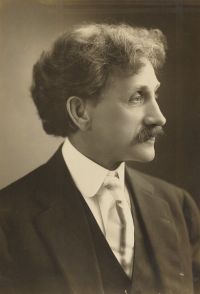
Portrait of Ernest Thompson Seton Ernest Thompson Seton,  Wild Animals I Have Known (1900)

“ Some ran around the hill with vast energy and little purpose, while a few of the more sensible began to carry away fat white eggs. But the old partridge, coming to the little ones, picked up one of these juicy-looking bags and clucked and dropped it, and picked it up again and again and clucked, then swallowed it. The young ones stood around, then one little yellow fellow, the one that sat on the chip, picked up an ant-egg, dropped it a few times, then yielding to a sudden impulse, swallowed it, and so had learned to eat. ”
Source: Wikisource

Get perspective with Kwize: daily news enlightened by great literature