Anti-tank gun

Definition and stakes

Amabel Williams-Ellis,  The Tank Corps

“ The hostile infantry follows Tanks only half-heartedly. Experience shows that hostile attacks are soon checked by aimed machine-gun and artillery fire. Co-operation between the Tanks and their infantry detachments must be hindered as much as possible. The arms should be separated and destroyed in detail. All projectiles which do not hit the armour-plating at right angles ricochet off instead of penetrating. Artillery, light trench mortar and anti-Tank rifle fire is effective against all portions of the Tank, especially against the broadside and the cab (framed in red in the illustrations) . ”
Source: Gutenberg

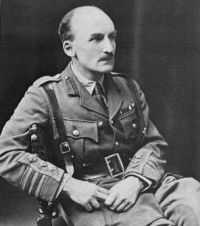
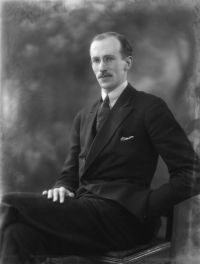
Portrait of B. H. Liddell Hart B. H. Liddell Hart,  Paris

“ If a man cannot move freely, he cannot fight. If a horse cannot move, what use is his rider? If the artillery-man cannot serve [80] the gun freely and the gun is immovable, field artillery is useless. Therefore, if gas becomes a standard weapon, we are left with the tank and the aeroplane as the sole effective arms for offensive action. Only as the static defenders of the fortified bases—the land-ports—of tanks and aircraft will there be a future for infantry and artillery, the former armed with super-heavy armour-piercing machine-guns, and the latter with anti-tank and anti-aircraft guns. ”
Source: Gutenberg

Amabel Williams-Ellis,  The Tank Corps

“ But there was one form of weapon which was, we felt sure, bound to be evolved by the Germans. It was one which we were not at all anxious to encounter. We imagined a weapon which should practically be the machine-gun version of the anti-Tank rifle; that is to say, a weapon which could pour out a stream of high-velocity, large-calibre bullets at the rate of two hundred a minute. Actually it was almost precisely such332 an engine that the Germans had got in their “Tuf” machine-gun, of which an interesting account is given in Weekly Tank Notes. ”
Source: Gutenberg

Get perspective with Kwize: daily news enlightened by great literature