Astronomical unit

Definition and stakes

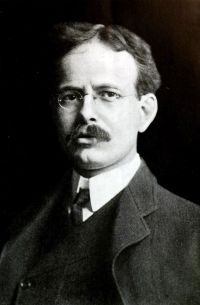
Portrait of Simon Newcomb Simon Newcomb,  Side-Lights on Astronomy and Kindred Fields of Popular Science

“ To form a conception of the stellar system, we must have a unit of measure not only exceeding any terrestrial standard, but even any distance in the solar system. For purely astronomical purposes the most convenient unit is the distance corresponding to a parallax of 1", which is a little more than 200,000 times the sun's distance. But for the purposes of all but the professional astronomer the most convenient unit will be the light-year—that is, the distance through which light would travel in one year. ”
Source: Gutenberg

Simon Newcomb and Agnes Mary Clerke,  1911 Encyclopædia Britannica, Volume 2… (1911)

“ At the base of every system of astronomical observation is the law that, in the voids of space, a ray of light moves in a right line. The fundamental problem of practical astronomy is that of determining by measurement the co-ordinates of the heavenly bodies as already defined. Of the three co-ordinates, the radius vector does not admit of direct measurement, and must be inferred by a combination of indirect measurements and physical theories. ”
Source: Wikisource

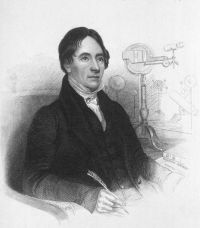
Portrait of George Biddell Airy George Biddell Airy,  Popular Astronomy: A Series of Lectures Delivered at Ipswich (1881)

“ There are two elements which, ever since accurate astronomical observations began, have been fixed on by all astronomers as the most advantageous. One is thus described: supposing we can fix on the imaginary pole or place of rotation of the stars, then one element is the distance of the star, as measured from that pole in degrees. I will speak in a short time of what is really meant by a degree. The other is, supposing the celestial globe, or the sphere of the heavens, to turn round an axis, as we have shown it does ”
Source: Wikisource

Get perspective with Kwize: daily news enlightened by great literature