Biogeographic barrier

Definition and stakes

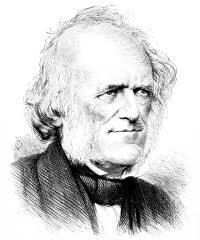
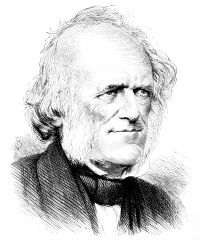
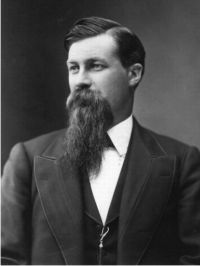
Portrait of Alfred Russel Wallace Alfred Russel Wallace,  The Geographical Distribution of Animals…

“ The range of any species or group in such a region, will in many cases (perhaps in most) be determined, not by physical barriers, but by the competition of other organisms. Where barriers have existed from a remote epoch, they will at first have kept back certain animals from coming in contact with each other; but when the assemblage of organisms on the two sides of the barrier have, after many ages, come to form a balanced organic whole, the destruction of the barrier may lead to a very partial intermingling of the peculiar forms of the two regions. ”
Source: Gutenberg

Frederic E. Clements,  Research methods in ecology (1905)

“ Biological barriers include vegetation, man and animals, and plant parasites. The limiting effect of vegetation is exhibited in two ways. In the first place, a formation acts as a barrier to the ecesis of species invading it from the formations of another type, on account of the physical differences of the habitats. Whether such a barrier be complete or partial will depend upon the degree of dissimilarity existing between the formations. Hylophytes are unable to invade a prairie, though open thicket plants may do so to a certain degree. ”
Source: Gutenberg

Frederic E. Clements,  Research methods in ecology (1905)

“ In the same way, a forest formation on account of its diffuse light is a barrier to poophytes; and a swamp, because of the amount and character of the water-content, sets a limit to both hylophytes and poophytes. Formations, such as forests, thickets, etc., sometimes act also as direct obstacles to migration, as in the case of tumbleweeds and other anemochores, clitochores, etc. A marked effect of vegetation in decreasing invasion arises from the closed association typical of stable formations and of social exclusive species. ”
Source: Gutenberg

Get perspective with Kwize: daily news enlightened by great literature