Bituminous coal

Definition and stakes

W. Mattieu Williams,  Science in Short Chapters

“ To light an anthracite fire in an ordinary fireplace the bellows are required unless a specially suitable draught or fire-lighter is used. Some recommend that an admixture of bituminous coal should be used to start it, but this is a feeble device calculated to lead to total failure, seeing that the sole originator and sustainer of our ordinary use of bituminous coal is domestic ignorance and indolence, and if both kinds of coal are kept in a house a common English servant will stubbornly use the easy-lighting kind, and solemnly assert that the other cannot be used at all. ”
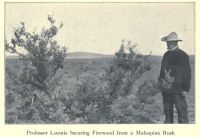
Source: Gutenberg

Justin R. Loomis,  The Elements of Geology; Adapted to the Use of Schools and Colleges

“ The common bituminous coal kindles readily, emits much smoke, and throws out so much liquid bitumen that the whole soon cakes into a solid mass. It contains about forty per cent, of bitumen. The second kind, or cannel coal, contains twenty per cent., and inflames easily, but does not agglutinate. The stone-coal, or anthracite, contains scarcely any bitumen, ignites with difficulty, emits but little smoke, and produces a very intense heat. The bituminous varieties are always found in the least disturbed portions of the coal districts ”
Source: Gutenberg

Political and commercial geology and the world's mineral resources (1920)

“ Of the bituminous coals, some coke satisfactorily, but many do not, so that good coking coals are highly prized. Anthracite, because it makes no smoke, is in great demand for house heating; whereas bituminous coal is chiefly used for power production, including locomotive and steamship firing. Lignites as a rule are used only where the better grades of coal are not available. ”
Source: Gutenberg

Get perspective with Kwize: daily news enlightened by great literature