Bowie knife

Definition and stakes

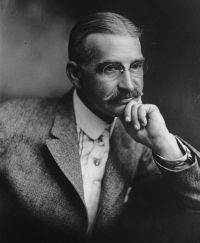
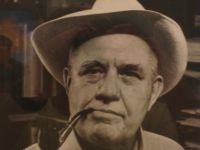
Portrait of J. Frank Dobie J. Frank Dobie,  Stories of Christmas and the Bowie knife (1953)

“ Through long centuries of warring, certain weapons of the Old World, like King Arthur’s “Excalibur” and Siegmund’s great sword “Gram,” became the subjects of legends and of songs that have made them immortal. Their solitary counterpart in the New World, before six-shooter and law-abiding habits supplanted its use, was the Bowie knife. The knife’s origin is wrapped in fable as fantastic as that recounting how the dwarf smiths forged for the old Norse gods; its use is memorialized in a cycle of dark and bloody legends yet told all over the Southwest. ”
Source: Gutenberg

Appletons' Cyclopædia of American Biography (1900)

“ Bowie, who had been shot early in the engagement, drew his knife, which had been made from a blacksmith's rasp or large file, and killed Maj. Norris Wright with it. After the conflict, the weapon was sent to Philadelphia, where it was fashioned by a cutler into the form of a knife, which style of weapon has since become famous as the “Bowie knife.” When the original was received by Bowie, he was told: “It is more trustworthy in the hands of a strong man than a pistol, for it will not snap.” Later he emigrated to Texas with his brother, and took a prominent part in the Texan revolution. ”
Source: Wikisource

Portrait of J. Frank Dobie J. Frank Dobie,  Stories of Christmas and the Bowie knife (1953)

“ For dozens of purposes the Bowie knife was “as handy as a shirt pocket.” Its hard bone or horn handle was often used as a kind of pestle to grind coffee beans. The blade, sometimes as heavy as a Mexican machete, served to hack limbs from trees and to cut underbrush, as well as to dress and skin game. Tradition has it that in the battle of San Jacinto the Texans killed more Mexicans with the Bowie knife than with bullets. ”
Source: Gutenberg

Get perspective with Kwize: daily news enlightened by great literature