
“ If you were the First Consul's brother—""The Argus should describe the bride's dress, not mine," said Fairfax Cary. "How lovely you would look, in that gown you have on, in a curricle drawn by grey horses! What is the stuff—roses and silver?""Heigho!" sighed Unity. "'Tis a bridesmaid's gown. I am out with men. I shall never wear a bride's gown.""Don't jest—""Jest! I never felt less like jesting! I laugh to keep from crying. Here is the coach." ”
Bride's dress
Definition and stakes
The theme of “bride's dress” has been addressed by authors such as Florence Howe Hall, Florence Hartley, Maud C. Cooke, Lillian Eichler Watson and M. E. W. Sherwood. It is often associated with terms like wedding, veil, white, church and lace.
Quotes about “bride's dress”
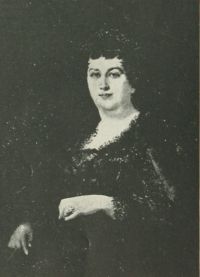 M. E. W. Sherwood,
Manners and Social Usages
“ The bride now prefers simplicity in her dress—splendid and costly simplicity. An elegant white-satin and a tulle veil, the latter very full, the former extremely long and with a sweeping train, high corsage, and long sleeves, long white gloves, and perhaps a flower in the hair—such is the latest fashion for an autumn bride. The young ladies say they prefer that their magnificence should wait for the days after marriage, when their jewels can be worn. ”
Florence Hartley, The Ladies' Book of Etiquette, and Manual of Politeness
“ The bride's dress must be of white entirely. If she is married in the morning, a plain white silk, white mantle, and white bonnet, full trimmed with orange flowers, with a plain veil, is the most suitable dress, and she may wear a richer one at her reception, when she returns from her bridal tour. ”
Maud C. Cooke, Twentieth Century Culture and Deportment
“ The wedding dress, no matter what its material, must be cut high in the neck and with long sleeves. This in deference to the fact that a marriage is not simply a gala occasion, but the turning point for weal or woe in the bride’s life, and a solemn sacrament of the church, and not to be celebrated in the garb of frivolity. ”
Maud C. Cooke, Twentieth Century Culture and Deportment
“ The Bride’s Dress may be as elegant as desired, or as simple, but it is to be hoped that the custom of using pure white in the composition of the toilet will not be superseded by any passing freak of Dame Fashion’s for softly tinted bridal robes. This innovation should be stoutly resisted by all brides-to-be. If the white robe is simple in material, a simple style should be chosen for the making; richer goods allow of more elaboration. The bride wears no jewels, and the typical orange-blossoms and myrtle are supposed to crown her brow. ”
 Jacob Grimm,
Grimm's Household Tales
(1884)
“ On the first day of the wedding ceremonies, she turned her wishing-ring, and said, "A dress as bright as the sun." Instantly the dress lay before her, and it was as bright as if it had been woven of real sunbeams. When all the guests were assembled, she entered the hall. Every one was amazed at the beautiful dress, and the bride most of all, and as pretty dresses were the things she had most delight in, she went to the stranger and asked if she would sell it to her. ”
Henry M. Field, From Egypt to Japan
“ The bridegroom was mounted on horseback, tricked out in the dress of a harlequin, with a crowd on horses and on foot, going before and following after, waving flags, beating drums, and making all manner of noises, to testify their joy; while the bride, who was commonly a mere child, was borne in a palanquin, covered with ribbons and trinkets and jewelry, looking, as she sat upright in her doll's house, much more as if she were a piece of frosted cake being carried to the wedding, than a living piece of flesh and blood that had any part therein. ”
Robert Kemp Philp, Enquire Within Upon Everything
“ The bridegroom should simply appear in morning dress, and should avoid everything eccentric and conspicuous in style. The bridesmaids should always be made aware of the bride's dress before they choose their own, which should be determined by a proper harmony with the former. ”
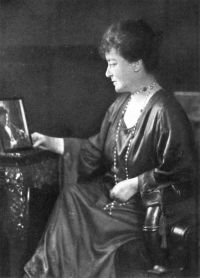 Eliza Davis Aria,
Costume: Fanciful, Historical, and Theatrical…
(1906)
“ Tradition orders that the bride shall retain her finery intact for an entire week, during which period the wedding festivities are kept up with unflagging enthusiasm, and on the eighth day she gives the signal for the merrymaking to cease by raising her hand to press a secret spring, when the heavy crown falls from her head and leaves her free to join in the last joyous dance with her husband. Possibly the annals of costume contain no more extravagant wedding-dress than that peculiar to the Duchy of Saxe-Altenburg. The bridal crown is certainly unique. ”
 Lillian Eichler,
Book of Etiquette, Volume 1, Part 1…
(1921)
“ Her dress is always different from those worn by the bridesmaids. The style is a matter of taste and prevalent fashion. If the wedding takes place at noon in a church, the gown is either sleeveless or with very short sleeves, and it may or may not have a train, according to the taste of the wearer. Like the bride, she wears white gloves and carries flowers. ”
 Lillian Eichler Watson,
Book of Etiquette, Volume I
“ The exclusive use of white for the bride is supposed to have grown out of an old custom of the Patagonians, who cover the body with white paint on the eve of the wedding ceremony. To-day the keynote of the wedding gown is simplicity. The days of elaborate gowns with trains so heavy with the weight of precious jewels that eight girls had to carry them, is over. The sensible American bride knows that simplicity is more becoming to the solemn dignity of the occasion than extremely elaborate dress. ”
 Louisa May Alcott,
Aunt Jo's Scrap Bag, Volume 5
“ You know my style," said another young lady, privately resolving to buy the opal dress, when the rest had gone."Consider yourself engaged to get up my bridesmaids' costumes, for I never shall forget what a lovely effect those pale green dresses produced at Alice's wedding. She looked like a lily among its leaves, some one said, and you suggested them, I remember," added a third damsel, with the dignity of a bride-elect. ”
 Florence Howe Hall,
Good Form for All Occasions
“ It is always proper to send flowers. If the reception is in the evening, the silver-wedding bride wears evening dress of any color that is becoming to her. Gray, lavender, or purple is appropriate. While white alone is not permissible, black-and-white may be worn; the bridal veil—if it be of lace—may be draped over the skirt or worn as a scarf. The gown may be partially cut down at the neck or full décolleté, the material being silk, brocade, velvet, or other stuff as preferred. The groom wears regulation evening dress with white or light kid gloves (see Chapter VI) . ”
Lillian Eichler,
Book of Etiquette, Volume 1, Part 1…
(1921)
“ White linens are invariably initialed in white. FOR THE BRIDE "Girl, do not exult in thy wedding dress; see how much trouble lurks behind it," says an old Syrian proverb. But where is the little American bride who does not exult in her dainty wedding things—who does not glory in the silks and cottons and laces and ribbons of her trousseau? Always a lover of the beautiful—especially in clothes—she finds a new charm in these pretty things that portend so much happiness to come. ”
Various, The Scrap Book, Volume 1, No. 1
“ For a second marriage, the bride should wear a traveling dress, or, if the wedding is elaborately celebrated in church, a handsome reception gown. In both cases, a hat should be worn. The costume must not be purely white, but should be light and not somber in color.For Men.—Guests at a noon or afternoon wedding should wear the conventional afternoon costume: black frock coat, gray trousers, a four-in-hand or Ascot tie of light color, waistcoat of white piqué or one matching the coat, patent-leather shoes, gray gloves, and a silk hat. At an evening wedding only full dress is permissible. ”
M. E. W. Sherwood,
Manners and Social Usages
“ It is now so much the fashion to wear low-necked dresses (sleeveless dresses were worn by bridesmaids at an evening wedding recently) that the bride of twenty-five years can appear, if she chooses, in a low-cut short- sleeved dinner dress and diamonds in the evening. As for the groom, he should be in full evening dress, immaculate white tie, and pearl- colored kid gloves. He plays, as he does at the wedding, but a secondary part. Indeed, it has been jocosely said that he sometimes poses as a victim. In savage communities and among the birds it is the male who wears the fine clothes ”
 E. Lynn Linton,
The Girl of the Period, and Other Social Essays…
“ There is the bride in a white bonnet and light silk dress, who carries an ivory-backed Church Service with the most transparent attempts at unconsciousness, and the bridegroom who lounges after her and looks sheepish; sometimes it is the bride who straggles bashfully, and the groom who boldly leads the way. ”
Maud C. Cooke, Social Life; or, The Manners and Customs of Polite Society
“ A widow, re-marrying, no matter how youthful she may be, is prohibited from wearing the white gown, veil and orange-blossoms of the bride. Neither may she surround herself with a bevy of bridemaids. Her wedding, to be absolutely correct, should be quietly solemnized and her garb a traveling dress. ”
Mary King Waddington, My First Years as a Frenchwoman…
“ The difference of dress between the jeune fille and the jeune femme is very strongly marked in France. The French girl never wears lace or jewels or feathers or heavy material of any kind, quite unlike her English or American contemporaries, who wear what they like. The wedding-dress is classic, a simple, very long dress of white satin, and generally a tulle veil over the face. When there is a handsome lace veil in the family, the bride sometimes wears it, but no lace on her dress. The first thing the young married woman does is to wear a very long velvet dress with feathers in her hair. ”
Edith B. Ordway, The Etiquette of To-day
“ For the bride whose purse is not overfull the number of gowns and suits can be materially diminished; the wedding gown, with some slight changes, such as the removal of the high collar [189] and long sleeves, can be used as an evening dress; the traveling, church, and visiting suit may be one and the same; the house dresses may be reduced to a minimum by frequent washing. That one cannot provide an elaborate wardrobe with which to begin married life should not be a barrier to a marriage which in every other respect appears to be auspicious. ”
Edwin Sidney Hartland, The Science of Fairy Tales
“ We may now pass to wholly different types of the tradition. In all the stories where the magical dress appears, whether as a feather-skin, the hide of a quadruped, or in the modified form of wings, a robe, an apron, a veil or other symbol, the catastrophe is brought about by the wife's recovery, usually more or less accidental, of the article in question. But it is obvious that where the incident of the dress is wanting, the loss of the supernatural bride must be brought about by other means. ”
Oscar Chrisman, The Historical Child
“ The costume of the bride is a complete allegory. This orange-red veil, this saffron-colored flammeum, which covers her head and allows only the face to be seen, is the usual ornament of the flamen's wife, to whom divorce is prohibited; the white tunic represents virginity; the head-dress raised in the form of a tower, almost like that of the vestals, with a javelot which runs through it, indicates that the wife is in submission to her husband ”
 Andrew Lang,
The Pink Fairy Book
“ However, the king was much too anxious to see his daughter married to listen to any excuses, and he declared that a dress must be put together somehow for the bride to wear. But when he went to look at the princess, she was such a figure that he agreed that it would be unfitting for her position to be seen in such a gown, and he ordered the ceremony and the banquet to be postponed for a few hours, so that the tailors might take the dress to pieces and make it fit. ”
Various, The Scrap Book, Volume 1, No. 1
“ The best man dresses as nearly as possible like the groom.The ushers should dress as nearly alike as possible. For day weddings, black frock coats, gray trousers, white piqué or black waistcoats, full-folded necktie, of dark silk with a lighter pattern, and gray gloves. Hats should not be carried during the service, but left in charge of some one in the vestibule. For evening weddings, full dress must be worn. The boutonnières sent by the bride are always to be worn, as are the groom's gifts, whether sleeve-links or scarf-pins. Gloves should be kept on while serving in the aisles. ”

“ I must put on a few ornaments now, because it is expected of me. A bride, you know, must appear like a bride, but my natural taste is all for simplicity; a simple style of dress is so infinitely preferable to finery. ”
Anonymous, Everybody's Book of Luck
“ So runs the ancient rhyme regarding the bride's wedding dress. White is the popular wear, and has been for several centuries, but previously yellow, pink, and a brilliant scarlet were frequently chosen, unless by a girl named Mary, who was expected to wear blue, the Virgin's sacred color. Some years ago, the daughter of a duke, who was united in marriage to a commoner, shocked society by insisting on a "green" wedding. In less than a year, she and her baby were buried in the family tomb.WHICH COLORMarried in white, you have chosen aright. ”
Florence Hartley, The Ladies' Book of Etiquette, and Manual of Politeness
“ In assisting at a wedding at church, if you are one of the bridesmaids, wear white, a white bonnet but no veil. If you occupy the first place, the bride's, it is in better taste to be married in a simple dress and bonnet, and don your full dress when you return home to receive your friends. ”
M. E. W. Sherwood,
Manners and Social Usages
“ The next day some one writes to a newspaper again,"Shall the bridegroom wear a dress-coat at the hour of eleven A.M., and who pays for the wedding-cards?" The wedding of to-day in England has "set the fashion" for America. No man ever puts on a dress-coat before his seven-o'clock dinner, therefore every bridegroom is dressed in a frock-coat and light trousers of any pattern he pleases; in other words, he wears a formal morning dress, drives to the church with his best man, and awaits the arrival of the bride in the vestry-room. He may wear gloves or not as he chooses. ”
Florence Howe Hall,
Good Form for All Occasions
“ Some solid dishes such as salads and oysters may be served, and there may be a wedding-cake.The golden-wedding bride may wear any color she pleases except black. The ugly fashion of dressing elderly women in hard black is fortunately on the wane, since it is extremely unbecoming to them. Delicate tints of lavender and gray, trimmed with soft ruffles or lace, are appropriate for the bride of fifty years. The groom wears formal afternoon dress, black frock or cutaway coat, with high waistcoat to match, dark trousers, and lavender scarf. ”
M. E. W. Sherwood,
Manners and Social Usages
“ A silver gray, trimmed with steel and lace, has lately been used with much success as a second bridal dress. Still less should the dress be white; that has become so canonized as the wedding dress of a virgin bride that it is not even proper for a widow to wear it on her second marriage. The shades of rose-color, crimson, or those beautiful modern combinations of velvet and brocade which suit so many matronly women, are all appropriate silver-wedding dresses.Ladies should not wear jewelry in the morning, particularly at their own houses ”
Florence Howe Hall,
Good Form for All Occasions
“ If this is the costume in which she intends actually to travel, it should be of material and color suitable for that purpose. A pretty and becoming shade should be selected, but not an extremely delicate one. Cloth or other woolen material is suitable for the cold months, a silken or woolen stuff of light weight for summer. A pretty hat and white gloves complete the costume, or, if preferred, these may correspond in color with the dress. A bride may, if she pleases, be married in a walking-suit of a very light color, changing this for a quieter dress before she starts on the wedding journey. ”
Grace Livingston Hill, Exit Betty
“ She was divided between her desire to robe the exquisite little guest in its pristine folds and her longing to wear it herself. There was a sense of justice also which entered into the matter. If that elegant wedding dress was to be hers, and all those wonderful silk underclothes, [68] which very likely she would never allow herself to wear, for they would be out of place on a poor working girl, it was not fair to repay their donor in old clothes. She decided to give the runaway bride her new blue serge. ”
Related terms
Authors who wrote about “bride's dress”
Florence Howe HallFlorence HartleyMaud C. CookeLillian Eichler WatsonM. E. W. SherwoodEliza Davis AriaLillian EichlerFlorence Mary GardinerArdern HoltJohn H. Young Emily PostWilfred Mark WebbEdith B. OrdwayHenry Jones, Oswald Barron, Stanley Cook…
 Mrs. AriaMrs. Alex. McVeigh MillerMary King WaddingtonEmily Rose BurtEdwin Sidney HartlandOscar Chrisman
