Caduceus

Definition and stakes

R. E. Francillon,  Gods and Heroes; or, The Kingdom of Jupiter

“ Instead of punishing him, however, Jupiter was so delighted with his cleverness and impudence that he made Mercury his chief messenger and cup-bearer. He also gave him a winged cap, wings for his heels, a short sword, and a scepter called caduceus—a rod round which two living serpents coiled. The winged cap was called petasus, and whenever he put it on he became invisible; the wings for his heels were called talaria, and made him able to fly faster than lightning to any place he pleased. The caduceus was a magic wand. ”
Source: Gutenberg

Anonymous,  Everybody's Book of Luck

“ Thus people wear the caduceus today in order to ensure a life free from quarrels and illness, and to enable them to be healthy and "go ahead."
No. 4.—The Caduceus or Staff of Mercury.
THE EYE AGATE.—As is generally appreciated, the "evil eye" is the source of all trouble and misfortunes, and the early Eastern races thought that, if the "evil eye" could be avoided or frightened away, all would be well. Searching for a charm to effect their purpose, they alighted upon the eye agate, and this they believed would give no quarter to the "evil eye."
”
Source: Gutenberg

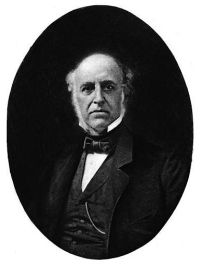
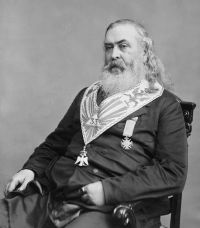
Portrait of Albert Pike Albert Pike,  Morals and Dogma of the Ancient and Accepted Scottish Rite of Freemasonry

“ The Caduceus, borne by Hermes or Mercury, and also by Cybele, Minerva, Anubis, Hercules Ogmius the God of the Celts, and the personified Constellation Virgo, was a winged wand, entwined by two serpents. It was originally a simple Cross, symbolizing the equator and equinoctial Colure, and the four elements proceeding from a common centre. This Cross, surmounted by a circle, and that by a crescent, became an emblem of the Supreme Deity—or of the active power of generation and the passive power of production conjoined,—and was appropriated to Thoth or Mercury. ”
Source: Gutenberg

Get perspective with Kwize: daily news enlightened by great literature