Calculus of variations

Definition and stakes

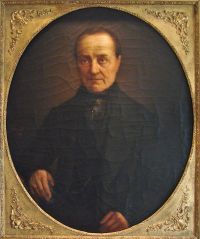
Portrait of Auguste Comte Auguste Comte,  The philosophy of mathematics

“ Such is the general acceptation in which we should conceive the Calculus of Variations, in order suitably to appreciate the importance of this admirable logical [Pg 163] instrument, the most powerful that the human mind has as yet constructed.
The method of variations being only an immense extension of the general transcendental analysis, I have no need of proving specially that it is susceptible of being considered under the different fundamental points of view which the calculus of indirect functions, considered as a whole, admits of.
”
Source: Gutenberg

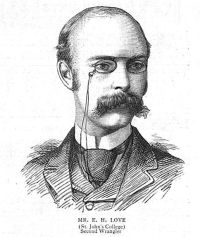
Portrait of Augustus Edward Hough Love Augustus Edward Hough Love,  1911 Encyclopædia Britannica, Volume 27… (1911)

“ The word extrernurn is often used to connote both maximum and minimum. The problem thus posed is known as the First Problem of the Calculus of Variations. If we begin with any curve joining the fixed end points, and surround it by an area of finite breadth, any other curve drawn within the area, and joining the same end points, is called a variation of the original curve, or a varied curve. The original curve is defined by specifying y as a function of x. Necessary conditions for the existence of an extremum can be found by choosing special methods of variation. ”
Source: Wikisource

Get perspective with Kwize: daily news enlightened by great literature