“ The outward eye, the quiet will, And the striding heart from hill to hill. Some of the finest of Mr. Carman's work is contained in his elegiac or memorial poems, in which he commemorates Keats, Shelley, William Blake, Lincoln, Stevenson, and other men for whom he has a kindred feeling, and also friends whom he has loved and lost. Listen to these moving lines from "Non Omnis Moriar," written in memory of Gleeson White, and to be found in Last Songs from Vagabondia: There is a part of me that knows, Beneath incertitude and fear, I shall not perish when I pass Beyond mortality's frontier ”
Carman
Definition and stakes
The theme of “carman” has been addressed by authors such as . It is often associated with terms like camel, automobile, engine, machine and carriage.
Quotes about “carman”
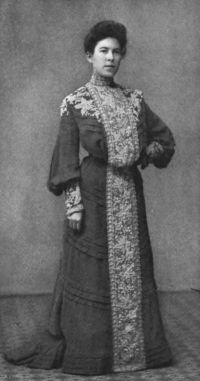 Jessie Belle Rittenhouse,
The Younger American Poets
Jessie Belle Rittenhouse,
The Younger American Poets
“ About him, is an artist’s picture not easily forgotten.Mr. Carman’s three volumes in the projected “Pipes of Pan” series, including thus far The Book of the Myths, The Green Book of the Bards, and The Sea Children, make new disclosures of his talent, and the title poem “Pipes of Pan,” is a bit of anointed vision that would waken the dullest eyes from lethargy as to the world around them. There is necromancy in Mr. Carman’s words when the outer world is his theme ”
“ Carman's speculations upon life's meaning and the mystery of the future cannot but appeal to the thoughtful-minded, it is as an interpreter of nature that he makes his widest appeal. Bliss Carman, I must say here, and emphatically, is no mere landscape-painter; he never, or scarcely ever, paints a picture of nature for its own sake. He goes beyond the outward aspect of things and interprets or translates for us with less keen senses as only a poet whose feeling for nature is of the deepest and profoundest, who has gone to her whole-heartedly and been taken close to her warm bosom, can do. ”
“ From the Book of Myths is made up of work of that sort, every poem in it being full of the beauty of phrase and melody of which Mr. Carman alone has the secret. The finest poems in the book, barring the opening one, "Overlord," are "Daphne," "The Dead Faun," "Hylas," and "At Phædra's Tomb," but I can do no more here than name them, for extracts would fail to reveal their full beauty. And beauty, after all is said, is the first and last thing with Mr. Carman. As he says himself somewhere: The joy of the hand that hews for beauty Is the dearest solace under the sun. ”
“ Yet such—strange and unbelievable though it may seem—is in very truth the case, that poet being (to give him his full name) William Bliss Carman. Canada has full right to be proud of her poets, a small body though they are; but not only does Mr. Carman stand high and clear above them all—his place (and time cannot but confirm and justify the assertion) is among those men whose poetry is the shining glory of that great English literature which is our common heritage. ”
Thomas Brown, The works of Mr. Thomas Brown, serious and comical… (1730)
“ Ezekiel Driver of Puddle-dock, Carman, having disordered his Pia mater with too plentiful a morning’s draught of three-threads and old Pharaoh, had the misfortune to have his car run over him. The whole street concluded him as good as dead, and the over-forward clerk of the parish had already set him down in the weekly-bills. Two applications of my Unguentum Traumaticum set him immediately to rights, and now he is coachman in ordinary to a Tallyman’s fat widow in Soho. ”
“ We leap to the infinite dark like sparks from the anvil.Thou leadest, O God! All’s well with Thy troopers that follow. 82 Bliss Carman (William) Bliss Carman was born at Fredericton, New Brunswick, Canada, April 15, 1861, of a long line of United Empire Loyalists who withdrew from Connecticut at the time of the Revolutionary War. Carman was educated at the University of New Brunswick (1879–81) , at Edinburgh (1882–3) and Harvard (1886–8) . He took up his residence in the United States about 1889 and, with the exception of short sojourns in the Maritime Provinces, has lived there ever since. ”
“ Bliss Carman was from the first too original and individual a poet to be directly influenced by anyone else; but there can be no doubt that his friendship with Hovey helped to turn him from over-preoccupation with mysteries which, for all their greatness, are not for man to solve, to an intenser realisation of the beauty and loveliness of the world about him and of the joys of human fellowship. ”
“ The April stars and autumn sunsets know— Soothed me and calmed with solace beyond reach Of human ken, mysterious and low. Who can read or listen to those moving lines without feeling that Mr. Carman is in very truth a poet of nature—nay, Nature's own poet? But how could he be other when, in "The Breath of the Reed" (From the Green Book of the Bards) , he makes the appeal? ”
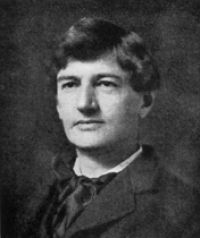 Bliss Carman,
Behind the Arras: A Book of the Unseen
Bliss Carman,
Behind the Arras: A Book of the Unseen
“ A wraith and a desire. Demonish, toiling, grim, In the ruddy furnace flare,89 While the Driver fingers the throttle-bar, Who stands at his elbow there? Can it be, this thing like a shred Of the firmament torn away, Is a boarded train that Death and his crew Consorted to waylay? His wreckers, grinning and lean, Are lurking at every curve; But the Driver plays with the throttle-bar; He has the iron nerve. We are travelling safe and warm, With our little baggage of cares; Why tease the peril that yet would come Unbidden and unawares? The lonely are lonely still ”
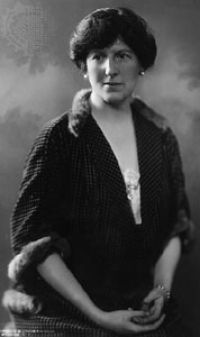 Alice Duer Miller,
A Maid and Her Money — Chapter 6
(1906)
Alice Duer Miller,
A Maid and Her Money — Chapter 6
(1906)
“ Orvice replied genially. “Oh, I don’t go in capacity of hero. I walk in the wheel-ruts. Miss Carman is shortly returning for a brief time to her native town, and I am going as a manacled savage—the proof of the prowess of her bow and spear.” “I can’t imagine a better selection,” said his mother grimly. Her heart was bitter at the news. “I am so glad you think so. I am picked out to impress a college president. I rather doubted my fitness, but perhaps you can help me out. Did you ever hear of the Stonehurst Institute?” ”
“ That poem is sufficient in itself to prove that Bliss Carman has full right and title to be called Spring's own lyrist, though it may be remarked here that not all his spring poems are so unfeignedly joyous. Many of them indeed, have a touch, or more than a touch, of wistfulness, for the poet knows well that sorrow lurks under all joy, deep and well hidden though it may be. ”
“ There are those who will have it that Bliss Carman has been away from Canada so long that he has ceased to be, in a real sense, a Canadian. Such assume rather than know, for a very little study of his work would show them that it is shot through and through with the poet's feeling for the land of his birth. ”
“ It is a common remark on the part of those who respond readily to the vigorous work of Kipling, or Masefield, even our own Service, that Bliss Carman's poetry has no relation to or concern with ordinary, everyday life. One would suppose that most persons who cared for poetry at all turned to it as a relief from or counter to the burdens and vexations of the daily round ”
Bliss Carman,
Songs from Vagabondia
“ And those who hear grow still. Like pillagers of harvest, Their fame is far abroad, As gray remorseless troopers That plunder and maraud. The dust is on their corselets; Their marching fills the world ”
“ Carman's mind, and inspire him again and again in his writing. "A Remembrance," at the beginning of the present collection, may be pointed to as a striking instance of this, but proof positive is the volume, Songs from a Northern Garden, for it could have been written only by a Canadian, born and bred, one whose heart and soul thrill to the thought of Canada. ”
“ Carman's three latest books, The Rough Rider, Echoes from Vagabondia, and April Airs, together with a number of more recent poems which have not before been issued in book form. Bliss Carman: An Appreciation How many Canadians--how many even among the few who seek to keep themselves informed of the best in contemporary literature, who are ever on the alert for the new voices—realise, or even suspect, that this Northern land of theirs has produced a poet of whom it may be affirmed with confidence and assurance that he is of the great succession of English poets? ”
“ Carman, however, his rule being not to publish until he has done sufficient work of a certain general character or key to make a volume. As a result, you cannot fully know or estimate his work by one book, or two books, or even half a dozen; you must possess or be familiar with every one of the score and more volumes which contain his output of poetry before you can realise how great and how many-sided is his genius. ”
 John Cassell,
The Story of the House of Cassell
(1922)
John Cassell,
The Story of the House of Cassell
(1922)
“ In mid-Atlantic the Carmania received a wireless call for help from the steamer Volturno, which, with 657 people on board, was on fire seventy-eight miles away. Very heavy weather prevailed, and though ten ships, including the Carmania, steamed to the rescue, they could do little for many hours. Sir Arthur Spurgeon, who was editing the daily newspaper on the Carmania during his trip, sent by wireless to the Press Association a description of the tragedy and its sequel, and when the Carmania reached Fishguard he telegraphed a full story. ”
W. Pett Ridge, Erb — Chapter 2 (1903)
“ The foreman waited at the entrance to the railway arch where the up parcels office, after many experiments in other places, had decided to settle; he looked on narrowly as the vans drove up the side street. The van foreman had been a carman in his day (to say nothing of a more lowly start in boyhood) , and he openly flattered himself that he knew the whole bag of tricks: he also sometimes remarked acutely that anyone who had the best of him had only one other person to get over, and that other person did not live on this earth. ”
“ Carman has always scorned to advertise himself, while his work has never been the subject of the log-rolling and booming which the work of many another poet has had—to his ultimate loss. A further reason is that he follows a rule of his own in preparing his books for publication. Most poets publish a volume of their work as soon as, through their industry and perseverance, they have material enough on hand to make publication desirable in their eyes. ”
“ I would single out from this volume for special mention as being "Canadian" in the fullest sense "In a Grand Pré Garden," "The Keeper's Silence," "At Home and Abroad," "Killoleet," and "Above the Gaspereau," but have no space to quote from them. But Mr. Carman is not only a Canadian, he is also a Briton ”
“ The truth is, he is aware of them as only one with the sensitive organism of a poet can be; but he does not feel that he has a call or mission to remedy them, and still less to sing of them. He therefore leaves the immediate problems of the day to those who choose, or are led, to occupy themselves therewith, and turns resolutely away to dwell upon those things which for him possess infinitely greater importance. "What are they?" one who knows Mr. Carman only as, say, a lyrist of spring or as a singer of the delights of vagabondia probably will ask in some wonder. ”
“ Brief quotation again would fail to convey an adequate idea of the exquisiteness of the work, and all I can do, therefore, is to urge all lovers of real poetry to possess themselves of Sappho: One Hundred Lyrics, for it is literally a storehouse of lyric beauty. I must not fail here to speak of From the Book of Valentines, which contains some lovely things, notably "At the Great Release." This is not only one of the finest of all Mr. Carman's poems, but it is also one of the finest poems of our time. ”
“ The poems in the present volume—which, by the way, can boast the high honor of being the very first regular Canadian edition of his work—will be evidence ample and conclusive to every reader, I am sure, of the place which The perennial enchanted Lovely world and all its lore occupy in the heart and soul of Bliss Carman, as well as of the magical power with which he is able to convey the deep and unfailing satisfaction and delight which they possess for him. ”
Bliss Carman,
Ballads of Lost Haven: A Book of the Sea
“ While round the hole of one is a rune,Black in the wash of the bleaching noon. [Pg 70] "Ride, for the wind is awake and away.Sleep, for the harvest grain is gray." No word more. And many a mile,A ghostly bivouac rank and file, They sleep to-day on the marshes wide;Some far night they will wake and ride. Once they were riders hot with speed,"Kelpie, Kelpie, gallop at need!" With hills of the barren sea to roam,Housing their horses on the foam. ”
“ The poet, happily, has fully recovered from the serious illness which laid him low some two years ago, and which for a time caused his friends and admirers the gravest concern, and so we may look forward hopefully to seeing further volumes of verse come from the press to make certain his name and fame. But if, for any reason, this should not be—which the gods forfend!—Later Poems, I dare affirm, must and will be regarded as the fine flower and crowning achievement of the genius and art of Bliss Carman. R. H. HATHAWAY. Toronto, 1921. ”
“ And here from another poem is a striking picture: ... the old sea Seems to whimper and deplore Mourning like a childless crone With her sorrow left alone— The eternal human cry To the heedless passer-by. I have said above that Mr. Carman has had three distinct periods, and intimated that the poems in the following collection are of his third period. The first period may be said to be represented by the Low Tide and Behind the Arras volumes, while the second is displayed in the three volumes of Songs from Vagabondia, which he published in association with his friend Richard Hovey. ”
Bliss Carman,
Songs from Vagabondia
“ That seem to slip Through the lulled soul to seek the sleepy shore. The idle clouds go floating by; Above us sky, beneath us sky; The sun shines on us as we lie Floating. It is a dream. It is a dream, my love ”
Bliss Carman,
Behind the Arras: A Book of the Unseen
“ Does it still malinger in the prism, Falsify the crucible with shame? Hardly. For the melody and marring, When they put the dear oblivion on, Are become as fresh clay for the potter, Neither good nor bad, for use anon. Blighted rose and perfect shall commingle In one excellence of garden mould. Soul transfusing comeliness or blemish Can alone lend beauty to the old. ”
“ THE BOOKS OF BLISS CARMAN: POETRY AND PROSE LOW TIDE ON GRAND PRÉ: A BOOK OF LYRICS . . . . . . . . . . . . 1893 SONGS FROM VAGABONDIA (WITH RICHARD HOVEY) . . . . . . . . . . . 1894 BEHIND THE ARRAS: A BOOK OF THE UNSEEN . . . . . . . . . . . . . 1895 A SEAMARK: A THRENODY FOR ROBERT LOUIS STEVENSON . . . . . . . . 1895 MORE SONGS FROM VAGABONDIA (WITH HOVEY) . . . . . . . . . . . . 1896 BALLADS OF LOST HAVEN: A BOOK OF THE SEA . . . . . . . . . . . . 1897 BY THE AURELIAN WALL, AND OTHER ELEGIES . . . . . . . . . . . . 1898 A WINTER HOLIDAY . . . . . . . . . . . . . . . . . . . . . . . . ”
Bliss Carman,
More Songs From Vagabondia
“ SHAKESPEARE HIMSELF: FOR THE UNVEILING OF MR. PARTRIDGE'S STATUE OF THE POET. The body is no prison where we lie Shut out from our true heritage of sun; It is the wings wherewith the soul may fly. Save through this flesh so scorned and spat upon, No ray of light had reached the caverned mind, No thrill of pleasure through the life had run, No love of nature or of humankind, Were it but love of self, had stirred the heart To its first deed. Such freedom as we find, We find but through its service, not apart. ”
Bliss Carman,
More Songs From Vagabondia
“ The wind comes into the garden, Like a lover that fears lest he waken his love, And his hands drip with the scent of the roses And his locks weep with the opiate odor of honeysuckle. Sighing, sighing As a lover that yearns for the lips of his love, In a torment of bliss, In a passionate dreaming of bliss, The wind in the trees of the garden! How intimate are the trees,-- Rustling like the secret darkness of the soul! ”
