Chuck (machine)

Definition and stakes

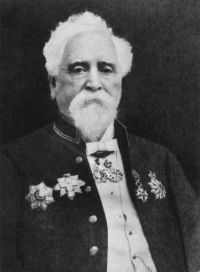
Portrait of Joshua Rose Joshua Rose,  Modern Machine-Shop Practice, Volumes I and II

“ Fig. 680 (from The American Machinist) shows a special chuck for grinding the faces of thin discs, such as very thin milling cutters, which could not be held true by their bores alone. The object of the device is to hold the cutter by its bore and then draw it back against the face of the chuck, which, therefore, sets it true on the faces. The construction of the chuck is as follows. The hub screws upon the lathe like an ordinary face plate, and has a slot running diametrically through it. ”

Source: Gutenberg

Portrait of Joshua Rose Joshua Rose,  Modern Machine-Shop Practice, Volumes I and II

“ In any event it is desirable to let the rod project so far out from the chuck as to enable its being finished and cut off, without removal from or moving it in the chuck, because such chucks are apt in course of time to wear, so that the jaws do not grip the work quite concentric to the line of centres; hence, if the work be moved in the chuck after having been turned, it is apt to run out of true. ”
Source: Gutenberg

Portrait of Joshua Rose Joshua Rose,  Modern Machine-Shop Practice, Volumes I and II

“ All the cutting tools used upon shaping and planing machines have already been described with reference to outside tools for lathe work, and it may be remarked that a great deal of the chucking done on the shaping and planing machine corresponds to face plate chucking in the lathe. Both shaping machines and small planing machines, however, are provided with special chucks and work-holding appliances that are not used in lathe work, and these will be treated of presently. On large planing machines chucks are rarely used, on account of the work being too large to be held in a chuck. ”
Source: Gutenberg

Get perspective with Kwize: daily news enlightened by great literature