 William Graham Sumner,
The Forgotten Man, and Other Essays
William Graham Sumner,
The Forgotten Man, and Other Essays
“ Civil liberty is the status of the man who is guaranteed by law and civil institutions the exclusive employment of all his own powers for his own welfare. ”
William Graham Sumner,
The Forgotten Man, and Other Essays
“ Civil liberty is the status of the man who is guaranteed by law and civil institutions the exclusive employment of all his own powers for his own welfare. ”
Emory Adams Allen, The Golden Gems of Life; Or, Gathered Jewels for the Home Circle
“ The various departments of business and trust, the pulpit and the bar, our courts of justice and halls of legislation, our civil, religious, and literary institutions, all, in short, that constitute society and go to make life useful and happy, are to be in their hands and under their control. ”
William Graham Sumner,
Folkways
“ Institutions also must be produced which will hold the activities of society in channels of order, deliberation, peace, regulated antagonism of interests, and49 justice, according to the mores of the time. These institutions put an end to exploitation and bring interests into harmony under civil liberty. But where do the institutions come from? The masses have never made them. ”
 Carl Russell Fish,
The Civil Service and the Patronage…
(1905)
Carl Russell Fish,
The Civil Service and the Patronage…
(1905)
“ All these tendencies are observable, and civil service reform is to be studied in connection with them and with all other political reform movements. Eternal vigilance, and not merely the mechanical selection of public officers, is the price of liberty. ”
Henry Mann, The Land We Live In
“ Notwithstanding the opposition of politicians and newspapers representing the vicious and ignorant element, civil service reform has made marvelous progress, and the principle is now recognized not only in appointments to the vast majority of non-elective offices under the National Government, but also in the civil service of States and municipalities. ”
 Lajos Kossuth,
Select Speeches of Kossuth
Lajos Kossuth,
Select Speeches of Kossuth
“ In every society there are political and civil concerns on one side, and on the other social concerns; for the first, civil authority must be established—in political and civil respects every one has to acknowledge the power of its jurisdiction. ”
 Carl Schurz,
Speeches, correspondence and political papers of Carl Schurz
(1913)
Carl Schurz,
Speeches, correspondence and political papers of Carl Schurz
(1913)
“ This is the clearest and completest program of civil service reform ever put forth by a public man in this Republic. Not a single essential point is forgotten,—and what is more, there is in it no vagueness or equivocation of statement or promise. ”
 Grover Cleveland,
A Compilation of the Messages and Papers of the Presidents…
Grover Cleveland,
A Compilation of the Messages and Papers of the Presidents…
“ I am, if possible, more than ever convinced of the incalculable benefits conferred by the civil-service law, not only in its effect upon the public service, but also, what is even more important, in its effect in elevating the tone of political life generally. ”
Carl Schurz,
The Necessity and Progress of Civil Service Reform
(1894)
“ Not only has it in this region some of its most faithful advocates, but the practical sense and the public spirit which have wrought here such wonders, seem to produce the very atmosphere in which this cause should prosper; for Civil Service Reform is, in the sense of an enlightened, large and patriotic public spirit, a preëminently practical conception—practical in its principles, practical in its aims, and practical in its methods. ”
by John Marshall Harlan, Baldy v. Hunter — Opinion of the Court
“ They were the fundamental principles for which civil society is organized into government in all countries, and must be respected in their administration under whatever temporary dominant authority they may be exercised. ”
Paul Janet, Elements of Morals
“ The duties imposed on each man in regard to the particular society of which he is a member, are called civil duties. He, himself, in regard to this society, is what is called a citizen; finally, the society itself, considered as one and the same person, of which the citizens are the members, is what is called the State or the city. ”
Carl Schurz,
Speeches, correspondence and political papers of Carl Schurz
(1913)
“ Have you ever calmly thought of it what our civil service system really is? It is one of the wonders of the world. Had it not gradually grown up among us, little by little, in the course of many years, so that we have become accustomed to the unique spectacle, we should scarcely be capable of believing in the possibility of its existence among people endowed with ordinary common-sense. ”
 Thomas Hill Green,
Lectures on the Principles of Political Obligation
Thomas Hill Green,
Lectures on the Principles of Political Obligation
“ Whether the legislative and administrative agencies of society can be kept in the main free from bias by private interests, and true to the idea of common good, without popular control; whether again, if they can, that 'civil sense,' that appreciation of common good on the part of the subjects, which is as necessary to a free or political society as the direction of law to the maintenance of a common good, can be kept alive without active participation of the people in legislative functions ”
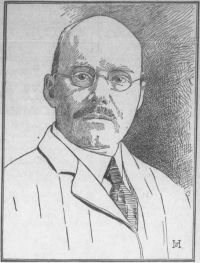 Hugo Richard Meyer,
The British State Telegraphs
Hugo Richard Meyer,
The British State Telegraphs
“ The latter day spirit of the civil service unions is to make the cause of the individual the cause of the class, and that brings about much intervention through the House of Commons, by the organized civil service, on behalf of individual State servants. ”
Carl Schurz,
Speeches, correspondence and political papers of Carl Schurz
(1913)
“ He will therefore have every inducement to lend a helping hand in the introduction of a thorough and permanent reform of the civil service, which, proceeding upon the idea that established character, knowledge and capability ought to be the only test of fitness for office, will at last give the country an able, honest and economical administration of the public business. ”
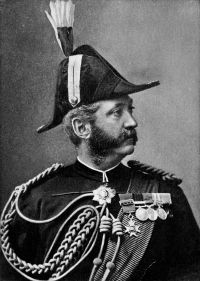 Sir William Francis Butler,
The Great Lone Land
Sir William Francis Butler,
The Great Lone Land
“ The first pressing necessity is the establishment, as speedily as possible, of some civil authority which will give a distinct and tangible idea of Government to the native and half-breed population, now so totally devoid of the knowledge of what law and civil government may pertain to. ”
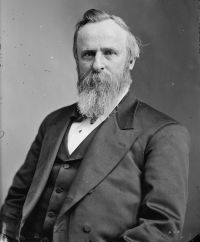 Rutherford Birchard Hayes,
State of the Union Addresses
Rutherford Birchard Hayes,
State of the Union Addresses
“ I think the economy, purity, and efficiency of the public service would be greatly promoted by their systematic introduction, wherever practicable, throughout the entire civil service of the Government, together with ample provision for their general supervision in order to secure consistency and uniform justice. ”
Carl Russell Fish,
The Civil Service and the Patronage…
(1905)
“ In list after list of the members of civil service reform associations, not a name can be found that does not suggest to one acquainted with the nomenclature of the various localities, education, wealth, or social position; the very list of such societies existing in 1892 shows that centres of learning and wealth, and not of population, are represented. ”
 John Stuart Mill,
Considerations on Representative Government
(1861)
John Stuart Mill,
Considerations on Representative Government
(1861)
“ Of the two modes of operation by which a form of government or set of political institutions affects the welfare of the community—its operation as an agency of national education, and its arrangements for conducting the collective affairs of the community in the state of education in which they already are, the last evidently varies much less, from difference of country and state of civilization, than the first. ”
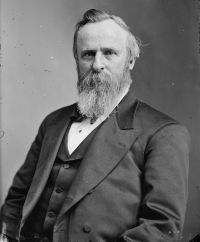 Rutherford B. Hayes,
Fourth State of the Union Address
(1880)
Rutherford B. Hayes,
Fourth State of the Union Address
(1880)
“ Believing that to reform the system and methods of the civil service in our country is one of the highest and most imperative duties of statesmanship, and that it can be permanently done only by the cooperation of the legislative and executive departments of the Government, I again commend the whole subject to your considerate attention. ”
Grover Cleveland,
A Compilation of the Messages and Papers of the Presidents…
“ The course of civil-service reform in this country instructively and interestingly illustrates how strong a hold a movement gains upon our people which has underlying it a sentiment of justice and right and which at the same time promises better administration of their Government. ”
Carl Schurz,
The Present State of Civil Service Reform
(1904)
“ The Administration would thereby add to the many excellent things it has already done for the cause of civil service reform another one, and, indeed, one no less important than any of them, and thus encourage the hope, which we all confidently cherish, that it will carry the work as far onward as Executive action can carry it. ”
Frederick Scott Oliver, Ordeal by Battle
“ Our civil service, which you are pleased to describe as a Bureaucracy, is distinguished among all others existing at the present time, by the calibre of its members, by its efficiency and honesty, by its poverty, and not less by the honour in which it is held notwithstanding its poverty. ”
Carl Schurz,
The Necessity and Progress of Civil Service Reform
(1894)
“ Richard Watson Gilder, the Anti-Spoils League was set on foot for the purpose of opening communication and facilitating correspondence and, in case of need, concert of action with the friends of Civil Service Reform throughout the country, and when, in a short space of time, about 10,000 citizens sent in their adhesion, representing nearly every State and Territory of the Union, and, in them, the most enlightened and influential classes of society. ”
 Francis Bacon,
Novum Organum; Or, True Suggestions for the Interpretation of Nature
Francis Bacon,
Novum Organum; Or, True Suggestions for the Interpretation of Nature
“ In civil matters even a change for the better is suspected on account of the commotion it occasions, for civil government is supported by authority, unanimity, fame, and public opinion, and not by demonstration. In the arts and sciences, on the contrary, every department should resound, as in mines, with new works and advances. ”
Carl Russell Fish,
The Civil Service and the Patronage…
(1905)
“ When, however, the opposite party comes to power and finds its opponents securely lodged in offices which but just now were patronage and from which its own members may have been but recently expelled, a severe strain is put upon the belief in the morality of civil service reform ”
 Leo XIII,
The Great Encyclical Letters of Pope Leo XIII
(1903)
Leo XIII,
The Great Encyclical Letters of Pope Leo XIII
(1903)
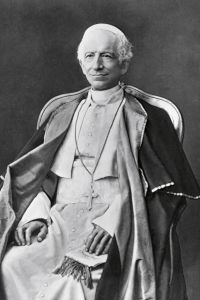
“ The foremost duty, therefore, of the rulers of the State should be to make sure that the laws and institutions, the general character and administration of the commonwealth, shall be such as of themselves to realize public well-being and private prosperity. ”
 Thomas Jefferson,
Notes on the State of Virginia…
Thomas Jefferson,
Notes on the State of Virginia…
“ Civil government being the sole object of forming societies, its administration must be conducted by common consent. Every species of government has its specific principles. Ours perhaps are more peculiar than those of any other in the universe. ”
L. O. Curon, Chicago, Satan's Sanctum
“ The civil service law was placed upon the statute book at the instance of those who had made the study of municipal government a duty, and who from that study realized that the growth of great cities, in population, material wealth and industrial development, demands commensurate changes in the manner of governing such communities. ”
 G. P. R. James,
The Forgery; or, Best Intentions
G. P. R. James,
The Forgery; or, Best Intentions
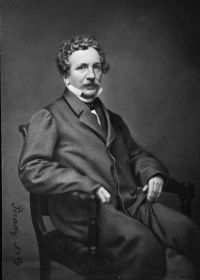
“ Our municipal institutions are but better organised types of that which exists even in country districts, where, round a few men of property and intelligence, whose duty it is to maintain order and peace, and as far as in them lies to spread happiness and prosperity around them, are collected a multitude of persons of various grades of wealth and intellect, who have a right to look to those above them for advice, assistance, protection, and support. ”
 William Bennett Munro,
Social Civics
(1922)
William Bennett Munro,
Social Civics
(1922)
“ But the evolution was not confined to political institutions alone. Social and economic groups and institutions developed also. A variety of needs called forth one institution after another, the church, the school, the club, the industrial organization. Each has its own function in organized society.Government is the guiding hand. The Rôle of Government.—The dominating factor in the social and economic life of today, however, is the political community (nation, state, and municipality) , acting through the agency which we call government. Government is the great co-ordinating factor. ”
 Henry James Sumner Maine,
Ancient Law
(1861)
Henry James Sumner Maine,
Ancient Law
(1861)
“ The agents of legal change, Fictions, Equity, and Legislation, are brought in turn to bear on the primeval institutions, and at every point of the progress, a greater number of personal rights and a larger amount of property are removed from the domestic forum to the cognizance of the public tribunals. ”
William Klapp Williams, The Communes of Lombardy from the VI. to the X. Century
“ We have been dealing exclusively with institutions, and the manner in which their growth has been accomplished. For it is in the institutional life of a people, and in the change and development it undergoes, that are to be found those elements which form the basis for all future changes, whether simply in the form of its government or in the structure of its social system. ”
Carl Schurz,
Some Object Lessons
(1903)
“ Civil service reform has with signal success passed the period of uncertain trial. Every executive officer is now compelled to admit—and the more conscientious he is, the more emphatically he will admit it—that those branches of the public service in which the civil service rules, and especially the competitive principle, are most strictly enforced, the work to be done is most attentively attended to and most satisfactorily performed. ”
 Jean-Jacques Rousseau,
The Social Contract
(1913)
Jean-Jacques Rousseau,
The Social Contract
(1913)
“ But I should have chosen a community in which the individuals, content with sanctioning their laws, and deciding the most important public affairs in general assembly and on the motion of the rulers, had established honoured tribunals, carefully distinguished the several departments, and elected year by year some of the most capable and upright of their fellow-citizens to administer justice and govern the State; a community, in short, in which the virtue of the magistrates thus bearing witness to the wisdom of the people, each class reciprocally did the other honour. ”
 John R. Commons,
The American Journal of Sociology
(1901)
John R. Commons,
The American Journal of Sociology
(1901)
“ That is, the machinery of government may be so constructed and the suffrage so extended that different sects and classes may get a share of social services by simply getting control of the constituted authorities through well-recognized channels and without resorting to violence. ”
Carl Schurz,
Speeches, correspondence and political papers of Carl Schurz
(1913)
“ The subject of civil service reform, which also formed a prominent feature of our platform in 1870, has attracted the attention of the people in a higher degree than ever before. That the President has adopted and promised to carry out a plan of reform proposed to him by the Civil Service Commission must by no means be taken as an indication that the cause of reform is now safe. ”
 J. Ellis Barker,
British Socialism
J. Ellis Barker,
British Socialism
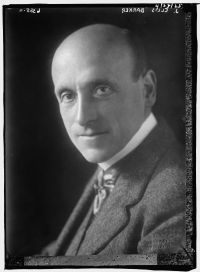
“ The Society further endeavours to promote social amelioration by the dissemination of information about existing institutions, in order that better use may be made of the powers already possessed by local administrative authorities, now too often neglectful of their obligations. ”
John Richard Green, History of the English People, Volume II
“ At the close of his reign King, Lords, Commons, the Courts of Justice, the forms of public administration, the relations of Church and State, all local divisions and provincial jurisdictions, in great measure the framework of society itself, have taken the shape which they essentially retain. ”
John Stuart Mill,
Considerations on Representative Government
“ When, therefore, the instructed in general can be brought to recognize one social arrangement, or political or other institution, as good, and another as bad—one as desirable, another as condemnable, very much has been done towards giving to the one, or withdrawing from the other, that preponderance of social force which enables it to subsist. ”
East Germany/SED, Constitution of the German Democratic Republic (1949)
“ State authority must serve the welfare of the people, liberty, peace and the progress of democracy. (6) Those active in public service are servants of the community as a whole and not of any one party. Their activity is supervised by the popular representative body. ”
 Thorstein Veblen,
The Place of Science in Modern Civilisation…
Thorstein Veblen,
The Place of Science in Modern Civilisation…
“ The important and interesting institutions in such a case, those institutions which fill a large angle in men's vision and carry a great force of authenticity, are the institutions of coercive control, differential authority and subjection, personal dignity and consequence; and the speculative generalisations, the institutions of the realm of knowledge, are created in the image of these social institutions of status and personal force, and fall into a scheme drawn after the plan of the code of honor. ”
Mary Katrine Rice Sedgwick, Ácoma, the sky city (1926)
“ The civil government is chiefly concerned with property, and equities in material things, individual or communal. The governor and lieutenant-governor must be of different clans, and, theoretically at any rate, so also are their aids. Certain officials serve only one year at a time, and as there is a general disposition to give equal representation in public affairs to each clan, such diffusion of power tends toward a community thoroughly welded together. ”
 Guillermo Marín Ruiz,
Translation:Toltec Pedagogy
(2009)
Guillermo Marín Ruiz,
Translation:Toltec Pedagogy
(2009)
“ The social organization system and legal regime, ranging from ancestral family and community principles and ethical and moral standards, passing through production and trade relations, solidarity and social responsibility, forms of community and state administration; up to a very complex system of laws, rules, uses and customs that embodied free work by the community, the stewardships and charges system, which allowed the orderly and balanced community life as well as relationships and exchanges with other communities or states. ”
Carl SchurzWilliam Graham SumnerCarl Russell FishGrover ClevelandJohn Stuart MillHenry James Sumner Maine Edmund BurkeLajos KossuthEmory Adams AllenPaul Janetby John Marshall HarlanHenry MannSir William Francis ButlerRutherford Birchard HayesRutherford B. HayesFrederick Scott OliverThomas Hill GreenFrancis BaconLeo XIIIL. O. Curon