Cockade

Definition and stakes

1911 Encyclopædia Britannica, Volume 6… (1911)

“ To-day each foreign nation has its special coloured cockade. Thus the Austrian is black and yellow, the Bavarian light blue and white, the Belgian black, yellow and red, French the tricolour, Prussian black and white, Russian green and white, and so on, following usually the national colours. Originally the wearing of a cockade, as soon as it had developed into a badge, was restricted to soldiers, as “to mount a cockade” was “to become a soldier.” There is still a trace of the cockade as a badge in certain military headgears in England and elsewhere. ”
Source: Wikisource

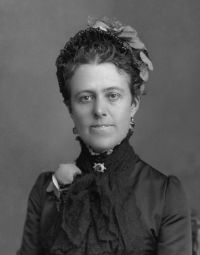
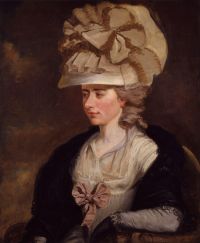
Portrait of Frances Burney Frances Burney,  Cecilia — Book 1/Chapter ii: AN ARGUMENT (1782)

“ Among the gentlemen, the most conspicuous, by means of his dress, was Mr Aresby, a captain in the militia; a young man who having frequently heard the words red-coat and gallantry put together, imagined the conjunction not merely customary, but honourable, and therefore, without even pretending to think of the service of his country, he considered a cockade as a badge of politeness, and wore it but to mark his devotion to the ladies, whom he held himself equipped to conquer, and bound to adore. ”
Source: Wikisource

G. Woolliscroft Rhead,  History of the Fan

“ The cockade form, à la cocarde, has been in use during all periods subsequent to its first introduction from the East in the early centuries of our era. We have already referred at some length to the cockade flabella at Tournus and Monza. In an inventory of Charles V. of France, 1380, we read of ‘un esmouchouer rond, qui se ploye, en yvoire, aux armes de France et de Navarre, à un manche d’ybenus.’78
During the fourteenth century, the long-handled flabellum was also in use, waved by attendants as at Thebes and Rome.
”
Source: Gutenberg

Get perspective with Kwize: daily news enlightened by great literature