Cockatrice

Definition and stakes

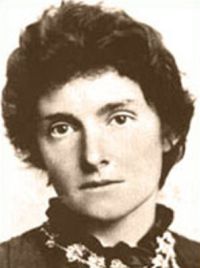
Portrait of E. Nesbit E. Nesbit The Book of Dragons — VIII. KIND LITTLE EDMUND, or THE CAVES AND THE COCKATRICE (1901)

The wood blazed up, and presently something in the basin caught fire, and Edmund saw that it was a sort of liquid that burned like the brandy in a snapdragon. And now the cockatrice stirred it with his tail and flapped his wings in it so that some of it splashed out on Edmund's hand and burnt it rather badly. But the cockatrice grew red and strong and happy, and its comb grew scarlet, and its feathers glossy, and it lifted itself up and crowed "Cock-a-trice-a-doodle-doo!" very loudly and clearly.
Source: Wikisource

Portrait of Arthur Charles Fox-Davies Arthur Charles Fox-Davies A Complete Guide to Heraldry (1909)

Both these peculiarities occur in the case of the crest of a Lancashire family named Ffarington.
The Cockatrice.—The next variety is the cockatrice (Fig. 431) , which is, however, comparatively rare. Two cockatrices are the supporters to the arms of the Earl of Westmeath, and also to the arms of Sir Edmund Charles Nugent, Bart. But the animal is not common as a charge. The difference between a wyvern and a cockatrice is that the latter has the head of a cock substituted for the dragon's head with which the wyvern is decorated.
Source: Wikisource

F. Edward Hulme Myth-Land

In the fifty-ninth chapter the workers of iniquity are described as hatching the cockatrice egg, and amongst the judgments pronounced upon the impenitent Jews by the prophet Jeremiah we find the verse, “Behold, I will send serpents, cockatrices, amongst you, which will not be charmed, and they shall bite you.” The heraldic cockatrice is represented as having the head and legs of a cock, a scaly and serpent-like body, and the wings of a dragon.
Source: Gutenberg

Get perspective with Kwize: daily news enlightened by great literature