
“ Now, if the Earth of our cold Climate be so fertile of animate bodies, what may we think of the fat Earth of hotter Climates? Certainly, the Sun may there, by its activity, cause as great a parcel of Earth to fly on wings in the Air, as it does of Water in steams and vapours. And what swarms must we suppose to be sent out of those plentifull inundations of water which are poured down by the sluces of Rain in such vast quantities? ”
Cold climate
Definition and stakes
The theme of “cold climate” has been addressed by authors such as Alexander Buchan, Ledyard Bill, Armin Hajman Koller, Alfred Russel Wallace and comte de Georges Louis Leclerc Buffon. It is often associated with terms like heat, temperature, winter, snow and ice.
Quotes about “cold climate”
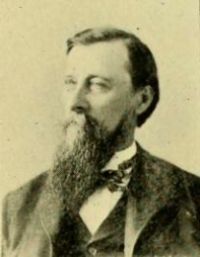 Ledyard Bill,
Minnesota; Its Character and Climate
“ The advantages of this winter season is that, while a cold climate, it still admits of the invalid taking constant daily exercise with an entire freedom from liability to "catch cold," the system freed from sudden shocks incident to the coquetting climate of the East; the lungs and whole body strengthened and braced by the tonic effect of this continental climate."It is the most normal climate on the continent. No other is so exquisitely symmetrical in its entire annual development. ”
Chautauqua Institution, The Chautauquan, Vol. 04, December 1883
“ You have learned that the higher parts of the atmosphere are extremely cold. You know also that in the far north and the far south, around those two opposite parts of the earth’s surface called the Poles, the climate is extremely cold—so cold as to give rise to dreary expanses of ice and snow, where sea and land are frozen, and where the heat of summer is not enough to thaw all the ice and drive away all the snow. ”
Popular Science Monthly (1880)
“ The calmer light, the more gentle and equalized heat, the thicker and more humid atmosphere, explain that equalization of temperature, those days half veiled and transparent nights, and that tepid climate of the polar regions, that we might consider as presiding at the development of primitive life. Finally, the primitive sun, by its slow condensation, passing insensibly into its present state, necessarily forced the retreat of the torrid zone, thus ending the anterior equality of the climate, permitting cold to become established at the pole, and concentrating heat at the equator. ”
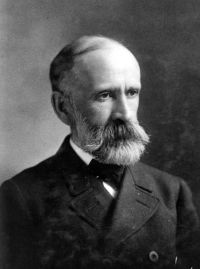 Israel C. Russell,
North America
“ As a whole, the portion of the continent embraced in the temperate zone is characterized by its pronounced seasonal changes, including wide extremes of heat and cold over large areas, and by its frequently sudden and strongly marked weather changes during short periods of time. It is a highly suggestive fact that of all the great climatic zones the one having the most changeable climate, the greatest extremes of heat and cold, and the most frequent storms should be the one in which man has reached the highest development both of body and mind. ”
C. H. Thomas, Origin of the Anglo-Boer War Revealed…
“ The snow would, however, thaw with the warmth of the sun, and so restore the temperature as before. The bracing quality of the climate mostly consists just in those variations of cool nights and warm days, and the occasional days of comparatively cold, boisterous weather. ”
W. Mattieu Williams, Science in Short Chapters
“ This work finished, then the warming power of a non-setting sun becomes evident, and the continuously accumulating heat of his rays displays its remarkable effect on vegetable life, and everything capable of being warmed. These peculiarities of Arctic climate must become exaggerated as the Pole is approached, the winter cold still more intense, and the accumulation of summer heat still greater. ”
 Alfred Russel Wallace,
Island Life; Or, The Phenomena and Causes of Insular Faunas and Floras
“ The reason of this may perhaps be made clearer by considering the stability of either extreme glacial conditions or the entire absence of perpetual ice and snow, and the comparative instability of an intermediate state of climate. When a country is largely covered with ice, we may look upon it as possessing the accumulated or stored-up cold of a long series of preceding winters; and however much heat is poured upon it, its temperature cannot be raised above the freezing point till that store of cold is got rid of—that is, till the ice is all melted. ”
Chautauqua Institution, The Chautauquan, Vol. 04, December 1883
“ In other words, while in the polar tracts the climate is so cold that perpetual snow is found even close to the sea-level, the equatorial regions are so warm that you must climb many thousand feet before you can reach the cold layers of the air where snow can remain all the year. ”
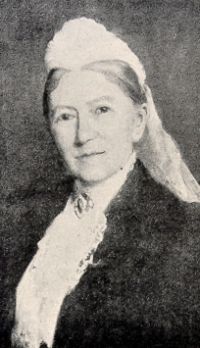 Eliza Brightwen,
Wild Nature Won by Kindness — The Californian Mouse
“ In his own country, where the cold is very severe in winter, its habit is to become perfectly unconscious, exactly as if dead, and in that state it can endure the rigour of the climate and wake up when the temperature rises. ”
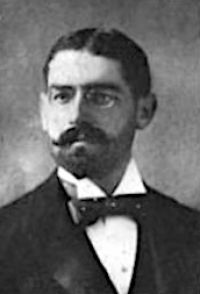 Robert DeCourcy Ward,
1911 Encyclopædia Britannica, Volume 6…
(1911)
“ The polar limits of the temperate zones are fixed by the isotherm of 50° for the warmest month. Summer heat is more important for vegetation than winter cold, and where the warmest month has a temperature below 50°, cereals and forest trees do not grow, and man has to adjust himself to the peculiar climatic conditions in a very special way. ”
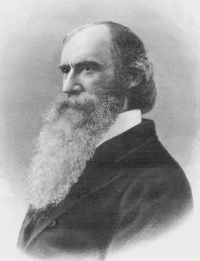 John Strong Newberry,
Popular Science Monthly
(1876)
“ The greater elevation of the land (in the Ice period) is simply assumed as an hypothesis to account for the cold. The facts of geology, however, are fast establishing the opposite conclusion, viz., that when the country was covered with ice, the land stood in relation to the sea at a lower level than at present, and that the continental periods or times, when the land stood in relation to the sea at a higher level than now, were the warm inter-glacial periods, when the country was free of snow and ice, and a mild and equable condition of climate prevailed. ”
Israel C. Russell,
North America
“ The winter in the northeastern portion of the transition province may be said to be the most characteristic feature of the climate, as it is the one that is most pronounced and exceptional, when a comparison is made with other thickly peopled portions of the continent. The period of cold and snow each year is long, extending in general from November to March, and the coming of the flowers and birds in spring is frequently much delayed. The long cold winters have a decided influence on plant and animal life, and in a marked way modify the lives of men. ”
Robert DeCourcy Ward,
1911 Encyclopædia Britannica, Volume 6…
(1911)
“ Towards the margins of the zone, with increasing annual ranges of temperature, seasons in the extra-tropical sense gradually appear. Physiological Effects of Heat and Humidity.—Tropical heat is associated with high relative humidity except over deserts and in dry seasons. The air is therefore muggy and oppressive. The high temperatures are disagreeable and hard to bear. The “hot-house air” has an enervating effect. Energetic physical and mental action are often difficult or even impossible. The tonic effect of a cold winter is lacking. ”
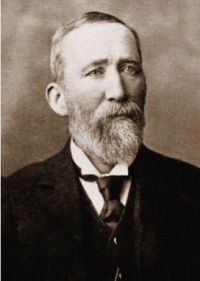 Henry Alleyne Nicholson,
The Ancient Life History of the Earth
“ With the commencement of the Quaternary period, however, this diminution of temperature became more decided; and beginning with a temperate climate, we find the greater portion of the northern hemisphere to become gradually subjected to all the rigours of intense Arctic cold. All the mountainous regions of Northern and Central Europe, of Britain, and of North America, became the nurseries of huge ice-streams, and large areas of the land appear to have been covered with a continuous ice-sheet. ”
 Charles Dudley Warner,
The Works of Charles Dudley Warner
“ Accustomed to extremes of temperature and artificial heat, I think for most people the first winter here is a disappointment. I was told by a physician who had eighteen years' experience of the climate that in his first winter he thought he had never seen a people so insensitive to cold as the San Diegans, who seemed not to require warmth. And all this time the trees are growing like asparagus, the most delicate flowers are in perpetual bloom, the annual crops are most lusty. I fancy that the soil is always warm. The temperature is truly moderate. ”
 Denison Olmsted,
Letters on Astronomy
“ The cold of the upper regions of the atmosphere modifies and tempers the solar heat, so as to give a most delightful softness, while the uniformity of temperature excludes those sudden and excessive changes which are often experienced in less favored climes. In ascending certain high mountains situated within the torrid zone, the traveller passes, in a short time, through every variety of climate, from the most oppressive and sultry heat, to the soft and balmy air of Spring, which again is succeeded by the cooler breezes of Autumn, and then by the severest frosts of Winter. ”
Charles Ernest Pelham Brooks, The evolution of climate (1922)
“ These figures were then analysed mathematically, and from them the effects on temperature of land to the east, land to the west, and ice were calculated. The detailed numerical results are set out in an Appendix; it is sufficient here to give the following general conclusions: (1) In winter the effect of land to the west is always to lower temperature. (2) In winter the effect of land to the east is almost negligible, that is to say, the eastern shore of a continent is almost as cold as the centre of the continent. ”
 Woodes Rogers,
A Cruising Voyage Around the World
“ The Climate here is uncertain, as through all the Country, being for most part both cold and hot at the same time, viz. cold in the Shade, and hot in the Sun, but is never excessive either way; yet the Inhabitants complain of the Cold in the Mornings, and of the Heat from March till July; from thence to September the Rains cool the Air, and from that time till March the Rains are but small. ”
Arthur Griffiths, Russian Prisons
“ The mere atmospheric conditions and extremes of temperature in the varying seasons suffice to break down the health of all but the most hardy, for winter succeeded summer before the march ended and vice versa, so that arctic cold alternated with tropical heat, and deep snow with burning sun and torrential rains. ”
Israel C. Russell,
North America
“ The principal elements of the weather which go to make up the conditions of the atmosphere embraced in the broader term climate are temperature, precipitation, and the winds. On the accompanying map, Plate II, the mean annual temperature of the continent is represented by isotherms, or lines drawn through localities having the same average temperature for the year. On the same map is also shown in blue the average depth of precipitation, including both rains and melted snow. ”
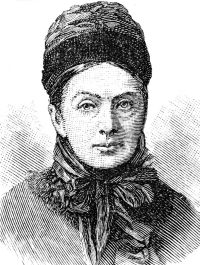 Isabella L. Bird,
Korea and her neighbors
(1897)
“ Except on the few days on which snow falls, the skies are cloudless, the temperature is not seriously below zero, and the dryness of the air is very invigorating. In winters, happily somewhat exceptional, in which there is no snowfall, and the strong winds create dust-storms, the climate is less agreeable. ”
W. H. Davenport Adams, Everyday Objects; Or, Picturesque Aspects of Natural History
“ It has been found that the inner surface of the snow seldom falls much below 32° F., although the temperature of the external air may be many degrees under the freezing-point; and it is known that this amount of cold can be endured by the crops without injury, so long as their covering protects them from the raking influence of the wind. In climates where the winter's cold is longer and more intense than in England, the protective influence of snow is much more plainly shown. ”
comte de Georges Louis Leclerc Buffon, Buffon's Natural History. Volume 10…
“ From hence it can only be owing to the consolidation of the earth occasioned by the cold, or even to the cold produced by the durable rains which fall in these climates, that we can attribute this difference between winter and summer; the binding of the earth by cold suppresses a part of the emanations of the internal heat, and the cold, always renewed by the fall of rain, diminishes its intensity ”
J. G. M'Pherson, Meteorology; or, Weather Explained
“ Climate is an expression for the conditions of a district with regard to temperature, and its influence on the health of animals and plants. The sun is the great source of heat, and when its rays are nearly perpendicular—as at the Tropics—the heat is greater on the earth than when the slanted rays are gradually cooled in their passage. As one passes to a higher level, he feels the air colder, until he [Pg 111] reaches the fluctuating snow-line that marks perpetual snow.The temperature of the atmosphere also depends upon the radiation from the earth. ”
Willis Luther Moore, The new air world (1922)
“ We now know that the forceful, dominating peoples come out of the regions where the heat is not so great as to debilitate, nor the cold so fierce as to deaden the mental and the physical faculties; but rather from the region of the thoroughfare of the great circum-polar storm tracks, where there are frequent changes of weather from sunshine to clouds, and where there is a fairly wide difference in temperature between night and day and between winter and summer. ”
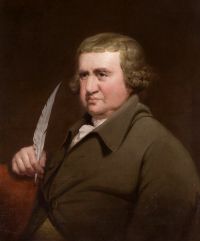 Erasmus Darwin,
The Botanic Garden, a Poem in Two Parts…
“ Now though the atmosphere at that height may be cold to a very considerable degree; yet its total deprivation of condensible vapour would seem to shew, that its water was decomposed; as there are no experiments to evince that any degree of cold hitherto known has been able to deprive air of its moisture; and great abundance of snow is deposited from the air that flows to the polar regions, though it is exposed to no greater degrees of cold in its journey thither than probably exists at four miles height in the atmosphere at the line. ”
George P. Marsh, The Earth as Modified by Human Action
“ From a careful comparison of these facts, it appears that the weather, in modern winters, in the United States, is more inconstant than when the earth was covered with woods, at the first settlement of Europeans in the country; that the warm weather of autumn extends further into the winter months, and the cold weather of winter and spring encroaches upon the summer; that, the wind being more variable, snow is less permanent, and perhaps the same remark may be applicable to the ice of the rivers. ”
F. Arago, Biographies of distinguished scientific men…
“ When we perceive, even under the equator, certain mountains covered with eternal snow, upon observing the rapid diminution of temperature which the strata of the atmosphere undergo during ascents in balloons, meteorologists have supposed, that in the regions wherein the extreme rarity of the air will always exclude the presence of mankind, and that especially beyond the limits of the atmosphere, there ought to prevail a prodigious intensity of cold. ”
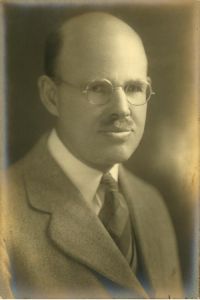 Ellsworth Huntington,
The Red Man's Continent: A Chronicle of Aboriginal America
(1919)
“ The best climate is, therefore, one where the temperature ranges from not much below the freezing-point at night in winter to about 80 degrees F. by day in summer, and where the storms which bring daily changes are frequent at all seasons. ”
Thomas Wood, The Mosaic History of the Creation of the World
“ In other countries, the inhabitants are scorched with the rays of a vertical sun, and wish in vain for the cooling winter’s snow. Some know not what is meant by the heat of summer, and others are as ignorant of the cold of winter. Some see the sun, but comparatively feel not his warming influence; while others are penetrated with his burning rays all the year. But the people of this country have moderate summer, heat sufficient for ripening the most useful fruits, and winter that may be well endured. ”
Robert Kemp Philp, The Reason Why
“ Because the temperature of our climate differs more from the temperature of the torrid zones in the winter than it does in the summer, and the inequalities of temperature cause frequent changes in the degree of prevailing heat. ”
George P. Marsh, The Earth as Modified by Human Action
“ These effects seem to result necessarily from the greater quantity of heat accumulated in the earth in summer since the ground has been cleared of wood and exposed to the rays of the sun, and to the greater depth of frost in the earth in winter by the exposure of its uncovered surface to the cold atmosphere."—Collection of Papers by Noah Webster, p. ”
Anonymous, The Senses and the Mind
“ It may, however, be permitted us to state a few simple facts relative to the atmospheric temperature of our globe, and the adaptation of organic beings to the different degrees of heat within the inter-tropics, in the temperate and in the polar latitudes. Climate varies not only according to latitude, but also according to elevation, the relative proportions of land and water, the nature of the surface of the land, the extent of forests, etc. ”
Related terms
Authors who wrote about “cold climate”
Alexander BuchanLedyard BillArmin Hajman KollerAlfred Russel Wallacecomte de Georges Louis Leclerc BuffonWillis Luther MooreCharles Ernest Pelham BrooksDaniel DraperGeorge P. MarshIsrael C. RussellEllsworth HuntingtonJohn Strong NewberryRobert DeCourcy Ward Philip E. MuskettCharles Dudley Warner
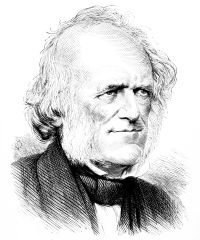 Sir Charles Lyell
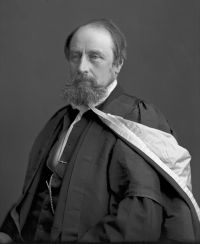 Sir John William Dawson
 Edwin Swift BalchPhilip Lake and Howard Knox and W. A. B. CoolidgeVarious
Ledyard BillArmin Hajman KollerAlfred Russel Wallacecomte de Georges Louis Leclerc BuffonWillis Luther MooreCharles Ernest Pelham BrooksDaniel DraperGeorge P. MarshIsrael C. RussellEllsworth HuntingtonJohn Strong NewberryRobert DeCourcy WardPhilip E. MuskettCharles Dudley WarnerSir Charles LyellSir John William DawsonEdwin Swift BalchPhilip Lake and Howard Knox and W. A. B. CoolidgeVarious