Collective psychology

Definition and stakes

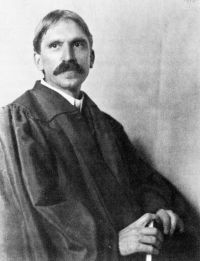
Portrait of William McDougall William McDougall,  The Group Mind: A Sketch of the Principles of Collective Psychology

“ This doctrine of the ‘collective consciousness’ of societies may seem bizarre to those to whom it is altogether novel; but it is one that cannot be lightly put aside; it demands serious consideration from any one who seeks the general principles of Collective Psychology. We have no certain knowledge from which its impossibility can be deduced; and the new light thrown upon individuality by modern studies in psycho-pathology shows us that the indivisibility and strictly bounded unity of the individual human soul is a postulate that we must not continue to accept without critical examination. ”
Source: Gutenberg

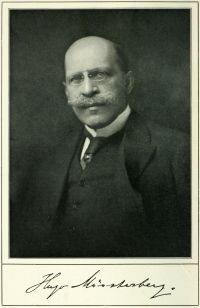
Portrait of William McDougall William McDougall,  The Group Mind: A Sketch of the Principles of Collective Psychology

“ Coming now to close quarters with the doctrine, we may ask those who, like Schaeffle and Espinas, regard the ‘collective consciousness’ as a bond which unites the members of a society and makes of them one living individual,—Is this ‘collective consciousness’ merely epiphenomenal in character? Or are we to regard it as reacting upon the consciousnesses or minds of the individuals of the group, and, through such reaction, playing a part in determining the behaviour of the group, or rather of the individuals of which the group is composed? ”
Source: Gutenberg

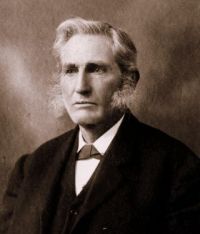
Portrait of Gustave Le Bon Gustave Le Bon,  The Psychology of Revolution

“ Although I have studied collective psychology at length in another volume, I must here recall its principal laws.
Man, as part of a multitude, is a very different being from the same man as an isolated individual. His conscious individuality vanishes in the unconscious personality of the crowd.
Material contact is not absolutely necessary to produce in the individual the mentality of the crowd. Common passions and sentiments, provoked by certain events, are often sufficient to create it.
The collective mind, momentarily formed, represents a very special kind of aggregate.
”
Source: Gutenberg

Get perspective with Kwize: daily news enlightened by great literature