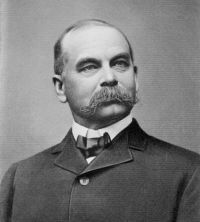
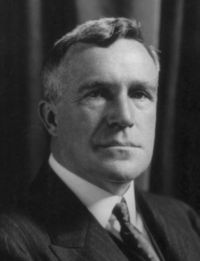
“ College isn't the Elysium that it is painted in stories and novels, but I feel sorry for any intelligent man who didn't have the opportunity to go to college. There is something beautiful about one's college days, something that one treasures all his life. As we grow older, we forget the hours of storm and stress, the class-room humiliations, the terror of examinations, the awful periods of doubt of God and man—we forget everything but athletic victories, long discussions with friends, campus sings, fraternity life, moonlight on the campus, and everything that is romantic. ”
College life
Definition and stakes
Quotes about “college life”
Clayton Sedgwick Cooper, Why go to College? (1912)
“ The college, then, is a means only to the larger life of spirit and service. It exists to point out the goal the attainment of which lies inherent in the student. The college is like the tug-boat that pulls the ship from the harbor to the clear water of the free, open sea. The curriculum, the play-life, the laboratory, the patriotism of the college spirit, the buildings, and the men, are only torches gleaming through the morning shadows of the student’s coming day. ”
Annie F. Johnston, Asa Holmes; or, At the Cross-Roads
“ But there need be no surmise about college florescence. Faculties may beam with complacency on their yearly cluster of [121] full-blown graduates, the very walls of the gray old universities may thrill as they echo the applause of admiring audiences, but the greatest pride is not felt within the college town itself where the student life centres. It is back in the roots that have made college life possible. Back in some parental existence that daily sinks itself farther into the commonplace in order that some son or daughter may blossom into the culture of arts and belles-lettres. ”
Alice Freeman Palmer,
Why Go to College? An Address
“ Leaders in the stirring world of to-day return at each commencement to share the fresh life of the new class. Books, pictures, music, collections, appliances in every field, learned teachers, mirthful friends, athletics for holidays, the best words of the best men for holy days,—all are here. No wonder that men look back upon their college life as upon halcyon days, the romantic period of youth. ”
Horace Meyer Kallen, College prolongs infancy (1932)
“ College sits in excelsis. The topmost turn of the educational system, it sets the standards and defines the ideal both of knowledge and conduct. Secondary-school students consequently prepare for college in a far completer way than is recognized. They emulate and reproduce the whole pattern and structure of “college life,” with its fraternities and other societies, its athletics, its hidden sex interests, and all the rest. ”
Alice Freeman Palmer,
Why Go to College? An Address
“ Fascinating fields of knowledge are waiting to be explored; possibilities of doing, as well as of knowing, are on every side; new and dear friendships enlarge and sweeten dreams of future study and work, and the young student cannot afford quivering nerves or small lungs or an aching head any more than bad taste, rough manners, or a weak will. Handicapped by inheritance or bad training, she finds the plan of college life itself her supporter and friend. ”
Various, Popular Science Monthly (1911)
“ It is that the college take charge of its own affairs. Through these later years alma mater has been piling up her equipment, employing more and more professors, proclaiming her wares, absorbed in the task of growing. With some uneasiness, but with affected unconcern, she has seen growing up over against her own growth this monstrous structure of student activities, this artificial world of student life encased in traditions too sacred to be scrutinized and presided over by that stuffed goddess of liberty known as college spirit. ”
Clayton Sedgwick Cooper, Why go to College? (1912)
“ Undergraduate life is now likewise influenced by the influx of students who are not the sons of college men, but who come from homes the chief ideals of which have been derived from counting-rooms and laboratories, from brokers’ and railroad offices. These students, scions of a property-getting class, in conjunction with the social and the scientific students in college, help to change the classical traditions. They emphasize the campus side of college life more than that of the lecture-room. ”
Chautauqua Institution, The Chautauquan, Vol. 05, March 1885
“ The student through college is a traveler, sometimes examining in detail, sometimes superficially. He gives a glance and remembers; he takes notes and thinks closely. He sees the all-surrounding regions of knowledge, and although he may make but slight researches in particular lines, he knows where to return in the after years for deeper research and ampler knowledge.7. College life leads to self-discovery. It tests a man’s powers, and reveals to him his weakness. ”
Charles Franklin Thwing,
Letters from a Father to His Son Entering College
“ The first principle of college life is the principle of doing one's duty. In your appreciation of scholarship, your first duty is to learn your lessons. I have known many college men who learned their lessons, who yet failed to get from the college all that they ought to get. But I [Pg 32] have never known a man who failed to get his lessons, whatever else he may have got, to receive the full advantage of the course. The curriculum of every good college is the resultant of scores or of hundreds of years of reflection and of trial. ”
Clayton Sedgwick Cooper, Why go to College? (1912)
“ The work of the classroom and examination-hall makes for democracy, while the social life of the college makes for conservatism and aristocracy. Campus life is increasingly difficult to understand because of its growing complexity. The material needs of our time have created a class of undergraduates bent on becoming specialists, and these men have increasingly less time for either college work or college life; for them the undergraduate course is something to be hurried through as a short cut to professional efficiency. ”
Clayton Sedgwick Cooper, Why go to College? (1912)
“ After we have said much concerning the life and the work of the American undergraduate, there is still a valuable thing which the college should impart to him, and through which he should become enabled to present with greater charm and with greater force the message which is in his soul. This valuable thing, at once both idealism and incentive, is the undergraduate’s individual message to the world. It may be composed of knowledge, the ability to think, the faculty of relaxation, and the power to do faithfully and successfully some given task. ”
Various, Popular Science Monthly (1903)
“ OF all the influences molding secondary education in the United States at the present time, among the most powerful are the college entrance examinations. To the schoolmaster they seem to embody in tangible form the object of his efforts; to the student they form a barrier that must be cleared, interposed as they are between him and that fascinating interplay of social, athletic and perhaps scholarly activities, called college life. ”
Clayton Sedgwick Cooper, Why go to College? (1912)
“ For some students, too, we must conclude that trivialities and immoralities bury far out of sight the true meaning of college training and life-work; but in other students, and these are the majority, underneath his curriculum and his customs, his light-heartedness, his loves, and his seeming listlessness, one may discern the real American undergraduate, energetic, earnest, expectant, and strenuously eager for those great campaigns of his day and generation in which the priceless guerdon is the “joy of the working.” ”
Alice Freeman Palmer,
Why Go to College? An Address
“ The business and I are both the better for it every day." How many a young girl has had her whole horizon extended by the changed ideals she gained in college! Yet this is largely because the associations and studies there are likely to give her permanent interests—the fifth and perhaps the greatest gift of college life of which I shall speak. ”
William Trufant Foster,
Should Students Study?
(1917)
“ The students have given us their own word for it that College Life is more important that college studies; but Professor Gayley of the University of California calls this worshiping the idol of Incidental Issues. ”
Alice Freeman Palmer,
Why Go to College? An Address
“ Yet in spite of this I have sometimes thought that in college more than elsewhere the old law holds, "To him that hath shall be given and he shall have abundance, but from him who hath not shall be taken away even that which he seemeth to have." For it is the young life which is open and prepared to receive which obtains the gracious and uplifting influences of college days. What, then, for such persons are the rich and abiding rewards of study in college or university? ”
Atlantic Classics, Second Series
“ But even if intercollegiate games are detrimental to the interests of scholarship, is not the college spirit they create worth all they cost? Perhaps so. A university is more than a curriculum and a campus. It is more than the most elaborate student annual can depict. Even in Carlyle's day, it was more than he called it: a true university was never a mere 'collection of books.' It is the spirit that giveth life, and 'college spirit' is certainly a name to conjure with. The first question is what we mean by college spirit. ”
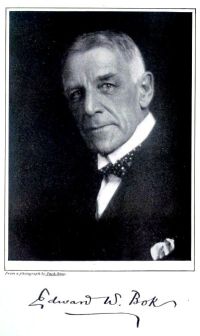
Edward William Bok,
The Young Man in Business
“ But before our American colleges become an absolute factor in the business capacities of men their methods of study and learning will have to be radically changed. I have had associated with me both kinds of young men, collegiate and non-collegiate, and I must say that those who had a better knowledge of the practical part of life have been those who never saw the inside of a college and whose feet never stepped upon a campus. ”
“ If you take an academy or a private school, constituted and organized like other similar institutions, success in your own will give you influence over others. A successful teacher of an academy raises the general standard of academic instruction. A college professor, if he brings extraordinary talents to bear upon the regular duties of that office, throws light, universally, upon the whole science of college discipline and instruction, and thus aids in infusing a continually renewed life and vigor into those venerable seats of learning that might otherwise sink into decrepitude and decay. ”
James Stalker, The Preacher and His Models
“ The professorial theory of college life is, that the faculties are being exercised and the resources collected with which the battles of life are subsequently to be fought and its victories won. And there is, no doubt, a great deal of truth in this theory. The acquisitions of the class-room will all be found useful in future, and your only regret will be that they have not been more extensive and thorough. The gymnastic of study is suppling faculties which will be indispensable hereafter. ”
Randolph Silliman Bourne,
Education and living
(1917)
“ The college will not really get the undergraduate until it becomes more conscious of the contrast of its own philosophy with his sporting philosophy, and tackles his boyish Americanisms less mercifully, or until it makes college life less like that of an undergraduate country club, and more of an intellectual workshop where men and women in the fire of their [Pg 229] youth, with conflicts and idealisms, questions and ambitions and desire for expression, come to serve an apprenticeship under the masters of the time. ”
John Marshall Barker, Colleges in America
“ Such, however, has been the growth of the sciences and advancement in the methods of teaching, that in our modern schools for superior instruction the well-equipped college has a decided advantage over those with meager appliances.Likewise, select a college where the life and esprit de corps is the very best. The college is not an exercising ground for the intellect alone, but a place for inspiring ideas and aims. These are the soul of college life. They are more important than college buildings, endowment or libraries. ”
Albert J. Beveridge,
The Young Man and the World
“ Then pick your college. That is as important a matter as choosing your occupation in life. One college is not as good as another for you. A score of colleges may be equally excellent in the ability of their faculties, in the perfection of their equipment.But each has its own atmosphere and traditions; each has its personality, if you may apply such a word to an institution. And you want to select the place where your mental roots will strike in the earth most readily, and take from the intellectual soil surrounding you the greatest possible amount of mental force and vigor. ”
William Lyon Mackenzie King,
The Secret of Heroism
(1906)
“ It may be that for many men four years of undergraduate life are not sufficient to make a college impress deep, or, to appearances, lasting; but if in any measure it is real, that influence must tell, not only on the years im- mediately succeeding, but through the whole of life. The first fruits of a college education are make of mind towards the problems of life, as these present themselves when academic halls are vacated, than in any immediate accomplishment. ”
Clayton Sedgwick Cooper, Why go to College? (1912)
“ In this portrait one sees the real drift of American undergraduate life—the life that engaged last year in North American institutions of higher learning 349,566 young men, among whom were many of America’s choicest sons. Thousands of American and Canadian fathers and mothers, some for reasons of culture, others for social prestige, still others for revenue only, are ambitious to keep these students in the college world. ”
Randolph Silliman Bourne,
Education and living
(1917)
“ If the American college is to have a part in that new educational movement which is beginning to make the school not merely a preparation for life but life itself, interested in what has meaning to the student at his particular age and situation, it will have to recast some of its most cherished practices and ideals. ”
Various, The Book Review Digest, Volume 02…
“ A story by an anonymous writer which “gives us a singularly intimate view of what we think must be a unique element in American college life. It presents the life of the small college from the standpoint, not of the student, nor of the professor, nor of the graduate, nor of the outsider, but of the Faculty family that has lived all its days on the college campus.” (Bookm.) “The plot is simple, the incidents 177those of the narrow round of life in a small college, the theme the old-fashioned one of love, but the book is saturated with life.” (Outlook.) ”
John Marshall Barker, Colleges in America
“ The college classes become the organic centers of college life. For four years the students meet, at least in the smaller colPage 159leges, in the same lecture rooms for common studies, and become acquainted with each other's talents, tempers, and characteristics. It is within this charmed circle that the students find their associates and form warm and lasting friendships. ”
Alice Freeman Palmer,
Why Go to College? An Address
“ It is true all the good gifts I have named may be secured without the aid of the college. We all know young men and women who have had no college training, who are as cultivated, rational, resourceful, and happy as any people we know, who excel in every one of these particulars the college graduates about them. I believe they often bitterly regret the lack of a college education. And we see young men and women going through college deaf and blind to their great chances there, and afterwards curiously careless and wasteful of the best things in life. ”
Clayton Sedgwick Cooper, Why go to College? (1912)
“ While, therefore, we must take it for granted that Americans generally believe in a collegiate education, we may still question whether the colleges are really equipping for leadership the young men whom they are sending into our modern life. ”
Harriet Martineau,
Retrospect of Western Travel, Volume 1…
“ I often wonder whether students are at all aware of the wistful longing, the envy, with which those who are precluded from academical life view the arrangements of colleges. No library in a private house conveys any idea of the power of devotion to study which is suggested by the sight of a student's apartment in a college. ”
Clayton Sedgwick Cooper, Why go to College? (1912)
“ These things, however, are all dependent upon the spirit of the actor, upon his vision, his determination, his ambitious and unflagging attempts. The true modern university contributes to the world a great-minded and a great-hearted man, to whom college [200] life has been a soul’s birth as well as a mind’s awakening. ”