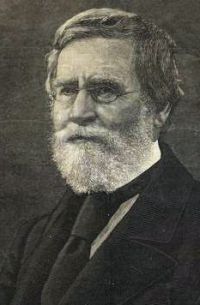
“ If you take an academy or a private school, constituted and organized like other similar institutions, success in your own will give you influence over others. A successful teacher of an academy raises the general standard of academic instruction. A college professor, if he brings extraordinary talents to bear upon the regular duties of that office, throws light, universally, upon the whole science of college discipline and instruction, and thus aids in infusing a continually renewed life and vigor into those venerable seats of learning that might otherwise sink into decrepitude and decay. ”
College professor
Definition and stakes
The theme of “college professor” has been addressed by authors such as Paul Klapper, John Marshall Barker, Clayton Sedgwick Cooper, John James Stevenson and Alice Freeman Palmer. It is often associated with terms like university, education, student, teaching and research.
Quotes about “college professor”
George Fitch, At Good Old Siwash
“ How a professor can go through an assorted collection of brain stufferies, get so many college degrees that his name looks like Halley's Comet with an alphabet tail, and then teach college students for forty years without even taking one of them apart to find out what he is made of, beats my time! That's a college professor for you, right through. He thinks of a college student only as something to teach—whereas, of all the nineteen hundred and eighty-seven things a college student is, that is about the least important to his notion. ”
Various, Popular Science Monthly (1915)
“ The college professor's function includes not only the increase of knowledge in the individual and the elevation of the intellectual standard in the world at large, but the actual advancement of learning. College and professor alike are not for their own campus alone, but for society in general. ”
Various, Popular Science Monthly (1885)
“ The active duties of a college professor leave little time for continued systematic investigation. A new era, however, is dawning in university education in America, and the college professor who shows ability for scientific investigation will undoubtedly be relieved of the yearly teaching of immature minds and be left free to devote himself to graduate students, to research, and to the general supervision of his department, rather than to the daily drill which should be left to trained assistants. ”
John Marshall Barker, Colleges in America
“ It is within the power of the college professor to help enlighten the understanding, strengthen and guide the intuitions and reasoning faculties, and to awaken within the student a consciousness of his new powers and capacities, and incite him to mental activity. The highest scholastic training demands that the professor studiously avoid all those methods of instruction which tend to mechanical habits of thought, and which check the mind's spontaneity of growth and repress the individuality so essential to true scholarship. ”
Various, Popular Science Monthly (1915)
“ The college professor does not measure his time—which means that he also does not begrudge it. And the reason why he does not is that in the main his pleasure coincides with his duty. He gives his time ungrudgingly because he likes to. I do not forget the fine bits of humor about the professor—"a man with not enough brains to be a clerk, and too little muscle to dig ditches." As a matter of fact, he is a college professor because he is fitted for and enjoys the intellectual life, and because he has followed his bent. ”
Various, Popular Science Monthly (1915)
“ To say it once more, the professor's calling is inspirational. If at any time inspiration fails him, nothing so makes him unhappy, nothing is so missed by his students. The tongues of men and angels can not make up for it. There is a still larger service of the intellectual expert upon which the public rarely reflects. The college professor has a function and a duty beyond the class room, beyond his community, beyond his state. To put it in a word, it is the college professor, first of all, who is responsible for the intellectual standard of the world. ”
John James Stevenson, Popular Science Monthly (1912)
“ That type has not disappeared; but the college professor of the last three decades has had, for the most part, special preparation for his work; teaching is, for him, the noblest of professions; except in a few departments, he is a man of the world, not enclosed in a world of his own creation. With wider opportunities, he understands his fellows and can keep in touch with younger men. ”
Various, Popular Science Monthly (1915)
“ It would be surprising indeed if a college professor—a real college professor, I repeat, one of the useless kind; not one of the kind whose services are so easily translated into money and who are really nothing but business men—it would be a great surprise if a real college professor ever undertook a "survey" of his fellows. He knows too much about the nature of their calling. Next to the ministry, or even beyond it, the profession of liberal arts is removed from the rough business of life, and occupies itself with the affairs of the mind and soul. ”
Clayton Sedgwick Cooper, Why go to College? (1912)
“ No pulpit in our day is more far-reaching and decisive than the desk of the college teacher. The college professor who does not forget that he is first a man, then a professor, and who can get past the friendship of books and knowledge to a genuine friendship with students, can be the highest force in our present day civilization. But the teacher says: “I am only a teacher of literature, or of chemistry, or of engineering, or of bridge-building. ”
1911 Encyclopædia Britannica (1911)
“ The president and the faculty had supervision not only of the studies of the students, but of their moral and religious life as well. The older type of college professor was not always a great scholar, but he was a student of human nature, with keen intuitions and shrewd insight. The new type, which had come into existence at the opening of the 20th century, was more scholarly in some special direction, often regarded teaching as a check upon opportunities for investigation, and disdained troubling himself with a student’s personal concerns or intellectual and moral difficulties. ”
Paul Klapper, College Teaching
“ The advantage of correlation will remain lost in college teaching as long as each instructor regards himself as a specialized investigator concerned with teaching his subject rather than his students. How many college teachers know what subjects their students have already taken, or knowing the names of these subjects, have a general knowledge of their content? The college professor of the preceding generation was a cultured gentleman whose general scholarship transcended the limits of his specialty. ”
Various, Lippincott's Magazine of Popular Literature and Science…
“ The utmost that can be said of our college system, as a system, is that it stands on a somewhat higher plane than the schools, that it is supposed to finish a young man's education, and consequently that the men whom it employs for such a purpose—its professors—are, or at least ought to be, abler men than the teachers proper. The difference, then, between professor and teacher is one of degree, and not of kind. ”
 Upton Sinclair,
The Goose-step: A Study of American Education
“ I do not expect many of the interlocking trustees to accept this invitation. I do expect, however, that developments in our public affairs will force a constantly increasing number of college professors to realize the intolerable nature of their present position, and to take up the work of educating their colleagues and the general public. These men will come to realize the broad nature of their task; how the roots of our academic problem go down into the very deeps of our political and economic life. The need of the college professor is one with the need of the citizen and the worker ”
Edward Howard Griggs, The Soul of Democracy
“ College professors are human—some of them. They want students prepared to enter as smoothly as possible into the somewhat artificial curricula of academic studies they have arranged. The Latin professor wishes not to go back and start with the rudiments of his subject, as the professor of mathematics with the beginnings of Algebra and Geometry. The result is they demand of the high school what fits most smoothly into their scheme. ”
John James Stevenson, Popular Science Monthly (1912)
“ In the old faculty, there was always some one to whom troubled students could go, knowing that he would give the best he had of advice and sympathy; and that man is present in every faculty to-day. Reasoning a priori, the number of such men should be greater now. The college professor of a half century ago was apt to be a recluse, not a man of affairs. Too often, especially in the smaller colleges, he had become teacher late in life, having been more or less unsuccessful in another profession, which, naturally, he regarded as of higher grade than teaching. ”
Various, Popular Science Monthly (1914)
“ But, after all, in the small college at least, the instruction of youth is the principal object of the professor's connection with the institution. There are not many professors whose research work is of any value whatever except to themselves. Those who are competent to enlarge the boundaries of human knowledge constitute a different class and are few in number. Such should have every opportunity and every facility. Generally these men are such wretchedly poor teachers that they have no place in the college faculty. ”
Various, Popular Science Monthly (1915)
“ It is in this second aspect that the college professor is most freely criticized. The general public, usually in the person of some one with a political or journalistic axe to grind, runs an eye through the columns of the semester program, and is surprised to find a professor scheduled for twelve hours, or ten, or even as few as six. ”
 John Kendrick Bangs,
From Pillar to Post: Leaves from a Lecturer's Note-Book
“ More than once I have left a symposium conducted by a group of these gentlemen almost obsessed with the notion that our universities might be better qualified to do their real work in life if the average college professor were able to "get his stuff over" as humanly, as clearly, as entertainingly, and as effectively as do the bulk of these advance agents of the American industrial world. ”
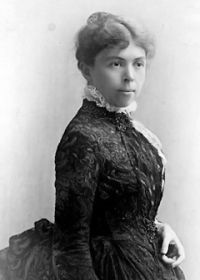 Alice Freeman Palmer,
The Teacher: Essays and Addresses on Education
“ To be an explorer and a guide in a department of human knowledge is an arduous profession. It admits no half-hearted service.Of course if the work demanded elsewhere is not serious, the case is different. Rather with benefit than with damage a college teacher may on occasion recast the instruction that was intended for professionals and offer it to a popular audience. In this way a professor makes himself known and makes his college known. Many of the small colleges are now engaging in university extension as an inexpensive means of advertising themselves. ”
Various, Popular Science Monthly (1911)
“ For as a member of the faculty the college professor already holds a franchise of considerable possibilities, and a place where he is authorized to speak, where, indeed, he is responsible for expressing himself regarding the welfare of his college, and where, as I think, he may also rightfully represent his own claims and those of his order. ”
Various, Popular Science Monthly (1911)
“ Without such a faculty, all the fine buildings, all the magnitude, all the alumni associations and other institutional paraphernalia in the world are dross and tinsel. It is a popular saying in the colleges that the business of the college professor is to teach. Often this carries the implication that a man can be an ideal teacher and not be doing some original work in his own particular field. ”
Various, Popular Science Monthly (1913)
“ Yet what is needed for the good of the cause is not fewer but many more faculty meetings. College professors are tempted, under present conditions, to confine themselves exclusively to their own line of work; they do not make connections with the work of other departments, or seek out relationships between different branches of knowledge, or see things as a whole. The college professor has in large measure been made what he is by the conditions in which he has been placed and he has lacked the courage to insist on having these conditions changed. ”
Anna Robertson Brown Lindsay, The Warriors
“ To be provost, to be college president or university professor, is to be seated on an intellectual throne.The problem of academic rule is not to attract a large number of students, to put up imposing buildings, to have endowments, and fill chairs with learned specialists; to grant many degrees, and to keep the hum of a teaching staff and of a student body alive in the ears of a community, marking the college group by flags and colors, cap and gown, processions and occasions. ”
Clayton Sedgwick Cooper, Why go to College? (1912)
“ Our institutions of learning have been obsessed with the mere value of the degree of doctor of philosophy. As a consequence, many a young professor is scholarly and expert in his knowledge of his subject, but utterly without ability to impart it with interest. He lacks driving force as well as guiding and regulating force. He seems at times without the capacity for real feeling. He is not alive to the issues of the time in which he lives. ”
Charles William Eliot and William Allan Neilson, The Harvard Classics Vol. 51 (1914)
“ College professors must be specialists—scholars in the full sense of the term; but college students do not for their part commonly intend or care to specialize in the same sense. To study one field with greater thoroughness than others; to gain from it a disinterested enthusiasm for learning; to approach in one direction the limits of achieved knowledge; to taste the joy of constructive intellectual effort; these are essential elements in a college student's curriculum. ”
Bernard C. Steiner, The History of University Education in Maryland
“ Primarily, instruction is the duty of the professor in a university as it is in a college; but university students should be so mature and so well trained as to exact from their teachers the most advanced instruction, and even to quicken and inspire by their appreciative responses the new investigations which their professors undertake. Such work is costly and complex; it varies with time, place, and teacher; it is always somewhat remote from popular sympathy, and liable to be depreciated by the ignorant and thoughtless. ”
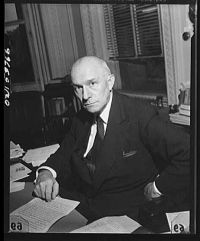 Stanley Kuhl Hornbeck,
Oxford and the Rhodes Scholarships
(1907)
“ Each College has its own teaching staff of Tutors and Lecturers. It is, of course, impossible for the ordinary College Tutor to supply instruction in all the various fields of knowledge. The difficulty has been met by appointing members of the instructional force of other Colleges, and very frequently also University Professors and Lecturers as College instructors, who in this way become responsible for some part of the ordinary College tuition. Thus it happens that an instructor may be lecturing as University Professor or Reader on one day, and on the next in his capacity as College Lecturer. ”
Various, Popular Science Monthly (1904)
“ In this matter the smaller universities have a great advantage over the larger ones if they will only be as careful in the choice of teachers. Only those who are near him know that a teacher is great. There are many graduates of our strongest institutions who never in their whole four years came in contact with a professor. Not long since, the editor of an eastern magazine, an able student and a man of strong character, told me that in his college course he had a speaking acquaintance with but one professor. ”
John James Stevenson, Popular Science Monthly (1912)
“ In those one finds a head professor with others known as instructors or assistant professors. The age of these associates averages not far from thirty years and, for the most part, they are men of experience in their work. In the "small college" on the contrary, all alike are professors, be they elderly men or callow youth. It is difficult to understand how a young man as professor in a small college can be more efficient as teacher or guide than he would be if called instructor or assistant professor in a large college. ”
Paul Klapper, College Teaching
“ While there are notable exceptions, my own observation is that the investigator, whether the head professor or the "teaching fellow," usually does not have the mental attitude that makes a successful teacher, at least of elementary classes,—and for these reasons: he begrudges the time spent in teaching elementary classes, presents the subject as primarily preparatory to upper courses, subordinates the human elements to the scientific elements, and actually exploits the class in the interest of research. ”
Related terms
Authors who wrote about “college professor”
Paul KlapperJohn Marshall BarkerClayton Sedgwick CooperJohn James StevensonAlice Freeman PalmerVariousBernard C. Steiner Karl Edwin Harriman
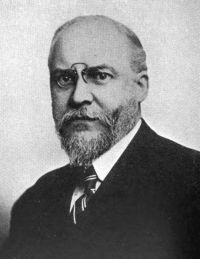 William Raimond BairdGeorge FitchUpton Sinclair
 Orison Swett Marden
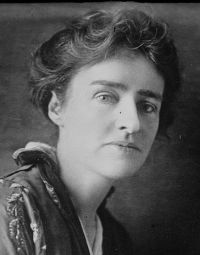 Jean WebsterChautauqua Institution
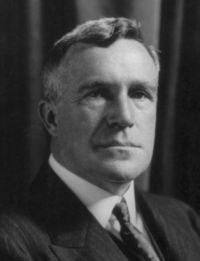 George Horace Lorimer
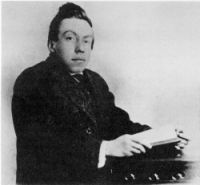 Randolph Silliman BourneMichael PupinHerbert M. HopkinsEdward Howard Griggs
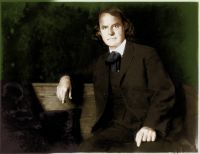 Elbert Hubbard
Alice Freeman PalmerVariousBernard C. SteinerKarl Edwin HarrimanWilliam Raimond BairdGeorge FitchUpton SinclairOrison Swett MardenJean WebsterChautauqua InstitutionGeorge Horace LorimerRandolph Silliman BourneMichael PupinHerbert M. HopkinsEdward Howard GriggsElbert Hubbard