Colored glass

Definition and stakes

Various,  Popular Science Monthly (1889)

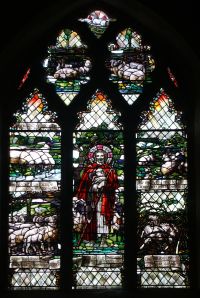
“ Some of our best effects are produced without the use of either paint or stain, and such windows have the advantage of a much greater durability. In painted glass the colors are produced by enamels fused to the surface of the glass by means of heat. In stained glass, a permanent transparent color effect is secured by the action of heat on certain metallic oxides applied to the surface as pigments; while in mosaic glass, pure and simple, the design is brought out by the use of shaped fragments of colored glass bound together by strips of doubly grooved lead. ”
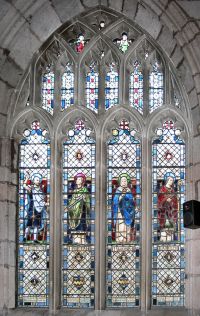
Source: Wikisource

Lewis F. Day,  Windows: A Book About Stained & Painted Glass

“ It is not in the least what a painter understands by painting. It is, in the first place, a means of giving in solid brown pigment, which effectually stops out the light, detail smaller than mere glazing would permit, such as the features of a face or the veining of a leaf: it gives the foils of the foliage, and marks the individual berries in the border overleaf. In the next it is used partially to obscure the glass, so as to give shading. The pigment is not used as colour, but for drawing and shading only. Local colour is represented by the pieces of pot-metal glass employed ”
Source: Gutenberg

J. Sydney Lewis,  Old Glass and How to Collect it

“ Points to be considered are the colour of the metal, the perfection of the twist, its opacity, and the character of the foot. The colour and weight of the glass are probably the best criteria. The forgeries are generally light, and the beautiful mellow tone of the real old English glass is replaced by a cold white tint or even a tinge of green. The twist is often more translucent than in the genuine pieces, and is frequently imperfectly produced, becoming looser as it descends, the loosening being particularly pronounced just before its junction with the foot. ”
Source: Gutenberg

Get perspective with Kwize: daily news enlightened by great literature