
“ We have already said that every strategic act can be referred to the idea of a combat, because it is an employment of the military force, and at the root of that there always lies the idea of fighting. ”
Combat effectiveness
Definition and stakes
The theme of “combat effectiveness” has been addressed by authors such as Carl von Clausewitz, Charles Jean Jacques Joseph Ardant du Picq, W. Balck, Anonymous and United States. Presidents. It is often associated with terms like enemy, weapon, soldier, military and battle.
Quotes about “combat effectiveness”
Anonymous, Infantry training, 1905 (1905)
“ A vigorous counter-attack by an army offering battle in a defensive position may throw the adversary on the defensive; or an assailant may fight a delaying or retaining action in one part of the field, while in another part his action may be essentially offensive; but these and other variations in a combat resolve themselves in every case into attack and defence. ”
Montgomery B. Gibbs, Military Career of Napoleon the Great
“ The time has passed in which enemies are mutually to appoint the place of combat, advance hat in hand and say: 'Gentlemen will you have the goodness to fire!' We must cut the enemy to pieces, precipitate ourselves like a torrent upon their battalions and grind them to powder. ”
United States. Presidents, State of the Union Addresses (1790-2006…
“ But we know that modern methods of warfare make it a task, not only of shooting and fighting, but an even more urgent one of working and producing. Victory requires the actual weapons of war and the means of transporting them to a dozen points of combat. ”
W. Balck, Tactics, Volume 1 (of 2). Introduction and Formal Tactics of Infantry
“ Increased demands must at present be made upon the combat training of the soldier. The combat requires enterprising, self-sacrificing, cold-blooded men who are imbued with the spirit of the reckless offensive. “The combat requires thinking leaders, trained to rely upon themselves, and skirmishers having initiative.” ”
Charles Jean Jacques Joseph Ardant du Picq, Battle Studies; Ancient and Modern Battle
“ You are troubled about stopping the fire of your soldiers? That is not difficult. You find that they show little coolness, and shoot despite their officers, in spite even of themselves? All right, require of them and their officers methods of fire that demand extremes of coolness, calm and assurance, even in maneuver. They cannot give a little? Ask a lot and you will get it. There you have a combat method nobody has ever heard of, simple, beautiful, and terrible. ”
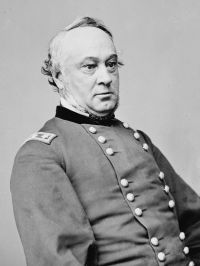 H. W. Halleck,
Elements of Military Art and Science
H. W. Halleck,
Elements of Military Art and Science
“ To watch the approach of an enemy, to see him move up and display his massive columns, his long array of military equipments, his fascines and scaling-ladders, his instruments of attack, and the professional skill with which he wields them, to hear the thunder of his batteries, spreading death all around, and to repel, hand to hand, those tremendous assaults, which stand out in all their horrible relief upon the canvass of modern warfare, requires a heart at least as brave as the professional warrior exhibits in the pitched battle. ”
Tadayoshi Sakurai, Human Bullets: A Soldier's Story of Port Arthur
“ But defense is the first step toward offense. We must first try every possible means, on this line of vigilant defense, to ascertain minutely and accurately the condition of the enemy, and to find out the arrangement of their men, before we lay our plans and begin a march and attack. So, therefore, our defense is like the dragon concealing itself in a pond for a while, and our march its gathering clouds and fogs around itself and ascending to heaven. So, then, I propose here to tell you a little about the actual condition of our line of defense after the battle of Kenzan. ”
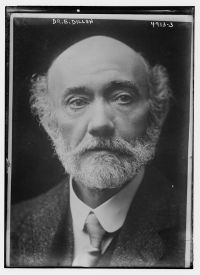 Emile Joseph Dillon,
England and Germany
Emile Joseph Dillon,
England and Germany
“ But only the weapons will be different; the military discipline, the callous indifference to the dictates of human and divine law, the utter absence of scruple will continue to characterize the tactics of our enemy, who will then have a wider scope for his activities than the battlefield can offer. ”
 Philip Gibbs,
Now It Can Be Told
Philip Gibbs,
Now It Can Be Told
“ With an optimism which was splendid in fighting-men and costly in the High Command, our men had attacked positions of enormous strength—held by an enemy in the full height of his power—without sufficient troops in reserve to follow up and support the initial attack, to consolidate the ground, and resist inevitable counter-attacks. ”
Clive Holland, Tyrol and Its People
“ More perfect discipline and arms of greater effectiveness will not, however, we think, altogether account for this, for history has over and over again proved that knowledge of the ground by the defenders and mountainous regions count heavily against successful attacks on the part of an invader. ”
 Spenser Wilkinson,
Lessons of the War: Being Comments from Week to Week to the Relief of Ladysmith
Spenser Wilkinson,
Lessons of the War: Being Comments from Week to Week to the Relief of Ladysmith
“ To break the centre of an enemy's line, to pour your forces into and through the gap, and then roll up the more important of his divided wings, is an operation which if it can be successfully executed makes a decisive victory; if followed up it ruins the enemy's army. But it is in modern conditions the most difficult form of attack. ”
National Security Council staff, under the direction of Paul H. Nitze, NSC-68 (1950)
“ Even a defensive strategy, if it is to be successful, calls not only for defensive forces to hold vital positions while mobilizing and preparing for the offensive, but also for offensive forces to attack the enemy and keep him off balance. ”
baron de Antoine Henri Jomini, The Art of War
“ An army reduced to the strategic defensive often takes the offensive by making an attack, and an army receiving an attack may, during the progress of the battle, take the offensive and obtain the advantages incident to it. ”
Anonymous, Lectures on Land Warfare; A tactical Manual for the Use of Infantry Officers
“ An attack {55} on an enemy presupposes a superiority of force at the place where the attack is made, for war is but the art of being stronger than the enemy at the right place at the right time, and for an attack to have a reasonable hope of success the attackers, at the point where the penetration takes place, must be superior. ”
1911 Encyclopædia Britannica (1911)
“ After the former it was often urged that the conditions of modern battle are distinctly in favour of defensive tactics; in other words, that the force which awaits attack can develop the full power of each arm with greater facility than that which delivers it. ”
Anonymous, Lectures on Land Warfare; A tactical Manual for the Use of Infantry Officers
“ In the first, the direction in which the decisive blow is to be delivered is determined beforehand; an adequate force is detailed and pushed forward for this purpose, and at the same time another part of the force is detailed to attack another portion of the enemy's position, to keep his attention there, to pin his troops in position, to prevent him sending reinforcements to the part mainly threatened, and ultimately to drive home with the successful assault of the main attack. ”
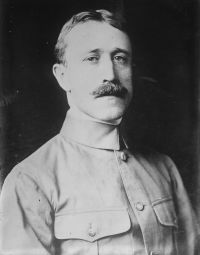 Frederick Palmer,
My Second Year of the War
Frederick Palmer,
My Second Year of the War
“ An attack was made to keep the men up to the mark; a counter-attack in order not to allow the enemy ever to develop a sense of superiority. Every soldier who participated in a charge learned something in method and gained something in the quality considered requisite by his commanders. ”
Herbert H. Sargent, The Campaign of Marengo, With Comments
“ It aims to bring a stronger force upon the battle-field, or to place an army in a position where victory will bring great results. But the battle must decide the struggle. "Even the weakest combatant does not lay down his arms to strategical manœuvres." ”
Charles Jean Jacques Joseph Ardant du Picq, Battle Studies; Ancient and Modern Battle
“ The more confidence one has in his methods of attack or defense, the more disconcerted he is to see them at some time incapable of stopping the enemy. The effect of the present improved fire arm is still limited, with the present organization and use of riflemen, to point blank ranges. ”
active 6th century B.C. Sunzi, The Art of War (1910)
“ If the enemy’s troops march up angrily and remain facing ours for a long time without either joining battle or taking themselves off again, the situation is one that demands great vigilance and circumspection. 40. If our troops are no more in number than the enemy, that is amply sufficient; it only means that no direct attack can be made. What we can do is simply to concentrate all our available strength, keep a close watch on the enemy, and obtain reinforcements. ”
Naval War College, Sound Military Decision
“ The application of power implies effort, i.e., the exertion of strength. The mental, moral, and physical power at the disposal of the armed forces depends on the effort which can be exerted by the human and material components of their fighting strength.The skillful employment of fighting strength, as a weapon more effective than the enemy's under a given set of circumstances, is the goal toward which the armed forces direct their effort. The elements of the material [9] component—arms, ammunition, and other equipment—are indispensable. ”
chevalier de James Johnstone Johnstone, A Dialogue in Hades
“ Their descriptions and plans of the country would have enlightened you, and furnished the means of destroying and crushing our army without fighting: this is the touchstone to prove superior talents and capacity in a General. The30 gaining of a battle is very often the effect of mere chance. But reducing an enemy without fighting must be the result of well-combined operations,—is the essence of military science, and was always the most radient and distinctive trait in the conduct and character of the great men whom history has handed down to us. ”
J. Ross, A History of the Coldstream Guards…
“ Of the value of works of defence to be occupied in case of attack, it is sufficient to point out that, if we were victorious without them, we should have been far stronger with them, and the battle (if it had taken place at all under these circumstances) could not have failed to result in greater disaster to the enemy, and in much less loss to ourselves. ”
A. Russell Bond, Mechanics: The Science of Machinery
“ Of course the main objects of war are offense and defense, the destruction of the opponent and the protection of one’s self. This first fighting was a hand-to-hand struggle which gave way to fighting at a distance as spears and arrows were invented. ”
W. Balck, Tactics, Volume 1 (of 2). Introduction and Formal Tactics of Infantry
“ That they are the decisive factors needs no proof whatever; it follows, as a matter of course, from uniform training, uniform leadership, and uniform arms. But tactics fit for use in war, are to furnish, above all else, ways and means, showing how and by what methods the fighting energy of troops may be preserved most effectively, and thus contribute directly toward preventing the premature deterioration of the morale of the troops. ”
W. Balck, Tactics, Volume 1 (of 2). Introduction and Formal Tactics of Infantry
“ Should the demands of strategy conflict with those of tactics on the battlefield, the latter must unquestionably take precedence, since the general’s foremost thought must be the annihilation of the hostile forces. Tactical considerations should likewise govern in the selection of the direction of attack in a battle, strategical reasons for striking in this or that direction becoming effective only after the attainment of tactical success. ”
 Hudson Maxim,
Defenseless America
Hudson Maxim,
Defenseless America
“ Finally, our army takes up its stand far in the rear, forming a new battle-front, which has been previously fortified.The enemy advances, repeats the previous tactics, forming a long battle-front on commanding positions just beyond the range of our guns, and again proceeds to dislodge us, and drive us back by their long-range gun-fire.Our loss in men and guns has been enormous. The enemy, on the contrary, has lost no guns, and but few men. ”
Henry Cabot Lodge, George Washington, Volume I
“ Eagerly watching the course of events, they saw the significance of the fact that an army raised within a year could fight a battle in the open field, endure a severe defeat, and then take the offensive and make a bold and well-planned attack, which narrowly missed being overwhelmingly successful. ”
James A. Moss, Manual of Military Training
“ Futility of advancing without fire superiority. To advance without fire superiority against a determined defense would result in such losses as to bring the attack to a standstill or to make the apparent success barren of results. ”
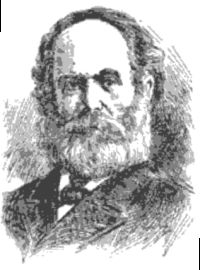 William Cleaver Wilkinson,
French Classics
William Cleaver Wilkinson,
French Classics
“ On one side, precision, foresight, geometry, prudence, an assured retreat, reserves spared, with an obstinate coolness, an imperturbable method, strategy, which takes advantage of the ground, tactics, which preserve the equilibrium of batallions, carnage, executed according to rule, war regulated, watch in hand, nothing voluntarily left to chance, the ancient classic courage, absolute regularity ”
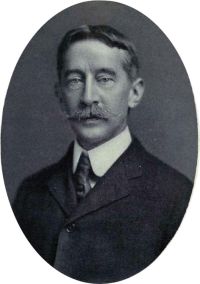 George Bird Grinnell,
Jack Among the Indians; Or, A Boy's Summer on the Buffalo Plains
George Bird Grinnell,
Jack Among the Indians; Or, A Boy's Summer on the Buffalo Plains
“ Protect him in battle. Let neither the arrows nor the bullets of the enemy strike his body, or if they must strike it, let them not pierce his flesh, but turn them aside, so that they shall do him no harm. ”
W. D. Bird, Some Principles of Frontier Mountain Warfare
“ In warfare in civilised and highly developed countries, when the enemy's object is rather to defeat the fighting force than to harry the convoy, and when troops can march on broad frontages, the protection given by bodies of cavalry with horse artillery, flung far to front and flanks, and supported, if necessary, by infantry, is usually adequate. ”
James Kennedy, Life and Work in Benares and Kumaon…
“ One could not look on the spot, and consider the weakness of the defenders compared with the strength of the enemy, supplied as they were with the guns and ammunition of our arsenal, without wondering the defence could have been maintained for a day. ”
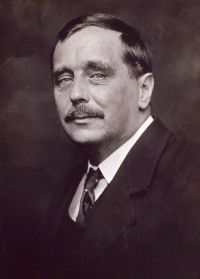 Herbert George Wells,
The Works of H. G. Wells
(1924)
Herbert George Wells,
The Works of H. G. Wells
(1924)
“ Now the strategy of this new sort of war in its opening phase will consist mainly in very rapid movements of guns and men behind that thin screen of marksmen, in order to deal suddenly and unexpectedly some forcible blow, to snatch at some position into which guns and men may be thrust to outflank and turn the advantage of the ground against some portion of the enemy's line. ”
Various, Popular Science Monthly (1915)
“ But there is abundant evidence that a country at war must, in the final test, rely for success upon the marching, shooting, bayonet-thrusting, trench-digging, misery-enduring qualities of the common soldier, of that primitive war engine that dates from the cave-dweller and beyond. ”
Charles Jean Jacques Joseph Ardant du Picq, Battle Studies; Ancient and Modern Battle
“ On the contrary, the demoralizing power of rapid and smokeless firing, which certain armies still persist in not acknowledging, manifests itself with so much the more force as each soldier possesses greater valor and cool energy. "It is then essential to work for the development of the moral forces of the nation. They alone will sustain the soldier in the distressing test of battle where death comes unseen. ”
baron de César Lecat Bazancourt, Secrets of the Sword
“ For all fighting, whether at long range or at close quarters, is very much alike, from schoolboys’ games to the most elaborate military operations; and all the advice of the world may be summed up in the eternal law of attack and defence, which is stated in these four words:—cunning, caution, energy, audacity. ”
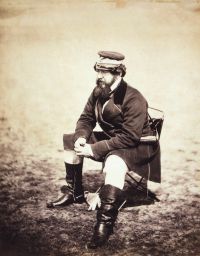 Sir William Howard Russell,
The British Expedition to the Crimea
Sir William Howard Russell,
The British Expedition to the Crimea
“ In effect, however, the right of the enemy presented less physical difficulties to the establishment of a hostile force on the flank, and it was there that the greatest number of artificial obstacles in the shape of guns, cavalry, and men, was accumulated. ”
 H. G. Wells,
What is Coming? A Forecast of Things after the War
H. G. Wells,
What is Coming? A Forecast of Things after the War
“ His case was that war between antagonists of fairly equal equipment must end in a deadlock because of the continually increasing defensive efficiency of entrenched infantry. This would give the defensive an advantage over the most brilliant strategy and over considerably superior numbers that would completely discourage all aggression. ”
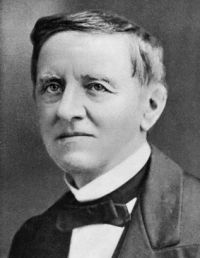 Samuel J. Tilden,
Letters and Literary Memorials of Samuel J. Tilden…
Samuel J. Tilden,
Letters and Literary Memorials of Samuel J. Tilden…
“ Our case requires not merely firmness in holding our position by our veterans, but affirmative, aggressive action, resulting in accessions from the hostile or neutral, captures from the enemy. If the higher morale—the better weapons, the stronger ammunition—are not with us, but against us, how are we to be capable of the kind of warfare necessary to the situation? ”
Various, Littell's Living Age (1876)
“ Because every improvement made in weapons from the earliest recorded history of war has entailed corresponding alterations in tactics to meet it, and obviate, as far as possible, its effects. Instead of standing in massive columns, or in line with close ranks two and three deep, and reserving their fire until they could "see the whites of their enemy's eyes," troops now engage at longer distances, in loose order, and take advantage of whatever cover is to be found. ”
Tadayoshi Sakurai, Human Bullets: A Soldier's Story of Port Arthur
“ ON THE DEFENSIVE WHAT an irksome, tantalizing business is defense! We may be quite ready to march and fight, both in morale and in material preparations, and yet we must wait until the right opportunity arrives. The sword hanging from the belt may moan from idleness, the muscles of the arm sigh from inactivity, and yet we have to wait till the proper time comes. ”

