“ We implicitly follow his lead to the next stage, where he detects that the “sociability of man sprang in the main from progressive intellectual and material civilisation”, and we are prepared to cut out communal marriage from the series of early developments of marriage forms, and translate it to a place where it must be considered the special outcome of marriage considered from its institutional side. ”
Communal marriage
Definition and stakes
The theme of “communal marriage” has been addressed by authors such as George Elliott Howard, Anna Garlin Spencer, Deborah T. Poritz, George Bernard Shaw and Richard John Santorum. It is often associated with terms like family, law, social, society and wife.
Quotes about “communal marriage”
Portal:Anonymous texts, The Urantia Book (1955)
“ All over the world the looser forms of communal marriage gradually evolved into various types of group marriage. And these group associations were largely regulated by the totem mores. Family life slowly and surely developed because sex and marriage regulation favored the survival of the tribe itself by insuring the survival of larger numbers of children. ”
Percy Greg, Across the Zodiac: the Story of a Wrecked Record (1880)
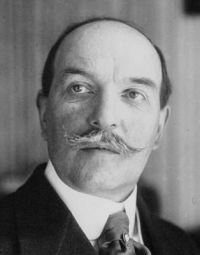
“ Your marriage contract, like our own laws, appears to favour the weaker sex more than strict theoretical equality would permit. This is quite right and practically inevitable; but it hardly agrees with the theory which supposes bride and bridegroom, husband and wife, to enter on and maintain a coequal voluntary partnership. ”
 Henry Bordeaux,
The fear of living
(1913)
Henry Bordeaux,
The fear of living
(1913)
“ Certain theories of the day, which on their critical side are not without justification, pretend to purify the sources of marriage by suppressing the consent of parents which is often too apt to overlook personal characteristics through consideration of the advantages to be gained, and by multiplying the facilities for union with the facilities for divorce; in a word, by associating marriage with those other unions which have no regard for the social order, into which they introduce anarchy. But marriage is the gateway of the family, the foundation of the home ”
 Robert Green Ingersoll,
The Works of Robert G. Ingersoll…
Robert Green Ingersoll,
The Works of Robert G. Ingersoll…
“ Every marriage, for a thousand reasons, should be public, should be recorded, should be known; but, above all, to the end that the purity of the union should appear. These ceremonies are not only for the good and for the protection of the married, but also for the protection of their children, and of society as well. But, after all, the marriage remains a contract of the highest possible character—a contract in which each gives and receives a heart. ”
 Carl Schurz,
Condition of the South
(1865)
Carl Schurz,
Condition of the South
(1865)
“ The officers of the bureau should be especially charged to impress upon the freedmen the sacredness of the family relation and the duty of parents to take care of their children, and of the aged and infirm of their race. Where a man and woman have lived together as husband and wife, the relation should be declared legitimate, and all parties, after contracting such relations, should be compelled to legal marriage by severe laws against concubinage. ”
Barry T. Albin, Lewis v. Harris — Opinion of the Court (2006)
“ Unlike our colleagues who are prepared immediately to overthrow the long established definition of marriage, we believe that our democratically elected representatives should be given a chance to address the issue under the constitutional mandate set forth in this opinion.We cannot escape the reality that the shared societal meaning of marriage -- passed down through the common law into our statutory law -- has always been the union of a man and a woman. ”
 John Stuart Mill,
Auguste Comte and Positivism
John Stuart Mill,
Auguste Comte and Positivism
“ He admits that the marriage institution has been, in various respects, beneficially modified with the advance of society, and that we may not yet have reached the last of these modifications; but strenuously maintains that such changes cannot possibly affect what he regards as the essential principles of the institution—the irrevocability of the engagement, and the complete subordination of the wife to the husband, and of women generally to men; which are precisely the great vulnerable points of the existing constitution of society on this important subject. ”
 Anna Garlin Spencer,
The family and its members
Anna Garlin Spencer,
The family and its members
“ Marriage converts an attachment between man and woman into a deliberate, permanent, responsible, intimate union for a common end of mutual good. Modern society requires that the husband and wife contemplate lifelong companionship, and the affection between husband and wife is enriched by the relation of parents to the children which are their care. The end of the family is not economic profit but mutual aid and the continuance and progress of the race."—Professor Tufts, in Ethics, by Dewey and Tufts. ”
Deborah T. Poritz, Lewis v. Harris — Concurrence/dissent (2006)
“ Because it fulfils yearnings for security, safe haven, and connection that express our common humanity, civil marriage is an esteemed institution, and the decision whether and whom to marry is among life’s momentous acts of self-definition. ”
Suzanne La Follette, Concerning Women (1926)
“ As individualism makes progress against group-tyranny, the preliminaries and the actual contracting of marriage become less the affair of God, the State, the family and the community, and more the affair of the two people chiefly interested; but once contracted, the marriage can hardly be said, even in the most civilized community, to be free of considerable regulation by these four influences. ”
 Diogenes Laërtius,
Lives of the Eminent Philosophers…
(1925)
Diogenes Laërtius,
Lives of the Eminent Philosophers…
(1925)
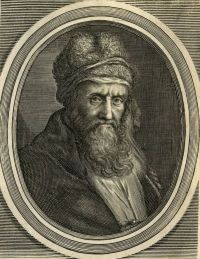
“ The only true commonwealth was, he said, that which is as wide as the universe. He advocated community of wives, recognizing no other marriage than a union of the man who persuades with the woman who consents. ”
History of Woman Suffrage, Volume I
“ Finally, educate woman, to enable her to promote her independence, and she will not be obliged to marry for a home and a subsistence. Give the wife an equal right with the husband in the property acquired after marriage, and it will be a bond of union between them. ”
F. W. Burbidge, The Gardens of the Sun
“ In the interior, where nearly all enjoy “liberty, equality, and fraternity,” in a way one can only dream of in civilised “society,” marriage is very simple, and monogamy the rule. The celebration of a marriage consists of a notification of the fact, and it is acknowledged by all in the village, who meet for feasting. ”
 Georg Simmel,
The American Journal of Sociology…
Georg Simmel,
The American Journal of Sociology…
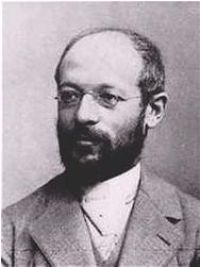
“ The same tendency to exclude from the community of marriage, a priori, certain defined life-contents, and by means of super-individual provisions, appears in the variations in the forms of marriage to be found in one and the same people, with possibility of choice in advance on the part of those contracting marriages. ”
 Max Simon Nordau,
Conventional Lies of our Civilization
(1886)
Max Simon Nordau,
Conventional Lies of our Civilization
(1886)
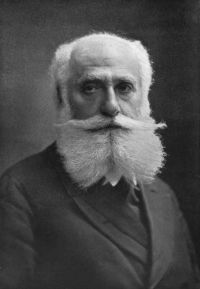
“ By these formalities, which make a marriage a matter of so much ceremony, the community has always kept control of the relations between the sexes, and the solemnity with which it treats the union of a loving couple, ought to arouse in them the consciousness that their embraces are no mere private affairs, like a dinner, a hunting expedition or an evening spent in singing and dancing, but matters of great public importance and significance, affecting the welfare of the whole community and aiding to determine its future. ”
History of Woman Suffrage (1887)
“ Under the operation of this Amendment, what will become of the family hearthstone around which cluster the very best influences of human education? You will have a family with two heads—a "house divided against itself." You will no longer have that healthful and necessary subordination of wife to husband, and that unity of relationship which is required by a true and a real Christian marriage. ”
Walter Brown Murray, The Truth about Marriage (1931)
“ Unrestricted individualism cannot be permitted in marriage, because of the fact that marriage is the beginning of community life. Men who marry must be governed by laws designed to promote the good of the community. ”
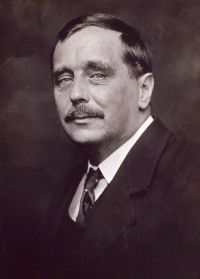 Herbert George Wells,
The Works of H. G. Wells
(1924)
Herbert George Wells,
The Works of H. G. Wells
(1924)
“ The institution of permanent monogamous marriage—except in the ideal Roman Catholic community, where it is based on the sanction of an authority which in real Roman Catholic countries a large proportion of people decline to obey—is sustained at present entirely by the inertia of custom, and by a number of sentimental and practical considerations, considerations that may very possibly undergo modification in the face of the altered relationship of husband and wife that the present development of childless ménages is bringing about. ”
Oscar Chrisman, The Historical Child
“ But this did not prevent marriage from becoming a business affair, where the material advantages to be gained were closely looked into and the amount of property or money to be gained on either or both sides was the most important and chief consideration. Nor did this prevent informal marriages, for men and women did join themselves together without priest or religious ceremony by a simple declaration that they would take each other as husband and wife. ”
Samuel Philips, The Christian Home
“ Fitness of circumstances, means, and age should be also considered. Am I able to support a family? Can I discharge the duties of a household? Where there is ignorance of household duties, indolence, the want of any visible means of supporting a family, no trade, no education, no energy, and no prospects, there is no reason to think there can be a proper marriage. Thus, then, mutual love, adaptation of character, of means, of circumstances, of position, and of age, should be considered, in the formation of a marriage alliance. ”
 William Graham Sumner,
Folkways
William Graham Sumner,
Folkways
“ They cover the relations of men and women to each other before marriage and in marriage, with all the rights and duties of married and unmarried respectively to the rest of the society. The mores determine what marriage shall be, who may enter into it, in what way they may enter into it, divorce, and all details of proper conduct in the family relation. In regard to all these matters it is evident that custom governs and prescribes. When positive institutions and laws are made they always take up, ordain, and regulate what the mores have long previously made facts in the social order. ”
 Ellice Hopkins,
The Power of Womanhood, or Mothers and Sons
Ellice Hopkins,
The Power of Womanhood, or Mothers and Sons
“ It is therefore on the woman that any loosening of the permanence of the marriage tie will chiefly fall in untold suffering. "Le mariage c'est la justice," say the French, who have had experience enough of "les unions libres"—justice to the wife and mother, securing her the stability of her right to her husband's affections, the stability to her right of maintenance after she has given up her means of support, above all, the stability of her right to the care of her own children. ”
Sarah E. Wall, Orange Grove (1866)
“ All their gallant sympathy and protection explodes, when the angel they worship so far condescends to come down to the plane of mortals as to become a wife. Admitting that it does not come within the scope of the law to regulate the marriage institution, which is the province of a higher tribunal, the conscience and the affections, it is the true province of legislation to recognize the equal rights of both sexes in entering into the relation, thus removing a great source of selfish motives in the thirst for gain and love of power. ”
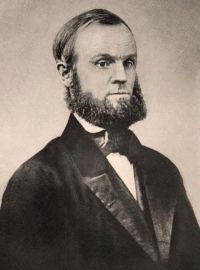 John Humphrey Noyes,
History of American Socialisms
John Humphrey Noyes,
History of American Socialisms
“ They apply to larger partnerships the same attractions that draw and bind together pairs in the worldly partnership of marriage. A Community home in which each is married to all, and where love is honored and cultivated, will be as much more attractive than an ordinary home, as the Community out-numbers a pair. 2. These principles remove the principal obstructions in the way of Association. There is plenty of tendency to crossing love and adultery, even in the system of isolated households. Association increases this tendency. ”
Anna Garlin Spencer,
Popular Science Monthly
(1881)
“ Our first point (the social law controlling the varying position of married women) brings us at once to the fact that physical unions of men and women must have preceded all legal definitions of their relation to each other, or to their offspring. We begin to call these unions marriage, when the first headland of rude ceremonial selection appears above the sea of promiscuous passions. For a long while yet, no legal enactments fix the status of the wife ”
History of Woman Suffrage, Volume II
“ Resolved, That in seeking to remove the legal disabilities which now oppress woman as wife and mother, the friends of woman suffrage are not seeking to undermine or destroy the sanctity of the marriage relation, but to ennoble marriage, making the obligations and responsibilities of the contract mutual and equal for husband and wife. ”
W.H.R.Rivers, Kinship and social organisation
“ Marriage is only one of the social institutions which have moulded the terminology of relationship. It is, however, so fundamental a social institution that it is difficult to get far away from it in any argument which deals with social organisation. In now passing to other examples of the dependence of the terminology of relationship upon social conditions, I begin with one in which features of this terminology have come about, not as the result of forms of marriage, but of an attitude towards social regulations connected with marriage. ”
William Forster Lloyd, Two Lectures on the Checks to Population (1833)
“ Now, the objection, drawn from the theory of population, against such systems of equality, is this. Marriage is a present good. The difficulties attending the maintenance of a family are future. But in a community of goods, where the children are maintained at public tables, or where each family takes according to its necessities out of the common stock, these difficulties are removed from the individual. They spread themselves, and overflow the whole surface of society, and press equally on every part. ”
“ From the point of view of a statesman, marriage is the union of a man and woman in a manner so intimate as to involve the probability of offspring, and it is of primary importance to the State, first in order to secure good births, and secondly good home conditions, that these unions should not be free, nor promiscuous, nor practically universal throughout the adult population. ”
Anna Garlin Spencer,
The family and its members
“ If we fear the future of the family because now the spiritual essence of marriage is demanded, even if the form of its first enclosure prove too strait for its growth, we cannot turn back to the harsh practice and coarse ideals that once made all unions seem right that preserved a legal bond and all men and women wrong-doers who sought freedom from intolerable ills.New and Finer Marriage Unions.—There is a way of life, full of difficulties and not yet clear, a way of life that leads to such a noble comradeship and such a type of loving union as the world could rarely see in the older days. ”
 Karl Heinzen,
The Rights of Women and the Sexual Relations
(1898)
Karl Heinzen,
The Rights of Women and the Sexual Relations
(1898)
“ The agreement of the lovers and a notice concerning their union must suffice for the forming of marriage. The priest does not make marriage, the law does not make marriage, the parents do not make marriage, the magistrate does not make marriage, but love and the agreement of the lovers make it. Let marriage, therefore, be made dependent on nothing save the conditions for its existence. ”
Deborah T. Poritz, Lewis v. Harris — Concurrence/dissent (2006)
“ Society endows the institution of marriage with not only a host of rights and responsibilities, but with a significant respect for the relationship of the married couple. When you say that you are married, others know immediately that you have taken steps to create something special. ”
 Charlotte Perkins Gilman,
Women and Economics
Charlotte Perkins Gilman,
Women and Economics
“ That is why the popular mind is so ready to associate socialistic theories with injury to marriage. Having seen that marriage makes us less collective, we infer conversely that collectivity will make us less married,—that it will “break up the home,” “strike at the roots of the family.” ”
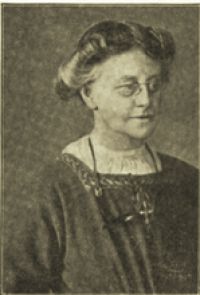 C. Gasquoine Hartley,
Women's Wild Oats: Essays on the Re-fixing of Moral Standards
C. Gasquoine Hartley,
Women's Wild Oats: Essays on the Re-fixing of Moral Standards
“ It is the highest type of men and women who will seek to marry and be best and happiest, if living together as faithful husband and wife, [218] as devoted father and mother, I do, however, hold, that there are others—women and men—without the gifts that make for successful parenthood or happy permanent marriage. I would recognize this frankly, and let those who do not desire marriage be openly permitted to live together in honorable temporary unions. ”
 Auguste Forel,
Sexual ethics
(1908)
Auguste Forel,
Sexual ethics
(1908)
“ None of these reforms, however, need in any way debar the formation of voluntary marriage contracts. Such contracts are, indeed, distinctly advisable, for the voluntary resolve of two people to remain faithful to one another, and to build up a permanent home for their children, is at once the best, truest, and most natural foundation of marriage. ”
Related terms
Authors who wrote about “communal marriage”
George Elliott HowardAnna Garlin SpencerDeborah T. Poritz George Bernard ShawRichard John Santorum
 Havelock EllisWalter Brown MurrayGordon A. StewartKate O'ReganAuguste Forel
 Ellen KeyVaughn R. WalkerBarry T. Albin
 Thomas HardyKarl HeinzenViscount Bertrand Edward Dawson DawsonAlice HubbardC. Gasquoine Hartley
 Bernard ShawSuzanne La Follette
Anna Garlin SpencerDeborah T. PoritzGeorge Bernard ShawRichard John SantorumHavelock EllisWalter Brown MurrayGordon A. StewartKate O'ReganAuguste ForelEllen KeyVaughn R. WalkerBarry T. AlbinThomas HardyKarl HeinzenViscount Bertrand Edward Dawson DawsonAlice HubbardC. Gasquoine HartleyBernard ShawSuzanne La Follette