Concave mirror

Definition and stakes

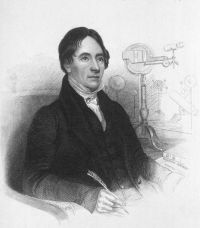
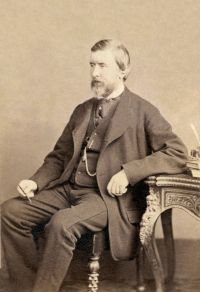
Portrait of John Henry Pepper John Henry Pepper,  The Boy's Playbook of Science

“ The effects that can be produced with the aid of concave mirrors are very impressive, because they are not merely confined to the reflection of inanimate objects, but life and motion can be well displayed by them; thus, if a man place himself directly before a concave mirror, but further from it than its centre of concavity, he will see an inverted image of himself in the air between him and the mirror of a less size than himself ”
Source: Gutenberg

Thomas D. Cope,  Physics

“ The real images formed by concave mirrors are always inverted. The principal focus of a concave mirror may be observed by holding the mirror in a beam of sunlight entering a darkened room. The sun's rays after reflection converge to form a small, round, intense spot of light, which is a real image of the sun, located at the principal focus of the mirror. The distance of the principal focus from the mirror is the least distance that a real image can be formed in front of a concave mirror. ”
Source: Gutenberg

Portrait of John Henry Pepper John Henry Pepper,  The Boy's Playbook of Science

“ By using a large concave mirror of about three feet in diameter, the author was enabled to show all the results to a large audience that were usually visible to one person only. Whilst experimenting with a concave mirror, by holding out the hand in the manner described, a bystander will see nothing of the image, because none of the reflected rays that form it enter his eyes. This circumstance is well illustrated by placing a concave mirror opposite the fire, and allowing the image of the flames projected from it to fall upon a well-polished mahogany table. ”
Source: Gutenberg

Get perspective with Kwize: daily news enlightened by great literature